River People

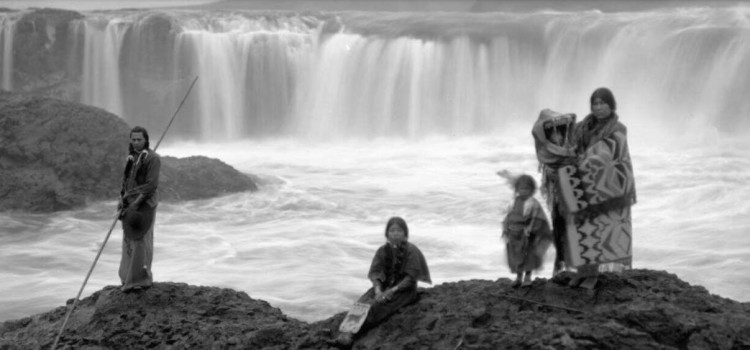
“Although identified by the photographer in about 1900 as Warm Springs Indians, this family, who lived near Celilo, 10959424_926208647390783_1820474339059025743_nwas part of a substantial population that refused to settle or stay on the reservations. Many of them came to identify themselves as Columbia River Indians, or River People, based on their shared heritage of connection to the river, resistance to the reservation system, adherence to cultural traditions, and relative detachment from the institutions of federal control and tribal governance. ”
(http://www.ohs.org/research/quarterly/images/OHQ1052_Fisher_1.pdf)

I am Proud to be a River People.

A video montage in honor of the River People.
Writing a new story

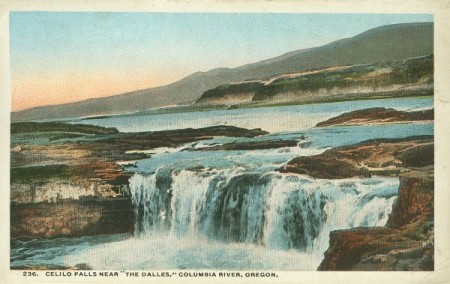
A grand spectacle! The sheer magnitude of these living waters, pummeling in their forever song of change.

Post Card, Near The Dalles, 1917

Post Card, Near The Dalles, 1917

The stories are spoken in the songs heard in between the spaces – when we close our eyes and listen. For millennia, this teller of tales has inspired and washed us in awe. Taken back, we are asked to remember its tales. Whether we like it, or not, it is up to us to write the new stories, and to pass them on… and time is speeding up in its forever song of change.

My heart lives here

My heart lives here, amongst the rivers and restless winds. The hills and snowy peaks, wild flower and ancient tree. My bones rest here, in stone, and mud, and stories yet told.

Family at Celilo, 189?

Family at Celilo, 189?

I wander here in dream, and re-live the lore of old, and wake to it’s ghost, slowly fading into the calm waters of a once wild stream.

“My generation is now the door to memory. That is why I am remembering.” Joy Harjo

Many of us River People speak about still hearing those waters fall. Like a longing at the doors of our dreams. Or a remembering that we know in the beating of our hearts. Each pump a drum of longing to be home, amongst the joyful jumping of Salmon. A familiar smoke drifting from shacks holding old stories. The repeating patterns of metaphor, and the sound of Echoes of Water Against Rocks.


Watch the documentary, Echoes of Water Against Rocks, here:

hastiness of clouds.

The Cedars stand still to the brief blue sky hovering above the cliffs. The gray clouds at bay to the west. There is a quietness you learn to appreciate in the Gorge.

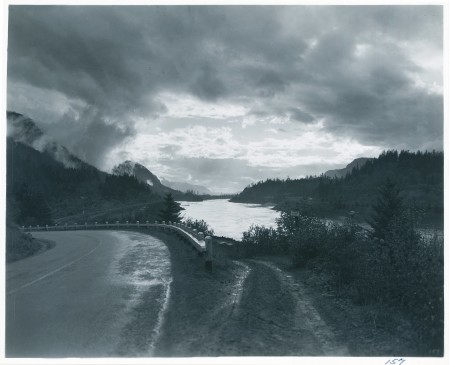
Sunset on Columbia River from Bridge of the Gods. 193?

Sunset on Columbia River from Bridge of the Gods. 193?

When the wind stops long enough to gather your breath. The sun dances its rays across my fish skin. Look to the Sky and take it in! For those clouds, at bay to the west, travel this Rivers path at a hasty pace.

A Fierce and Mighty Wind

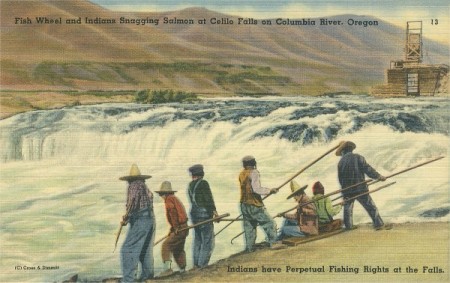
The fish wheel in the back ground looms like a dragon, ready to pounce, and devour a way of life, hungry and impermanent. I often dream of the other years,

Celilo Falls, post card. ca. 1930

Celilo Falls, post card. ca. 1930

but often find myself barely able to remember how to fish as I browse the supermarket aisle for the freshest caught bargain. Irony showers my existence. I feel like there is this wind that is blowing so hard it will knock the ‘Indian’ right out of me. I watch the flat surface of the lake that now covers the “echoes of falling water”, and see my cousins being shunned from their tribes for not having enough blood-quantum, and tribes, such as the Wy’am and many Columbia River Indians, not being seen as a Sovereign Nation and I feel lost. To be honest, Gathering the Stories is my anchor, or stump, you could say, to this wind, and I must say, it scares the living shit out of me to know that my offspring will no longer be considered part of a tribe.

Reading links:
Read about Celilo Falls from the Columbia River Inter-Tribal Fish Commission here

Read about the dis-enrollment of Chief Tumulth’s descendants from the Grande Ronde Tribe based on blood-quantum here

Read “Recalling Celilo: An Essay by Elizabeth Woody” from the book “Salmon Nation: People, Fish and Our Common Home” here

The Hatfield and McCoy’s of Skamania County

ALL NEIGHBORS NOT GOOD IN COUNTY’S EARLY SETTLEMENTS (Published in Skamania County Pioneer January, 1949)

“Neighbors” in the pioneer days of the county were not always “good neighbors,” according to Henry Metzger, pioneer Carson resident who this week recalled some of the occurances enlivening the early days in Skamania County.

The Hatfield clan from the famous Hatfield and McCoy conflict.

The Hatfield clan from the famous Hatfield and McCoy conflict.

“Much has been, and still is, said and written about the pioneer spirit, the spirit of neighborliness, mutual assistance, courage to take and solve difficult problems as if, and it is true, much of that has been and still is in evidence in this neck of the woods, but it would be folly and serve no good purpose to tell the now growing up generation that everything was sweet peace and harmony among the early settlers, for such was not always the case. Fact of the matter is that, in my opinion at least, there is now much more harmony among the neighbors than there was only about a half century ago. The reason for this I contribute to a much higher standard of education and to the fact that country life is getting more and more like city life, where you often do not know your next door neighbor.

Random photo of a fellow on Larch Mountain during the 1930's.

Random photo of a fellow on Larch Mountain during the 1930′s.

“Maybe I can best illustrate the pioneer spirit by telling of an incident that, I am told, happened in Skamania County about 60 years ago. There were two prominent citizens, joint farmer-neighbors, who could not get along together well. They could not smell one another, so the saying goes. They were not on speaking terms and when they met at public meeting they would oppose each other even if they were of the same opinion on the subject under discussion. It so happened that one of those farmers had hay on, ready to haul in when it looked as if the weather would turn to rain. He started hauling in hay, him on the wagon and his wife, a frail woman, pitching on the hay. But soon his ‘despised’ neighbor appeared and walking up to the woman said in a harsh tone, ‘Give me that fork and you go to the house, that’s where you belong,’ and he started in pitching on the hay and these two men worked for hours together, never speaking a single word to each other, not even would they say ‘thank you’ or ‘good bye’ when they parted after the hay was all in the barn.

“This is what I would call the ‘the Pioneer Spirit in the Rough’.”

Mining for Solitude

“Hidden in the glorious wildness like unmined gold.”- John Muir.

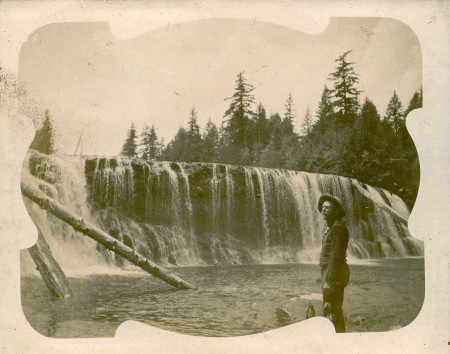
"Rock Creek Falls, ca. 1904" author unknown

“Rock Creek Falls, ca. 1904″ author unknown

I often find the company of a stream, a forest, a lake, a river, more comforting than a room full of humans filled with the best intents and hearts. It seems us humans are always abrasive to the cycles, and tied up in the melodramas of our modern lives. I prefer to be hidden and gloriously alone most times. But, I am never alone, and the gold of the wild, is better than all the fame in heaven.

Listen to Rock Creek from July, 2014 here:

The First Railroad in the Columbia River Basin

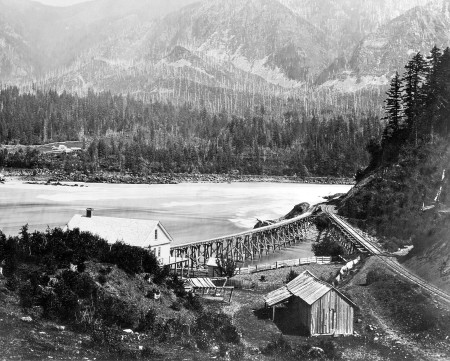
The first railroad in the Columbia River Basin was built along the river in 1851. Little more than a cart on rails, it was a portage tramway on the Washington side of the Columbia River Gorge around The Cascades rapids.

Portage Railroad Track on left. Just below the Cascade rapids. c. 1867

Portage Railroad Track on left. Just below the Cascade rapids. c. 1867

With a mule and one cart, Hardin Chenoweth moved freight and passengers around the rapids for a fee of 75 cents per 100 pounds. In 1894, the little railroad was damaged by flooding and sold to a cannery, which used it to haul salmon from its fish wheels to its production building.

Cape Horn

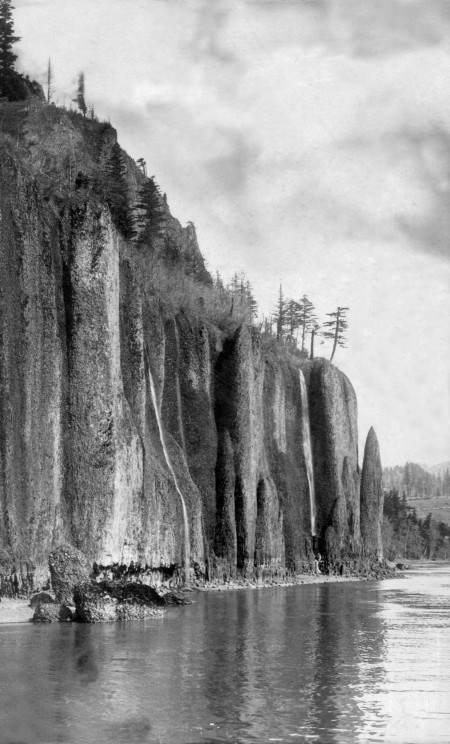
Did you know that Cape Horn was one of the first European settled areas of Washington?

Cigar Rock at Cape Horn, 1899.

Cigar Rock at Cape Horn, 1899.

The State’s first homestead was taken at Parker’s Landing (near Washougal) in 1845. The year before this,1844, James Walker crossed the continent by ox team from Pennsylvania to Vancouver. Then in 1846 he and his family moved to Cape Horn, thus becoming the first European settlers.

Why did my Chinook Ancestors flatten their heads?

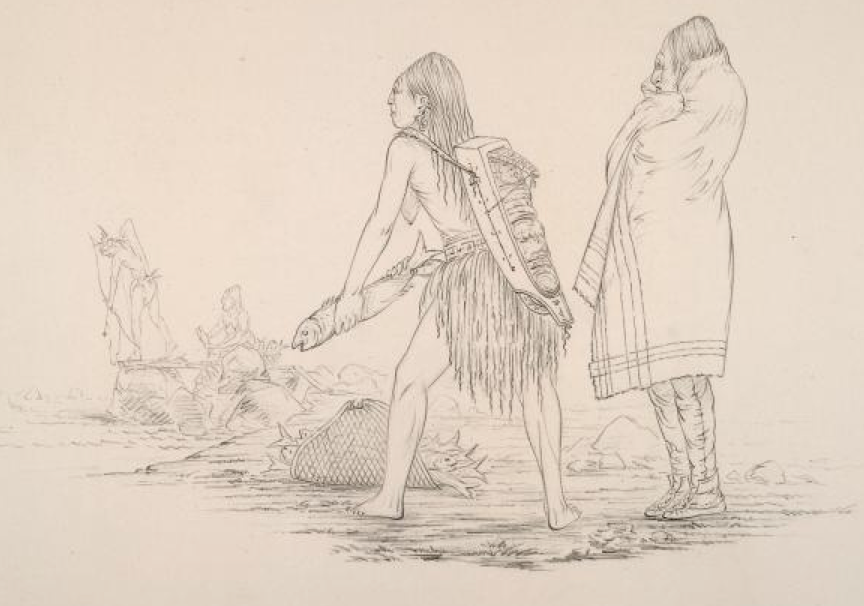
George Catlin. 1850

George Catlin. 1850

The picture is from about 1850 and is a pencil drawing of a scene at The Dalles, on the Columbia River by George Catlin. It clearly depicts the flat heads my tribe gave their children at birth by use of a set cradle board over the forehead during the first few months of life. Learn more here.

I am very interested in why we did this? Were there any old stories that were told that explained why we started flattening our foreheads? How did we come to accept and implement such a custom, that seems so foreign to our modern standards of beauty?

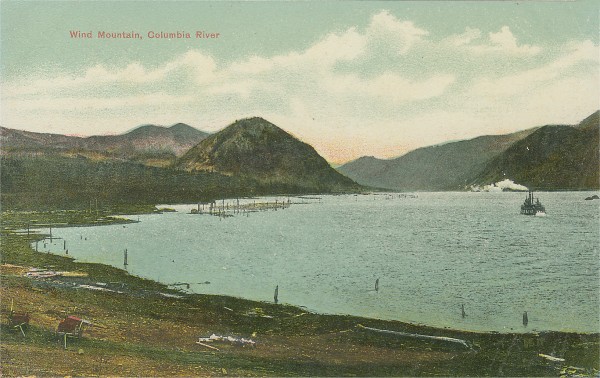
Penny Postcard, ca.1910, "Wind Mountain, Columbia River."

Penny Postcard, ca.1910, “Wind Mountain, Columbia River.”

What role did the landscape we live in play in this custom? I have always noticed a similarity between the contours of Wind Mountain and the profile of the flattened head, is this just coincidence? So many questions… so go’s the seeking.