The Impact of the Bonneville Dam on Native American Culture

The impact of the Bonneville Dam on Native American Culture
(Re-Printed from: http://www2.kenyon.edu/projects/Dams/bsc02yogg.html)

For the Native American tribes living in the Columbia River Basin, salmon are an integral part of their lives, serving as a symbol of their prosperity, their culture and their heritage. There are more than fourteen different tribes represented in the area, including the Nez Perce, Umatilla, Warm Springs, and Yakama tribes. While they are separate tribes, with differing cultures and traditions, their reliance on salmon to maintain their way of life is a common bond.
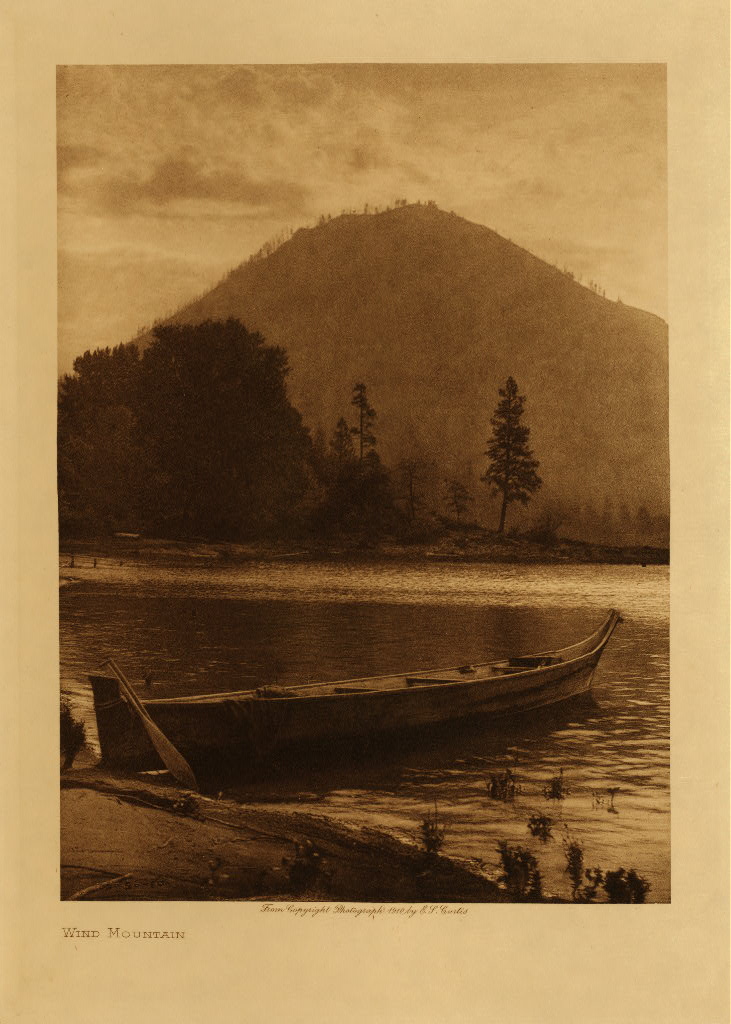
Auntie Virginia Miller's Canoe. Edward S. Curtis photo

Auntie Virginia Miller’s Canoe. Edward S. Curtis photo

Life Before the Dam

Economically, salmon were a large part of the culture of most of the tribes along the Columbia River. Before the treaty of 1855, many tribes had sucessful fishing economies. They traded salmon in order to obtain goods from other regions of the country. The salmon that were necessary to sustain their bodies and provide for their economic needs were available to them and therefore, the tribes were wealthy and self-sufficient. The economic benefits of the salmon were tremendously important for the welfare and maintenance of their communities, representing one of many significant benefits of salmon to their lives.

Year after year and generation after generation, the salmon returned every fall to spawn in the river. With this, a transfer of traditional knowledge and values occured. They passed on knowledge of fishing tecniques, as well as philosopies such as a respect for all forms of life. The return of Salmon to the river and subsequent transfer of knowledge symbolized to the natives that there had been a continuation of all life and assured them that their culture, tradition and spirituality had been upheld. It also served to reinforce their sense of place. When the salmon returned the tribes would gather down at the river to collect the salmon they needed to sustain them for the year. During the spring and summer they would head up to the hills to collect roots and berries to supplement their diet. People have mistaken these tribes to be nomads who wandered aimlessly in search of food and resources, but this is a misconception. These tribes followed the seasons, utilizing their resources in a circular pattern. The salmon were a fundamental component of their seasonal migration and their way of life.
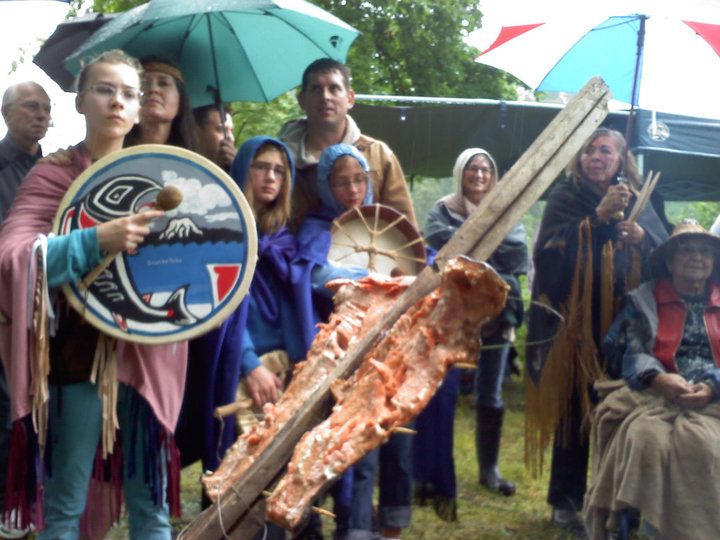
Cowlitz First Salmon Ceremony, Photo Unknown

Cowlitz First Salmon Ceremony, Photo Unknown

Because the salmon played such an important role in their way of life, the salmon were incorporated into their spirituality and religious practices as well. The tribes felt that their souls were connected to the natural world and all of its inhabitants, including the salmon. Because of this “over a dozen longhouses and churches on reservations and ceded areas depend on salmon for their religious services” (http://www.critfc.org/text/IMPORT.HTM). The return of the salmon each year was cause for celebration. One of the ceremonies used in celebration of the salmon was the First Food Feast. In this celebration they would pray, sing and dance before eating a traditional meal of salmon, deer or elk, roots and berries. Antone Minthorn of the Umatilla tribe explained the importance of this ceremony…

The importance of the first salmon ceremony has to do with the celebration of life, of the salmon as subsistence, meaning that the Indians depend upon the salmon for their living. And the annual celebration is just that – it’s an appreciation that the salmon are coming back. It is again the natural law; the cycle of life.

(www.critfc.org/text/CERMON.HTM)

A Clash of Cultures

The native tribes to the land surrounding the Columbia, and the white settlers that arrived in the early to mid 1800′s had very different philosophies concerning their respective relationships with the land.
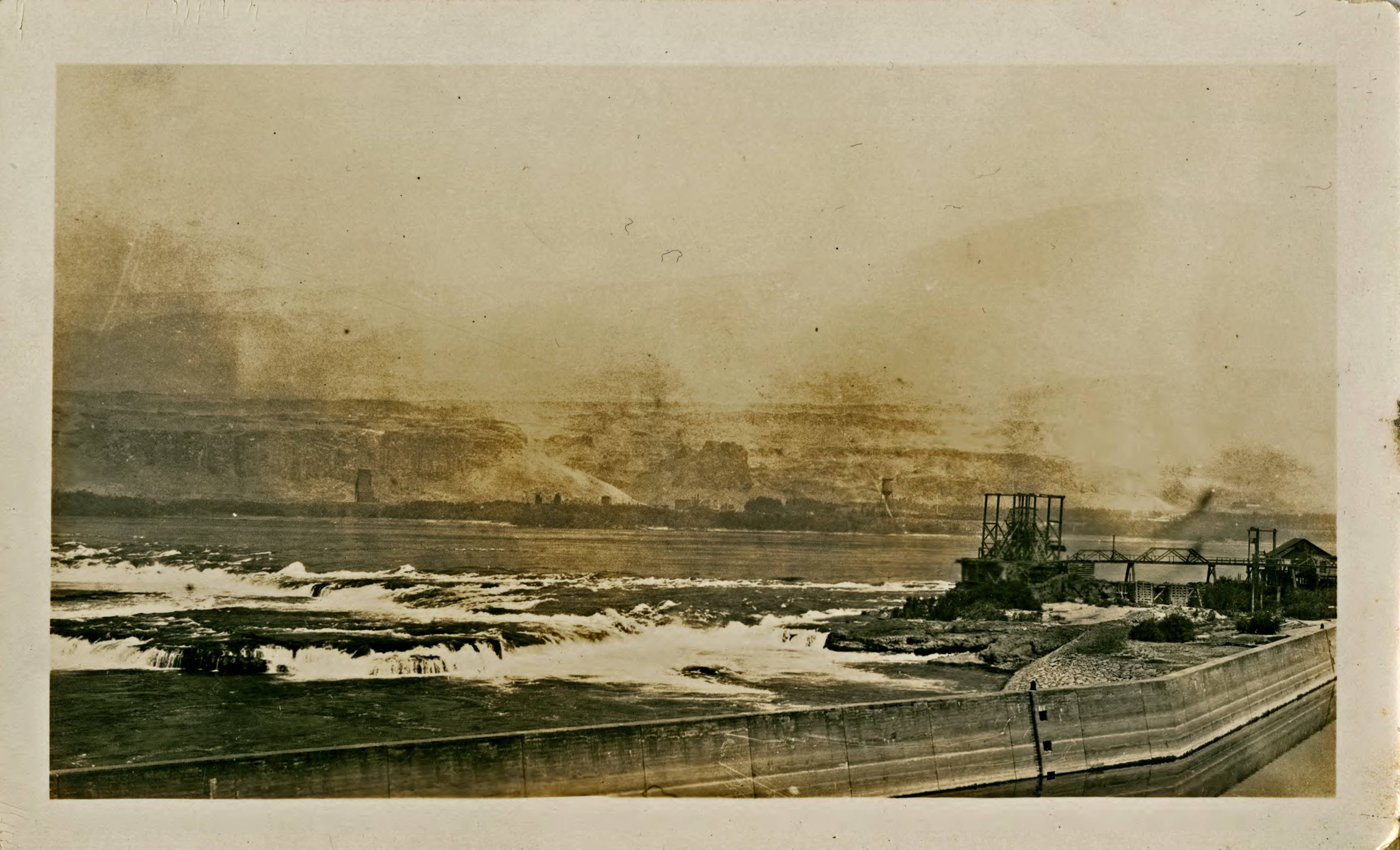
Fish Wheels near North Bonneville. Photo unknown

Fish Wheels near North Bonneville. Photo unknown

In general the white settlers displayed a disregard for the limits of their resources and brought with them the concepts of ownership and property. As a result of this, the non-Indian economy thrived at the expense of the Native Americans, whose fishing economy was driven almost to extinction. The native way of life depended on respecting the earths limits. They saw themselves as spiritually connected to the land, the animals, and its incredible abundance of resources, and they knew that by hurting the land they were hurting themselves. They understood the importance of sustainability, realizing that even if the effects of exploitation were not immediately apparent, they would be felt eventually, hindering the lives of the generations to come. This fostered a duty to protect the salmon. Bill Frank Jr. stated:

Survival of the salmon has always meant more than just food for the Indian people. Indians have long recognized that if they are to survive and if their children’s children are to survive, it will be because the salmon survives. It is their legacy.

(biology.uoregon.edu/classes/bi130/webprojects/35/tedstrong.html)
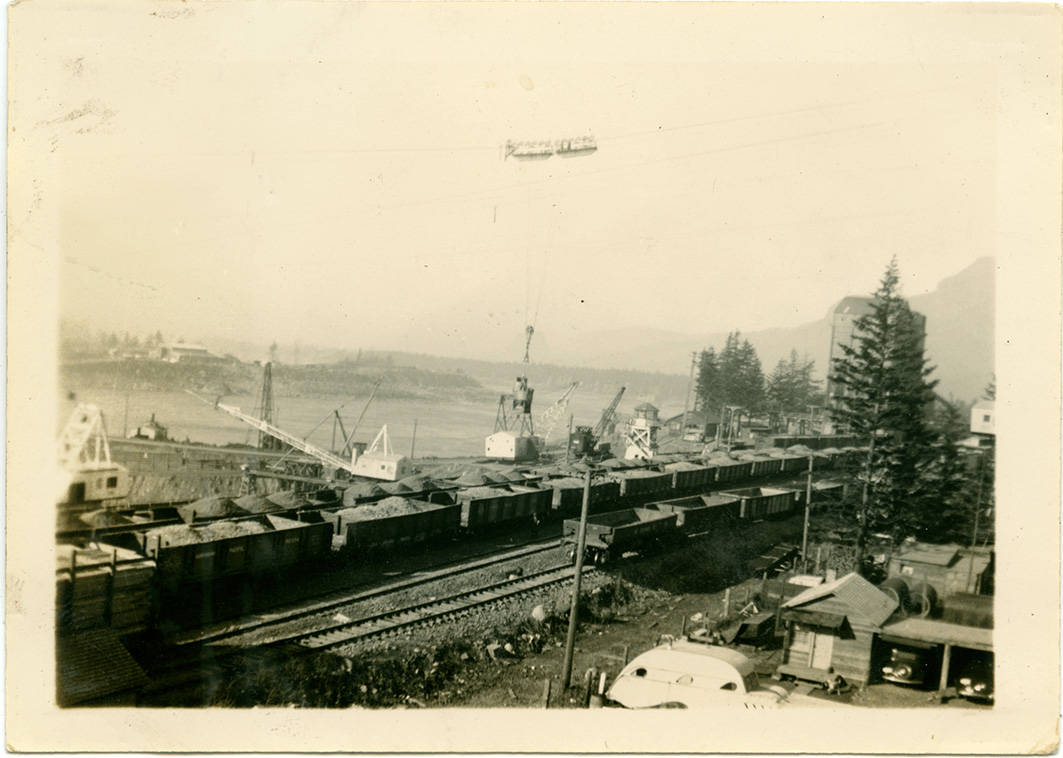
Construction of Bonneville dam, directly on top of my Ancestors old Village site.

Construction of Bonneville dam, directly on top of my Ancestors old Village site.

As the salmon population declined and many of their traditional fishing sites were flooded as a result of the constriction of the Bonneville Dam and other dams along the Columbia River, the culture, tradition and spirituality of these tribes have been put in danger. The native philosophies were essential in managing the resource of salmon, yet they were powerless in enforcing their methods because their ideas were seen as inferior. Allen V. Pinkham Sr. of the Nez Perce tribe who among other involvements in Native American politics spent nine years on the Nez Perce Tribal Council and was chairman of the Columbia River Tribal Fish Commission, explained:

We utilized the salmon resource, we didn’t deplete it. We utilized what was necessary to sustain our lifestyle and life ways, both spiritually and physically. Nobody does that anymore. Non-natives see only the salmon as a commodity that gets bought and sold. Not thinking about the survivability of that salmon as a species.

(Pinkham, 1996)

Present Day
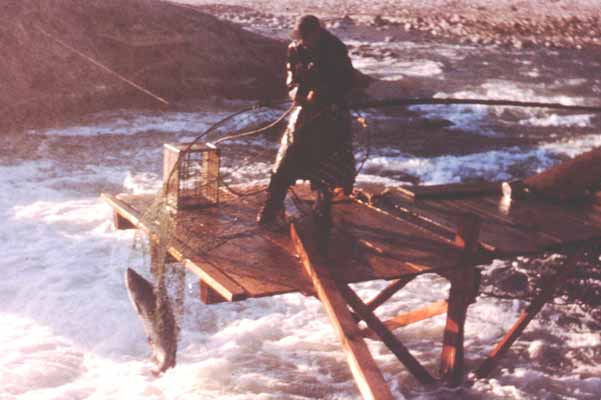
Old unknown photo of a dip-netter.

Old unknown photo of a dip-netter.

Today the Native Americans struggle to maintain their fishing economy. A recent article by Ellen Morris Bishop in the Columbian describes the hapless state of Native American commercial fishing as follows:

In the next month, Indians from Eastern Washington and Oregon will balance on flimsy platforms above the river’s current and plunge nets into the rolling green water. Others will challenge the Columbia in battered Boston Whaler boats, setting out gill nets in gathering darkness and harvesting their catch at dawn. They fish at sites their ancestors used, sites registered with the tribe, sacred ground.

(Bishop, August 27, 1998)
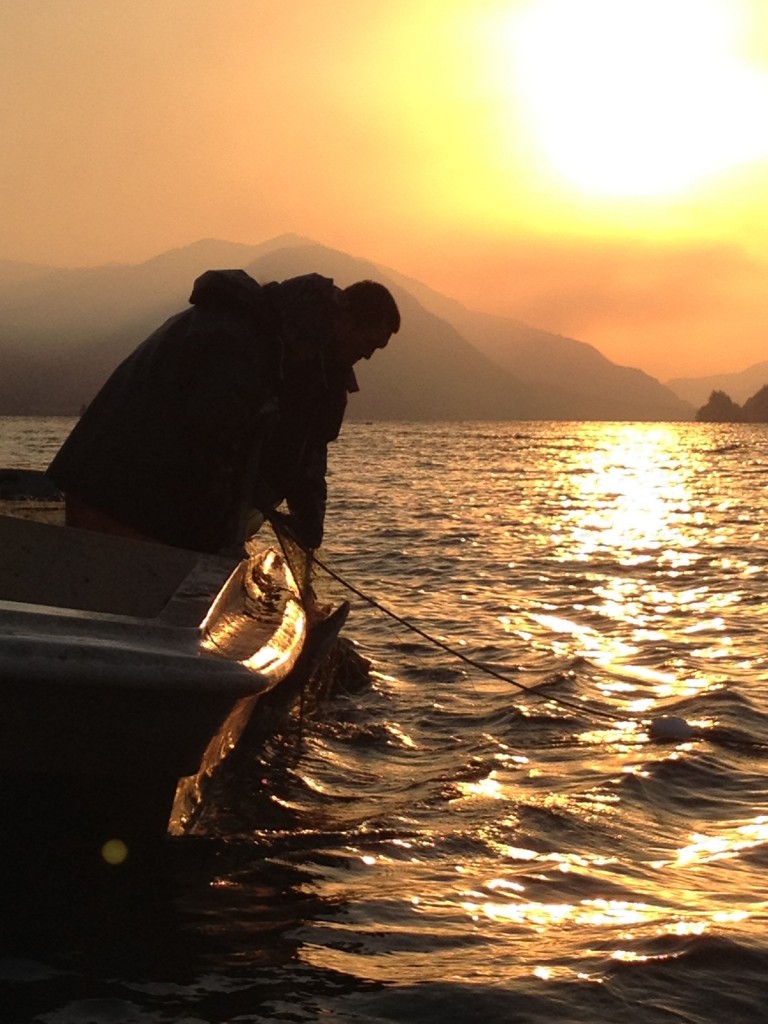
Les Brown photo. ©2012

Les Brown photo. ©2012

A decade ago there were nearly 1,100 native fishermen, while today they number fewer than 500. This year, in accordance with Native American treaty rights to half of all fish allocated for commercial harvest, the Upper Columbia River tribes are allowed to catch a total of 51,534 fall chinook and 16,720 steel head. It is anticipated that 2,400 will be wild steel head, but most of the fish will be from hatcheries. This year’s catch is up from last year’s 40,200 but far less than the 79,000 Indians caught commercially in 1990.

According to a 1995 article by Allen Thomas in the Columbian, in an effort to replace tribal fishing grounds flooded during construction of the Bonneville Dam, the U.S. Army Corps of Engineers planned to build and improve Native American fishing sites. The multiple sites along the Columbia and Snake River were planned to include parking lots, foot docks, camping sites, showers/restrooms, lighting systems, sewer and water systems, and fish cleaning stations. (Thomas, October 13, 1995)

It seems that the government is attempting to repair some of the damage done to the Native American fishing economy, but unfortunately much has already been lost. The Culture, tradition, and way of life of the tribes in the Columbia River Basin will never be the same as they were before the construction of the Bonneville Dam.
Bridge of the Gods

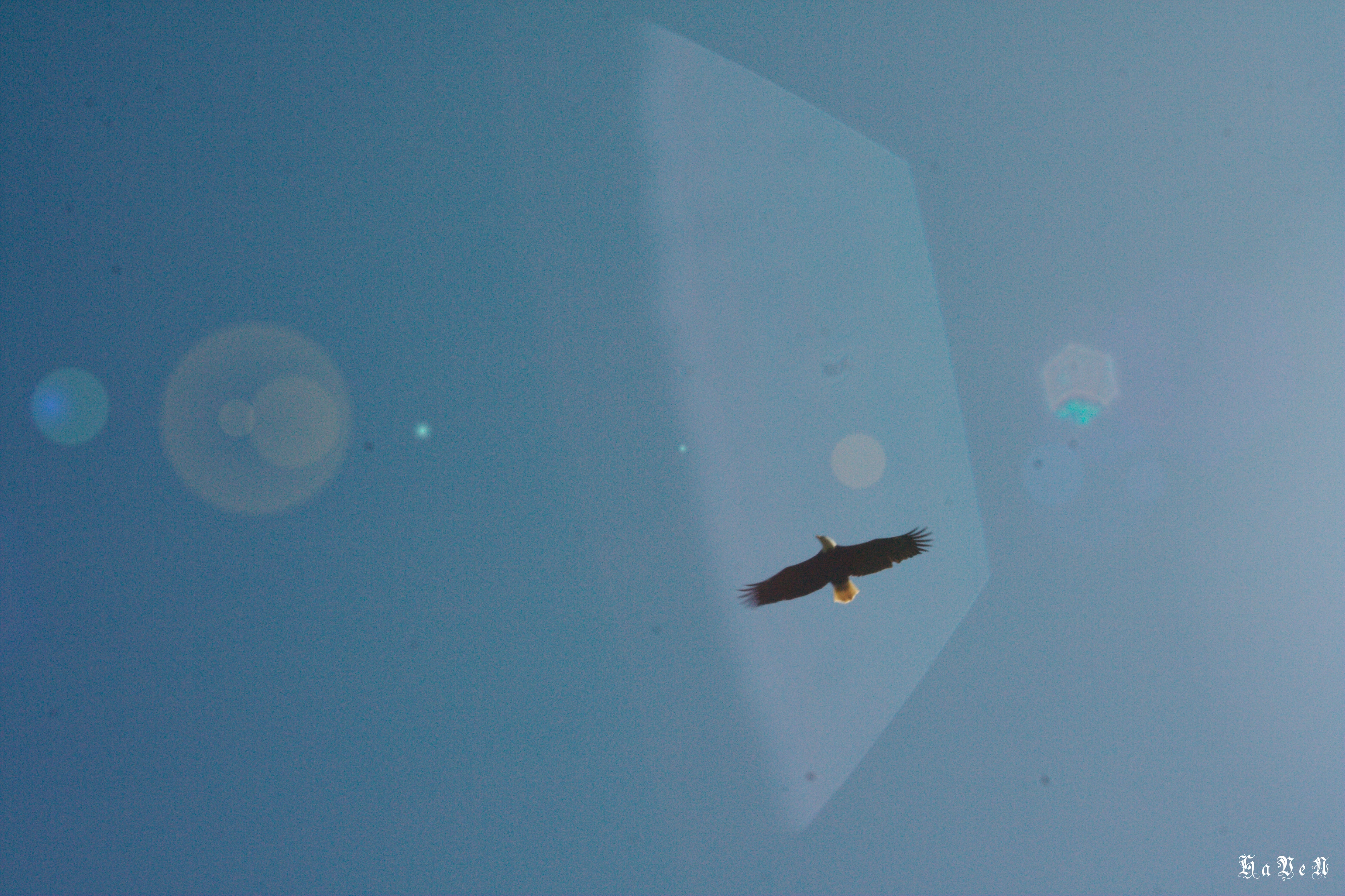
In the days of the animal people, a great bird lived in the land of the setting sun. It was Thunderbird. All of the animal people were afraid of it. Thunderbird created five high mountains and then said to the animal people, “I made a law that no one is to pass over these five high mountains. If any one does, I will kill him. No one is to come where I live.” Wolf did not believe the law. “I will go,” declared Wolf. “I will be the first to see what Thunderbird will do to me.” “I will go with you,” said Wolf’s four brothers.

Pahtoe.

Pahtoe.

So the five Wolf brothers went to the first mountain. They stood in a row, and each stepped with his right foot at the same time. Immediately the five wolf brothers were dead. When the animal people heard that the five Wolf brothers were dead, Grizzly Bear, the strongest of the animals, decided that he would go. “I will cross over the mountains,” announced Grizzly Bear. “I will not die as the Wolf Brothers have died.” “We will go with you,” said Grizzly Bear’s four brothers. So the five Grizzly Bear brothers went to the first mountain. They stood in a row, and each stepped with his right foot, all at the same time. Then each stepped with his left foot, all at the same time. Immediately the five Grizzly Bears were dead. “I will go now,” said Cougar. “I will take a long step and leap over the mountain.” Cougar’s four brothers went with him. They made one leap together, and then all were dead. “We will go next,” said the five Beaver brothers. “We will go under the mountain. We will not be killed. We will not be like the Wolf brothers, the Grizzly brothers, and the Cougar brothers.” But as they tried to cross under the mountains, all five Beaver brothers were killed. Then Coyote’s oldest son said, “I will talk to the mountains. I will break down the law so that people may live and pass to the sunset.” His four brothers went with him, and two of them talked to the five mountains. They made the mountains move up and down; they made the mountains dance and shake. But the five sons of Coyote were killed. The five mountains still stood. No one could pass over or under them to the sunset. Coyote’s sons had not told their father their plans. He had told them that they must never stay away from home overnight. When they did not return, he knew that they had been killed by Thunderbird. Coyote was wiser than the others. He had been instructed in wisdom by the Spirit Chief. After his sons had been gone five nights, Coyote was sure that they were dead. He cried loud and long. He went to a lonely place in the mountains and rolled on the ground, wailing and howling with grief. Then he prayed to the Spirit Chief for strength to bring his five sons back to life. After Coyote had cried and prayed for a long time, he heard a voice. “You cannot break the law of the Thunderbird. You cannot go over the five mountains. Thunderbird has made the law.”

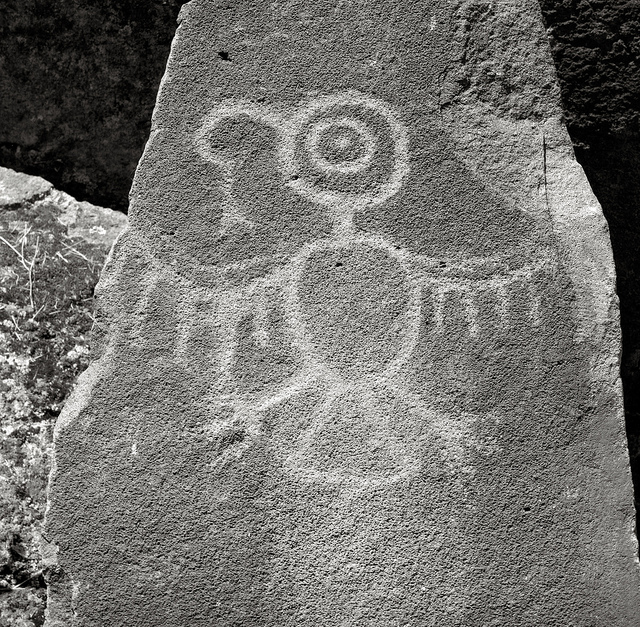
Thunderbird Petroglyph, Horse thief lake, OR.

Thunderbird Petroglyph, Horse thief lake, WA.

Coyote continued crying and praying, rolling on the ground in a lonely place in the mountains. After a time he heard the voice again. “The only thing you can do is to go up to the Above-World. It will take you five days and five nights. There you will be told how you can bring your five sons to life again.” So for five days and five nights Coyote traveled to the Above- World. There he told his troubles to the Spirit Chief. “Give me strength,” he ended. “Give me so much strength that I can fight Thunderbird. Then the people can cross over the mountains to the sunset.” At last the Spirit Chief promised to help. “I will blind the eyes of Thunderbird,” he promised. “Then you can go over the five mountains and kill him. “I will tell you what you must do,” continued the Spirit Chief. “When you get back to the earth, find the big bird called Eagle. He has great strength. Ask him for a feather from his youngest son. Ask for a feather, a small feather from under his wing. This feather is downy and has great strength. It has power running out from the heart because it grows near the heart. Return now to the earth.” After five days and five nights, Coyote reached the earth again. He found Eagle and told him all that the Great Spirit had said. Then he asked, “Will you give me the feather that grows nearest the heart of your youngest son?”

©2013 H a v e n

©2013 H a v e n

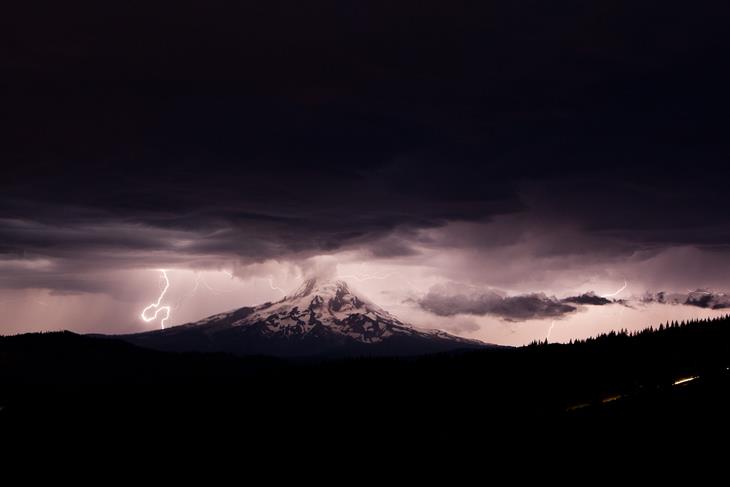
hood and thor

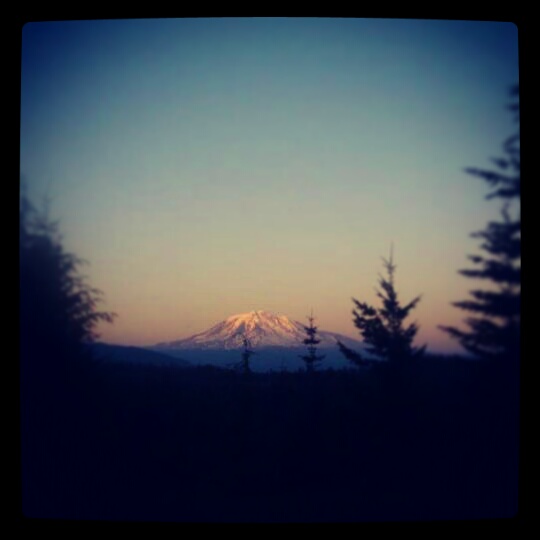
Wy’east. Photo by unknown.

“I will do as the Spirit Chief bids,” replied Eagle. “If he told you to come to me, then I will give you my power to fight Thunderbird.” “Fast for ten days and ten nights,” he had said. “If you will go without food and drink for ten days and nights, you will be changed to a feather. You will then be able to go anywhere.” So Coyote fasted. After ten days and ten nights, he was turned into a feather, like the one Eagle had given him. He floated through the air toward the five mountains. At a distance from them, he made a noise like thunder, as the Spirit Chief had told him to do. Three times he made a slow, deep rumbling, off toward the sunrise. Thunderbird heard the rumble and asked, “Who is making this noise? I alone was given the power to make that rumbling sound. This noise must be coming from the Above-World. I am dead! I am dead! I am dead!” A fourth time Coyote rumbled, this time closer to Thunderbird. Thunderbird became angry. “I will kill whomever this is that is making the noise. I will kill him! I will kill him!” he repeated angrily. Thunderbird made a mighty noise, a greater thunder than Coyote had made. Coyote, in the form of a feather, went into the air, higher and higher and ever higher. He darted and whirled, but could not be seen. Thunderbird was afraid. He knew that if a fifth rumble of thunder came he would be dead. He sought the deep water of Great River, to hide himself there. He heard Coyote far above him. Coyote prayed to the Spirit Chief. “Help me one more time, just one more time. Help me kill Thunderbird so that the people may live, so that my sons will come to life again.”

Old Bridge of the Gods drawing by unknown.

Old Bridge of the Gods drawing by Jimmie James in 1963, drawing made with charcoal dug up near the old site.

The Spirit Chief heard Coyote and helped him. Thunderbird sank deeper into the water, terrified. Coyote, still invisible above him, made a greater noise than ever, a noise like the bursting of the world. The five mountains crumbled and fell. Pieces of the mountain, floating down the Great River, formed islands along its course. Thunderbird died, and his giant body formed a great bridge above the river. The five sons of Coyote and all the other animal people who had been killed by Thunderbird came back to life. Though many hundreds of snows had passed, the great bridge formed from the rocks that had been made out of Thunderbird’s body still stood above the river. It was there long after the first Indians came to the earth.

The modern day Bridge of the Gods, connecting Oregon and Washington.

The modern day Bridge of the Gods, connecting Oregon and Washington.

The Indians always called it “the Bridge of the Gods.” No one must look at the rocks of the bridge. People knew that some day it would fall. They must not anger the Spirit Chief by looking at it, their wise men told them. The Klickitat Indians had a different law. Only a few men necessary to paddle the canoes would pass under the bridge. All the others would land when they approached the Bridge of the Gods, walk around to the opposite side of it, and there reenter the canoes. The oarsmen always bade their friends good-bye, fearing that the bridge would fall while they were passing under it. After many snows, no one knows how many, the prophecy of the wise men came true. The Bridge of the Gods fell. The rocks that had once been the body of Thunderbird formed the rapids in the river that were long known as Cascades of the Columbia.

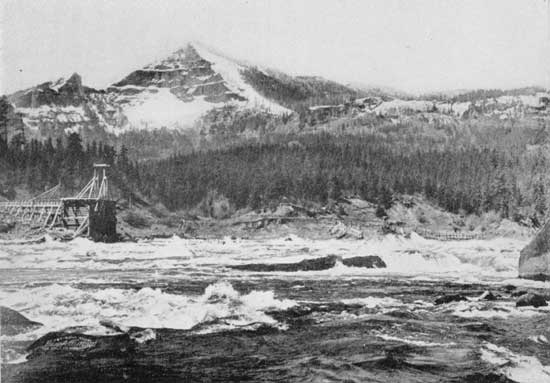
Cascade Rapids

Cascade Rapids