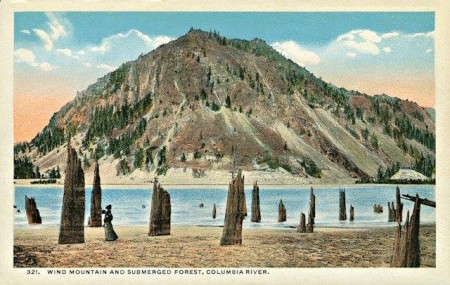
Up until the completion of Bonneville Dam in 1938, a ghostly white forest of drowned tree stumps could be observed along both sides of the Columbia River between Cascade Locks and The Dalles. The submerged forest was first mentioned in a geologic textbook in 1853, in “Principles of Geology” by Sir Charles Lyell
“Thus Captains Clark and Lewis found, about the year 1807 (sic), a forest of pines standing erect under water in the body of the Columbia RIver, which they supposed, from the appearance of the trees, to have been submerged only about twenty years.”
Both Lewis and Clark in 1805 and Captain Fremont in 1845 recognized that the trees were drowned by the formation of a lake behind a 200-foot landslide dam.
Penny Postcard, ca.1920s, “Wind Mountain and Submerged Forest, Columbia River”.
Possibly triggered by an earthquake, the dam material slid down from the cliffs of Table Mountain and Greenleaf Peak at a time later determined to be between 1260 and 1290 A.D. The stumps were described in detail by Minnesota biologists Donald B. and Elizabeth G. Lawrence in a series of definitive papers in 1935, 1937, 1937, and 1958. The Lawrences were the first to date the time of the landslide, by caron 14 analyses, as having occurred 700 years before. As of 1936, the Lawrence’s counted 3,068 stumps on the south side of the river, and 938 on the north side of the river. The maximum concentration of stumps on the south side occurs just above the mouth of Viento Creek, where more than 800 stumps were counted within a small area.
In the corners of the garden, I can see words caught in the geometry of webs that bob and dance in the breeze. I feel the sunflowers ushering poems through the labored
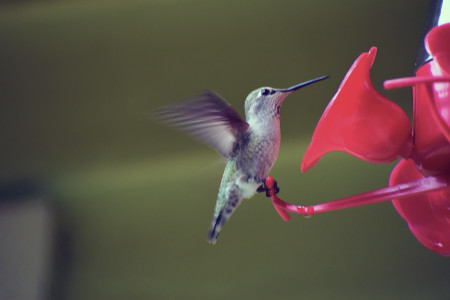
Humming Bird keeping time to the biology of existence.
bow of growing as they stretch towards the sun. It seems I have forgotten this language, perhaps the taste of regret is to bitter for the tongue. Or perhaps the words were never mine to begin with, all dressed in others hopes and wishes. Who am I without these wayward tricksters? Who am I without these invasive fears? Who am I without these walls of identity?
“Invasive plants were like all evil things; the only way to ensure that they wouldn’t return was to face them head-on, battle it out, and win. Anything else was only a temporary fix. I sighed, thinking of my own life. I was letting the weeds grow all over me. They were threatening my happiness and, in some ways, my life. So why couldn’t I face them?”
― Sarah Jio
I seem to keep courage in a box, only reaching for it when life is set a blaze. My day to day has been ran over by fear, a crippling fear that eats and gnaws at my insides. Like brambles who bribe me with their berries, I allow this fear to grow until I am unable to move at all. I lose relationships to this. I lose myself to this. The garden is teaching me courage of everyday life. And in these times, everyday life is getting increasingly darker, so the practice is appreciated.
The curve around a domed landscape harkens an era of black smoke and tar. Roads and the gorge became intwined in a historical knot of progress and expansion. Along with the trailblazing of the railroad, the fuel dependent pathways would change the course of what it meant to transport goods and culture. As the pace quickened along its shores, the river seemed to halt and stall behind pale dams hungry for a dragon named energy.
The very base of this mountain holds vigil, and reminds the River how it use to sing, and the mingle of wind holds time with the sun.
The persistence of strength and hard work, just to live, and to function each day. When the flowers bloomed, and the rains subsided, you noticed.. and, you smiled.
Moore/Nelson Flume near Stevenson, WA., early 1900′s.
Work, and joy, were words that one spoke in the same sentence, or at least that is what this photo conveys to me. This photo brings a smile across my face, and when I close my eyes and breath in, I swear I can smell the fresh spring rains.
The constant sounds of falling water and rustling winds make up much of the landscape of the Gorge.
Dog Creek Falls, Washington
The warm Pacific ‘Chinook Winds’ dropping their rains against the cold easterly draft of the Plains. I love being in that cold nip of winter, everything is bright and chill. I get lost in the language of falling water, often watching the afternoons fade into the waining of dusk. There is a vortex here, that makes time stand still.
The salt of time has worn the edges a little thin as the image wains in it’s slow compost. The timeless ghost of the unidentified figure suspended in haunted air. This bridge between the past and now, triggers my own memories, sneaking across forbidden entries, to break to the other side, and bathe in the glory of the Springs. The constant murmur of white waters washing across old stones and the sulphured air, and many generations baptized. I have come to believe that this is where the Gods live.
Two swinging bridges across Wind River. An unidentified person stands on one bridge. Written on the back of photo- “Swinging bridge Shipherd’s Hot Springs.”
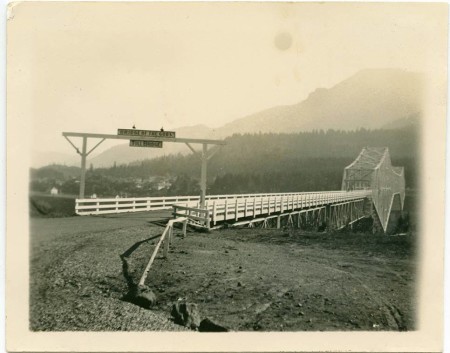
“No one must look at the rocks of the bridge. People knew that some day it would fall. They must not anger the Spirit Chief by looking at it, their wise men told them.
‘Bridge of the Gods’ ca. 1929, photographer unknown.
The Klickitat Indians had a different law. Only a few men necessary to paddle the canoes would pass under the bridge. All the others would land when they approached the Bridge of the Gods, walk around to the opposite side of it, and there reenter the canoes. The oarsmen always bade their friends good-bye, fearing that the bridge would fall while they were passing under it. After many snows, no one knows how many, the prophecy of the wise men came true. The Bridge of the Gods fell. The rocks that had once been the body of Thunderbird formed the rapids in the river that were long known as Cascades of the Columbia.”
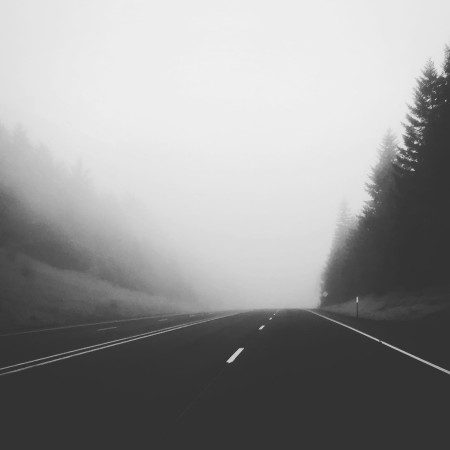
I woke up a bit before the Morning Star and could hear the silence of subfuscus mists hovering upon the hills and valleys. I laid awake, and reminisced about early mornings at Oceti Sakowin Camp in 2016, “Wake up, this is not a vacation!”.. I awaken to broken silence, echoing off old canyons, where trees fold time in the roots of soggy soil, I ponder my dreams.
Taowhywee, Morning Star
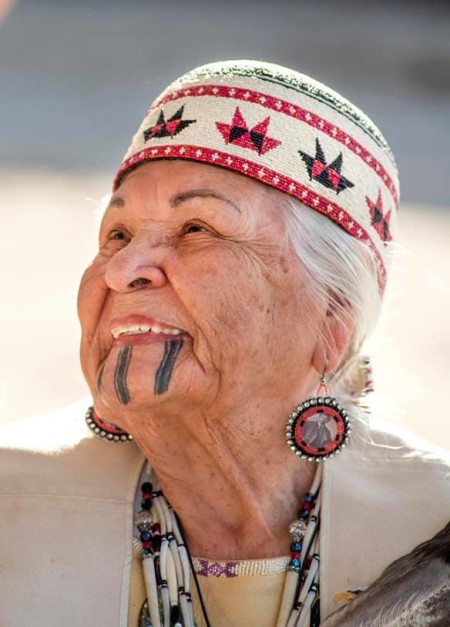
Today, I am off to say goodbye to an Elder, Grandma Aggie. I never met this holy Elder in the flesh, but her calling and life, resonated hard in my bones. When she talked about the sacred water, I could hear Wyam (Celilo Falls) pumping from my heart, and the sacred River flowing through my veins. Grandma Aggie felt so familier to me. The smell of Salmon and cedar smoke over open fires waifs from her voice. Grandma Aggie could be my own Grandmother, which, is not a new feeling for us Indians. It is an intrinsic part of our DNA, an intrinsic part of our Story.
My partner awakes to make some coffee and prepare herself for the journey. She knew Grandma Aggie personally, and looked up to her as a fellow Grandmother herself, learning to walk into Elder-hood. I watch her braid her hair with stories of Grandma, and what she meant to her. About her regrets of not staying in touch more, but holding the sacred memory close, she releases a single tear. I prepare the car for our journey to the Siletz Reservation, where we will lay Grandmother’s bones along side her relatives. As I am walking to the car, I hear my own Grandmothers voice in my head, and look up to greet the horizon. The young morning star obscured in fog seems so enchanted and calm. A deep breath overtakes me as I greet the day. I pray, remembering.
{Listen to my Grandmother, Shirley Amos, talking about finding our place in the sun.}
Our drive meanders through the Oregon Coast Range. The mists ebb and flow like the Ocean waves crashing against the shores of broken trees.
My partner tells me the story of how Grandma Aggie’s People were relocated to this wet fortress from the dry tinder Rouge Valley of Southern Oregon, which was known as “Oregons own trail of tears”. A story all Indigenous people share. A story of displacement from place and belonging. A story that is passed from one hand to the next, drenched in tears and whiskey. It is hard for us Indians to trust our strengths, and as I sit and listen to the Stories Grandma Aggie’s family tell, I know I am not alone.
Just as our stories are heartbreaking and traumatic, they are also laced in resilience and joy. There is a deep belonging to Place that fuels an inner fire no colonial power can kill, and no god can enslave. Yet, the scars are deep and seeping, and our Mother is in danger. We must find our place in the Sun, and rise above for the future generations. Thank you Grandma Aggie for the reminders, and the Stories.
The smells mingled in a frenzy of excitement, swaying with the brisk winds, carrying laughter and conversations into the chilly August night.
1954 Skamania County Fair: unknown photographer.
The whole county would seem to come alive and vibrate with a new frequency, communing over corned cob and Volunteer Fire Dept. hamburgers. It was our time to shine.