Chinook – Coyote

Coyote was coming. He came to Gôt’a't. There he met a heavy surf. He was afraid that he might be drifted away and went up to the spruce trees. He stayed there a long time. Then he took some sand and threw it upon that surf: “This shall be a prairie and no surf. The future generations shall walk on this prairie.” Thus Clatsop became a prairie. The surf became a prairie.
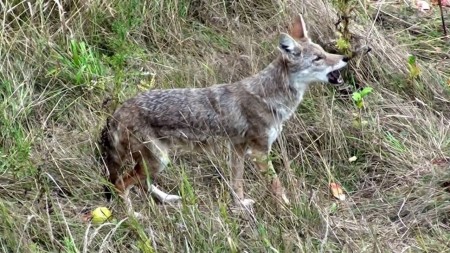
coyoteAt Niâ’xaqcê a creek originated. He went and built a house at Niâ’xaqcê. He went out and stayed at the month of Niâ’xaqcê. Then he speared two silver-side salmon, a steel-head salmon, and a fall salmon. Then he threw the salmon and the fall salmon away, saying: “This creek is too small. I do not like to see here salmon and fall salmon. It shall be a bad omen when a fall salmon is killed here; somebody shall die; also when a salmon is killed. When a female salmon or fall salmon is killed a woman shall die; when a male is killed a man shall die.” Now he carried only the silver-side salmon to his house. When he arrived there he cut it at once, steamed it and ate it. On the next day he took his harpoon and went again to the mouth of Niâ’xaqcê. He did not see anything, and the flood tide set in. He went home. On the next day he went again and did not see anything. Then he became angry and went home. He defecated and said to his excrements: “Why have these silver-side salmon disappeared?” “Oh, you with your bandy legs, you have no sense. When the first silver-side salmon is killed it must not be cut. It must be split along its back and roasted. It must not be steamed. Only when they go up river then they may be steamed.” Coyote went home. On the next day he went again and speared three. He went home and made three spits. He roasted each salmon on a spit. He had three salmon and three spits. On the next day he went again and stood at the month of the creek. He did not see anything until the flood tide set in. Then he became angry and went home. He defecated. He spoke and asked his excrements: “Why have these silver-side salmon disappeared?” His excrements said to him: “I told you, you with your bandy legs, when the first silver-side salmon are killed spits must be made, one for the head, one for the back, one for the roe, one for the body. The gills must be burnt.” “Yes,” said
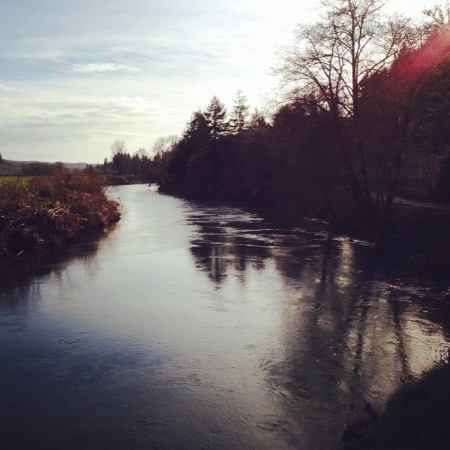
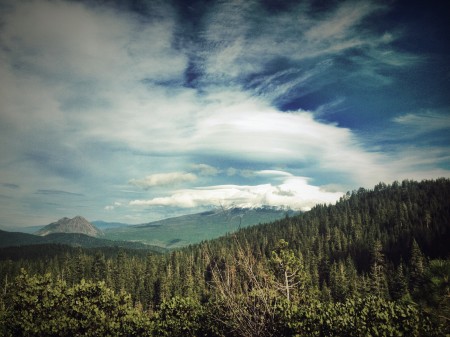
Grays River, WA.

Grays River, WA.

Coyote. On the next day he went again. He killed again three silver-side salmon. When he arrived at home he cut them all and made many spits. He roasted them all separately. The spits of the breast, body, head, back, and roe were at separate places. Coyote, roasted them. On the next morning he went again. He speared ten silver-side salmon. Coyote, was very glad. He came home and split part of the fish. The other part he left and went to sleep. On the next morning he roasted the rest. Then he went again and stood at the mouth of the river. He did not see anything before the flood tide set in. He went home. On the next morning he went again, but again he did not see anything. He went home angry. He defecated and asked his excrements: “Why have these silver-side salmon disappeared?” His excrements scolded him: “When the first silver-side salmon are killed, they are not left raw. All must be roasted. When many are caught, they must all be roasted before you go to sleep.” On the next morning Coyote went and stood at the mouth of the river. He speared ten. Then he made many double spits, and remained awake until all were roasted that he had caught. Now he had learned all that is forbidden in regard to silver-side salmon when they arrive first at Niâ’xaqcê. He remained there and said: “The Indians shall always do as I had to do. If a man who prepares corpses eats a silver-side salmon, they shall disappear at once. If a murderer eats silver-side salmon, they shall at once disappear. They shall also disappear when a girl who has just reached maturity or when a menstruating woman eats them. Even I got tired.”
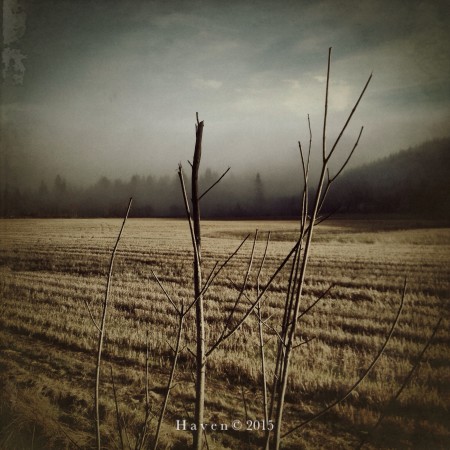
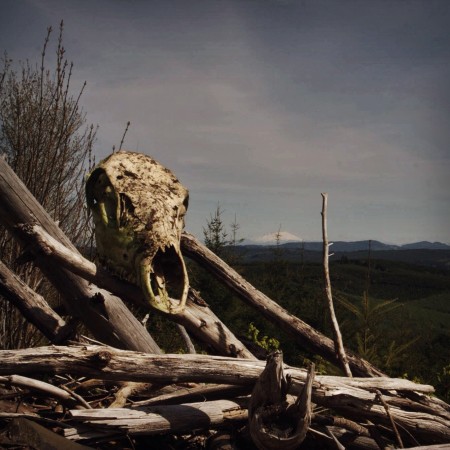
Willapa Hills, WA.

Willapa Hills, WA.

Now he came this way. At some distance he met a number of women who were digging roots. He asked them: “What are you doing?” “We are digging gamass.” “How can you dig gamass at Clatsop? You shall dig [a root, species?] and thistle [?] roots in this country. No gamass will be dug here.” Now they gathered [a root, species?] and thistle [?] roots. He left these women and spoiled that land. He transformed the gamass into small onions.

Then he came to Clatsop. It was the spring of the year. Then he met his younger brother the snake. He said to him: “Let us make nets.” The snake replied: “As you wish.” Now they bought material for twine, and paid the frog and the newt to spin it. Now Coyote cleaned all the material for twine while the snake was crawling about. Then the frog and the newt spun it. Then Coyote said to his younger brother: “Clean it, clean it. You crawl about all day.” Thus he spoke to the snake. Coyote continued: “You shall make one side of the net, I make the other.” Coyote finished his twine and said to the snake: “Quick! quick! you let me wait. Make your net.” The snake replied: “You let me wait.” Thus he spoke to Coyote. Now, Coyote made his net. He finished it all. The two women made the ropes, Coyote made the net buoys; while the snake crawled about. Coyote said: “Make your net buoys; you let me wait.” Thus he said to the snake. The snake replied: “Make haste! you let me wait.” Coyote finished his net buoys. Then he went to look for stones, and the snake accompanied him. They went for stones to Tongue point. The snake crawled about among the stones, while Coyote carried them down. They went home. After they reached home Coyote went to gather spruce roots. The snake accompanied him. Coyote dug, up the ground and the snake crawled about at the same place. They went home. Coyote split the spruce roots. “Go on; work,” he spoke to the snake; “you let me wait.” The snake replied: “Quick, quick; work! you let me wait.” Now Coyote tied his net to the buoys and laid it down flat on a large mat. Then he tied it to the buoys. The snake crawled about at the same place. Coyote finished his net and hung it up outside. Early the next morning he stepped out of the house, and there hung already the net of the snake. “Oh, brother,” he said, “you got the better of me.” Coyote was ashamed. The snake had won over him. Coyote said: “When a person makes a net, he shall get tired before he finishes it. It would not be well if he would not get tired.” The snake said to him: “I told you that you would let me wait.”
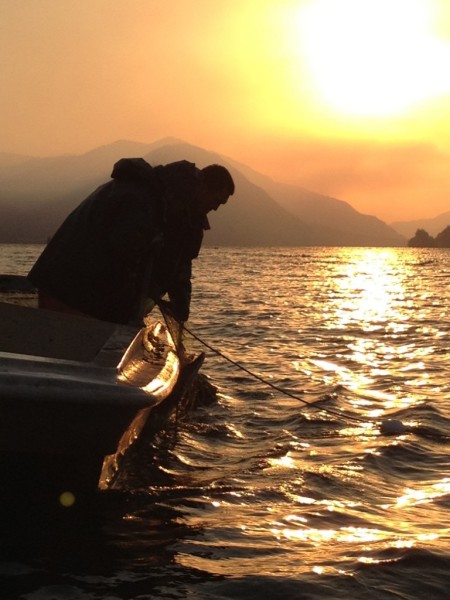
Les Brown photo. ©2012

Les Brown photo. ©2012

It got day. Then they went to catch salmon in their net. They laid the net and caught two in it. Coyote jumped over the net. Now they intended to catch more salmon, but the flood-tide set in. They had caught only two before the flood-tide set in. Now they went home. Coyote said that he was hungry, and he split the salmon at once. They roasted them. When they were done they ate. The frog and the newt were their cousins. The next morning they went fishing with their net. The newt looked after the rope, the snake stood at the upper end of the net, Coyote at the lower end. They intended to catch salmon, but they did not get anything until the flood-tide set in. They went home. Coyote was angry. He defecated and spoke to his excrements: “You are a liar.” They said to him: “You with your bandy- legs. When people kill a salmon they do not jump over the net. You must not step over your net. When the first salmon are killed, they are not cut until the afternoon.” “Oh,” said Coyote, “You told me enough.” On the next morning they went fishing. When they had killed a salmon they did not jump over the net. They laid their net twice. Enough salmon were in the net. Then he ordered the newt: “Bail out the canoe, it is full of water.” She bailed it out. Then they intended to fish again, but the flood-tide set in. They went home and put down what they had caught in the house. In the afternoon Coyote split the salmon. He split them in the same way as the silver-side salmon. He placed the head, the back, the body, and the roe in separate places and on separate double spits. They were done. The next morning they went fishing. They did not kill anything. Coyote became angry and defecated. He said to his excrements: “Tell me, why have these salmon disappeared?” His excrements scolded him: “Do you think their taboo is the same as that of the silver-side salmon? It is different. When you go fishing salmon and they go into your net., you may lay it three times. No more salmon will go into it. It is enough then. Never bail out your canoe. When you come home and cut the salmon, you must split it at the sides and roast belly and back on separate double spits. Then put four sticks vertically into the ground [so that they form a square] and lay two horizontal sticks across them. On top of this frame place the back with the head and the tail attached to it.” He said to his excrements: “You told me enough.” On the next morning they went fishing and killed three salmon. They did not bail out their canoe. Then he said to the newt: “Fetch a stick from the woods. We will make a club.” She went and brought a stick. Then they laid their net again. Again a salmon was in it and he killed it with his club. They intended to continue fishing, but the flood-tide set in. They killed four only. They put down their salmon. In the afternoon Coyote cut them and put four sticks into the ground. Now he did as his excrements had told him. When they were done he broke the backbone at once. On the next morning they went fishing. They did not kill anything before the flood-tide set in. They went home. Coyote was angry and defecated. “Why have these salmon disappeared?” he asked his excrements. “I told you,” they said to Coyote; “do you think their taboo is the same as that of the silver-side salmon? It is different. When you kill a salmon you must never strike it with a stick. When they may be boiled, then you may strike them with a stick. When it is almost autumn you may strike them with a stick. Do not break a salmon’s backbone when they just begin to come. When you have killed a salmon take sand, strew it on its eye, and press it with your fist. Do not club it.” Coyote said: “You have told me enough.” On the next morning they went fishing. Salmon went into the net; three went into the net immediately. He strewed sand on each and pressed each. He killed many salmon. They went home and roasted them. When they were done he distributed them among the people of the town above Clatsop. Now they dried them. On the next morning they went fishing. They tried to fish but did not catch anything before the flood-tide set in. They went home. Coyote was angry. He defecated: “Why have these salmon disappeared?” “I told you. you lean one, with your bandy-legs. There are many taboos relating to the salmon. When you have killed many salmon you must never carry them outside the house. You must roast and eat them at the same place. When part is left they must stay it the same place. When you want to dry them you must do so when the flood-tide sets in on the day after you have caught them.” He said to them: “You have told me enough.” On the next morning they went fishing again. They killed many salmon. They roasted them all. When they were done he invited the people. The newt was sent out. They came to eat in Coyote’s house. They finished eating. Then they left there what they had not eaten. Now it was low water in the morning. They went out early to lay their net, but they did not catch anything. They fished until the flood-tide set in. They did not kill anything. They were unsuccessful. Twice they tried to go fishing early in the morning, but they were unsuccessful; they did not catch anything. Coyote defecated and said to his excrements: “Why have the salmon disappeared?” Coyote received the answer: “I told you, you lean one, that the salmon has many taboos. When you go fishing and it is ebb-tide early in the morning, you must not lay your net before sunrise. The salmon must not be carried outside until a crow takes one and carries it outside. Then it must be distributed raw. No fire must be made until daylight; the breast must not be eaten before the next day. When salmon are roasted at a tire and they are done, water must be poured into the fire.” He said to his excrements: “You have told me enough. The Indians shall always do this way. Thus shall be the taboos for all generations of Indians. Even I got tired.”
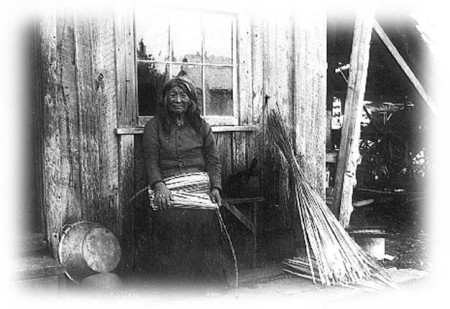
Jennie Michel, descendant of the Clatsop Tribe. Ca. 1900

Jennie Michel, descendant of the Clatsop Tribe. Ca. 1900

Thus spoke Coyote about the taboos of Clatsop. He said to his cousins: “We will move to the other side.” The newt made herself ready. Then the snake looked at the frog, who was growling. The snake reached her, struck, and killed her.

Now they arrived here on this side. They went fishing and killed salmon. He did the same way as in Clatsop. He strewed sand on the eye of that salmon. He pressed its eye. Then they intended to fish again, but they did not kill anything. They went home. On the following morning they went again fishing, but they did not kill anything On the next morning they went fishing again, but they did not kill anything. Coyote scolded. He defecated: “Why have these salmon disappeared?” “Oh, you foolish Coyote. When you kill a salmon you must kick it. Do you think it is the same here as at Clatsop?” “Oh, said Coyote. On the next morning they went fishing again. They laid their net and caught two salmon. They laid their net again and caught three salmon. He threw one ashore. It fell down head first so that the mouth struck the sand. They tried to lay their net again but they did not kill anything. They tried to fish until the flood tide set in. They had not killed anything. They had caught five only. They went home. In the evening Coyote cut the salmon and roasted them. They were done. The following morning they went fishing, but did not kill anything. Coyote scolded. He defecated: “Why have these salmon disappeared?” “Oh, you foolish Coyote. Do you think it is the same here as at Clatsop? Do not throw salmon ashore so that the head is downward. It is taboo. When you kill a salmon go and pick salmonberries. When you have caught many salmon put salmonberries into the mouth of each.” “Oh, you have told me enough,” he said to his excrements. The next morning they again went fishing. They killed many salmon. He sent the newt to pick salmonberries. The newt brought salmonberries. Now they put those berries into the mouths of those salmon. It got day and they went fishing again. They met fishermen on the water. A short distance down river they laid their net. They laid it several times and went up the river a short distance. They passed the canoes of those fishermen. They laid their net and intended to fish, but they did not kill anything. They were unsuccessful. They went home. Coyote scolded. He defecated: “Why have these salmon disappeared?” “You lean one! When yon kill a salmon, and you have laid your net at one place and you kill one more, you must lay your net at the same place. You must not pass a canoe with fishermen in it. It is taboo.” “Yes,” said Coyote. On the next day they went again fishing. Coyote said: “Even I got tired. The Indians shall always do in the same manner. Murderers, those who prepare corpses, girls who are just mature, menstruating women, widows and widowers shall not eat salmon. Thus shall be the taboos for all generations of people.”

Chinook Texts by Franz Boas. [1894] (U.S. Bureau of American Ethnology Bulletin, no 20.)
Little Crow and the Bear pt. I | A Contemporary Cowlitz Story

Introduction

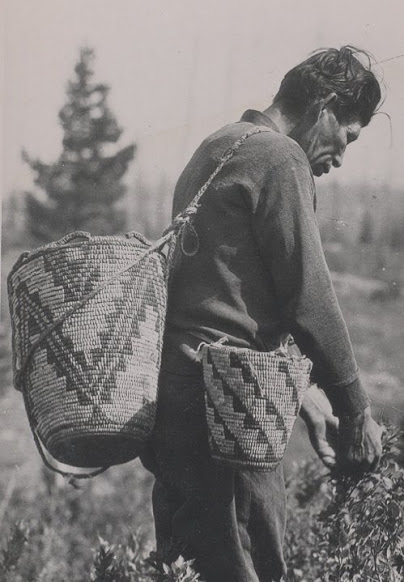
An unidentified Cowlitz man picking wənàyʼx (Huckleberry).

Picking wənàyʼx (Huckleberry).

Since the beginning of time, the sƛpúlmx (Cowlitz old name) People have lived and thrived on the abundance of the land. Fishing the rivers and streams, hunting the prairies and mountains, and picking berries near Lawetlat’la. The sƛpúlmx People came from below, from below the shadows of Volcanoes, where stúqʷpéˑsaʔ (Thunderbird) would summon fire and renewal. This is a small story about a moment in time, a story of change and rebirth.

kʼéˑci skʼàˑkʼa (Little Crow)
Kʼéˑci Skʼàˑkʼa’s (Little Crow)’s Mother had a dream while he laid in her womb, of a boy that was half skʼàˑkʼa (crow), and half séˑɬmʼx (boy). In her dream, Kʼéˑci Skʼàˑkʼa was a storyteller, always telling stories, and talking from his beak. The dreams kept happening while he was growing inside her. She would dream about Kʼéˑci Skʼàˑkʼa learning to fish and hunt, and gather and nurture. She knew he would be a strong spirit, and good to the People. Her last dream, on the night that Kʼéˑci Skʼàˑkʼa was to be born, she dreamt of fire and explosions.

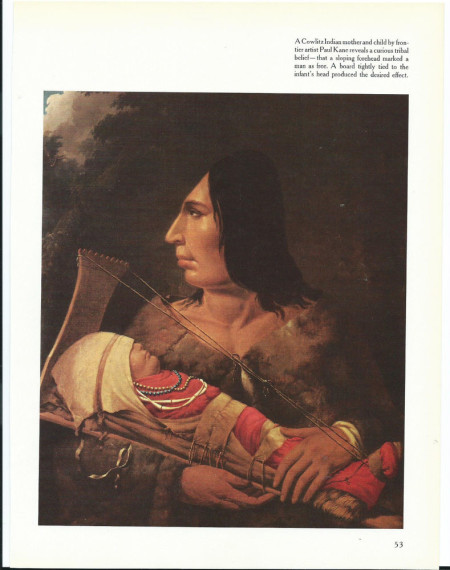
Cowlitz cradle board. Artist: Paul Kane

Cowlitz cradle board. Artist: Paul Kane

Kʼéˑci Skʼàˑkʼa spent the first days of his life in his cakʷiIiɬtnʼ (cradle board), watching his relatives fish, dig for roots, picking berries and singing songs. He watched with a careful eye, taking his world in and listening to the stories. He began talking earlier than most of the others. Words would flow from his lips effortlessly, as if he was born to speak.

One Day, the summer sun reigned down on Kʼéˑci Skʼàˑkʼa and stànawi (his mother),his body still strapped to the cakʷiIiɬtnʼ, bobbing to and fro to the rhythm of work songs, as stànaw picked wənàyʼx (huckleberry). Kʼéˑci Skʼàˑkʼa looked up and saw a big sČə̀txʷnʼ (bear) standing on its hind legs.

“Why, hello sČə̀txʷnʼ, how are the wənàyʼx?” Kʼéˑci Skʼàˑkʼa asked.

The sČə̀txʷnʼ looks at Kʼéˑci Skʼàˑkʼa with a look of bewilderment and curiosity, and then replies.

“Goodness child, you are the first to talk to us since you sxamʼálaxʷ (People) forgot your names? And what is your name my child?”

”Kʼéˑci Skʼàˑkʼa!”

The Cowlitz Nation

The Cowlitz Nation

The child snaps, startling stànawi, bringing her a grin across her ageless face. The sČə̀txʷnʼ, startled as well, ducks behind a wənàyʼx bush, and then peeps up to make eye contact with the child again, and softly whispers,

“Quiet now my child, we need not startle the other sxamʼálaxʷ, for they do not understand our ways of seeing. I must go now, but when you are older, we shall meet again.”

As the sČə̀txʷnʼ turned to walk away, the boy whispers,

“see you later old friend.”

Many moons passed and Kʼéˑci Skʼàˑkʼa was growing into a strong capable man, but many did not want to hunt with him, because he would talk all the time about the animals, and the stories they held. His uncles would snap,

“Kʼéˑci Skʼàˑkʼa, if you hunted as much as you talked, none of us would ever have a lean winter!”

Despite all this, many saw great things in the boy, and the elders would teach him good stories. Stories of nəkʼálʼus (Coyote) and how he brought the cʼáwɬ (Chinook Salmon) to feed the sxamʼálaxʷ. Stories of the wah-tee-tas (the little people) and Skookum. Stories on how stúqʷpéˑsaʔ (Thunderbird) made the Volcanoes, and how they take long sleeps in their craters. While Kʼéˑci Skʼàˑkʼa listened, he would daydream of all the things that use to be, and all the things that were to come.

To be continued…

(Author’s note: This is a story that came to me in a dream awhile ago. I decided to write it out and share. I am currently (2018) going to school at the Northwest Indian College, Nisqually campus, studying for my MFA (Masters of Fine Arts). I am in a class called “Language of the Ancestors”, I wrote this as a paper using the Cowlitz language as much as possible. I currently do not know how to speak these words, but I am learning, and one day hope to share this story orally, pronunciation and all.)

© All Rights Reserved | Justin “Si’Matta | Gathering the Stories | Reproduction or distribution to the public requires express written permission of the author.

These Mountains Have Teeth

These mountains have teeth, talking in ash and earthquake, and then silent. Lore spews forth from their huckleberry fields, seasonal rounds of medicines and comfort. Grandmothers teach old ways, the basket and weaver of stories. I feel the tinge of spirit run my spine like porcupine, goosebumps raised

Cowlitz cradle board. Artist: Paul Kane

Cowlitz cradle board. Artist: Paul Kane

with the visions of Wah-Tee-Tahs, small in the mirror of the winds. Skookums, in shadow, wait to raise the child to elder. On the banks, waiting for Salmon, Coyote plays a silly game, and gives life back to the hungry, and the lost.

A Journey

The first thing I saw was Crow. It was almost as if I was looking through a camera, and Crow put his face right up to the lens. He put his eyeball up to the lens, and then his beak, then his whole face, and then he vanished.
The next thing I saw was an enormous, gorgeous, perfect rose, free floating in mid-air. It was very dark pink, almost red, and then it became a lush, deep, dark red. It had petals like a peony, but it was a rose. The rose became larger and larger, and as it grew, it opened to reveal a velvety center of infinite petals.

I was on the edge of a forest. Eagle appeared, in a fierce emanation. I got onto his back.

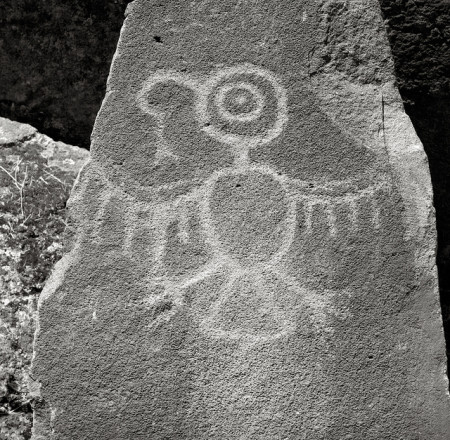
Thunderbird Petroglyph, Horse thief lake, OR.

Thunderbird Petroglyph, Horse thief lake, OR.


Then he and I climbed into the rose and were immediately transported up into the sky on a strong current of wind. Raccoon came running up behind us, and at the last minute grabbed onto the rose and came flying with us. Crow flew up beside us and flew along, by our side. As we climbed high into the sky, I looked down and saw two dead animals at the forest’s edge; a doe and a kit fox. I could see smoke coming from the treetops and I realized there must be a forest fire. It appeared that the doe and the kit fox had possibly died of smoke inhalation.
We were scaling a mountainside. There was a cliff jutting out, way above us. It was above the cloud line. We went through the layer of clouds, very swiftly, and landed on the edge of the cliff. Grandmother Rose was there. She had been waiting for us. There was also a leathery old medicine man. He was half man and half crow, and he called himself Crow Dancer. He had a man’s head and was wearing a crow feather hood with a crow beak. He had crow wings, and he wore a fringed elk hide robe. Rose had been preparing for this retrieval.
First, she pulled out a wonderful medicine blanket that she made for as a gift. It was very long, and when she unfurled it, the length of it tumbled over the cliff for many yards. As she began to gather it back up into a neat roll, she smiled lovingly. She had spent many moons making this blanket, and each stitch contained a prayer. This blanket had very powerful protective medicine. She placed the rolled-up medicine blanket into the saddlebag on the Eagle. Then she handed me a magic compass. The compass was made entirely of quartz crystal. She showed me precisely how to use it for navigation. The face of the compass was completely blank, empty of all markings. It had a clear crystal face, with a quartz crystal needle. The compass would guide us on our journey. Finally, she handed me a key, carved out of jade. I placed the key in my medicine pouch. Crow Dancer danced around and flapped his wings and stomped his feet and made a blessing for the journey, and we were off again.
As soon as we started flying, we were joined by a magnificent phoenix. It came swooping from around the back of the mountain, began flying beside us, and then quickly pulled out in front of us and began to lead the way. We flew downward now, like bullets, and plunged into the ocean with incredible force and speed. We went down down down to the very bottom of the ocean and came to the mouth of a cave.

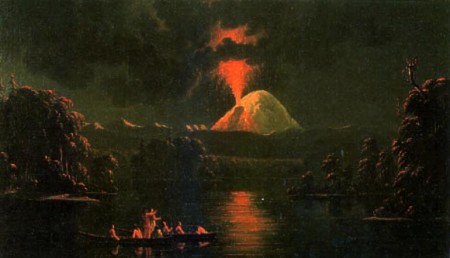
Paul Kane painting of Loowit (Mt. St. Helens), which was a symbol of rebirth to the Cowlitz People.

Paul Kane painting of Loowit (Mt. St. Helens), which was a symbol of rebirth to the Cowlitz People.

The cave was guarded by a blue dragon. The phoenix approached the dragon and requested permission to enter the cave. The dragon asked the phoenix what business he had in the cave, and the phoenix replied that he had come to “get his boy.” The dragon gave him three challenges. He challenged him to a game of chinese checkers. The phoenix won. He challenged him to a fire breathing contest. The phoenix won. And finally, he asked the phoenix to guess his name. The phoenix went up to the dragon and whispered something in the dragon’s ear. The dragon looked at him, utterly astonished, and granted entry. The dragon breathed fire up into the ceiling above the entry of the cave, and a trap door opened. We all went in. We found ourselves in a very narrow, tight tunnel. It was so narrow and tight that we barely had room to move. The only way was for us to make ourselves smaller and to keep moving, otherwise we would get stuck. I couldn’t see a thing. There were so many twists and turns that it made me dizzy. I remembered the magic compass. As soon as I pulled it out of my medicine pouch, the needle on the compass began to glow and pulse. The needle quivered for a moment and then pointed very strongly in a particular direction, which we followed. After that we were fine. We just followed the glowing compass needle through the labyrinthine tunnels and eventually came out into a part of the cave that had a large central clearing. There were several openings and cave mouths all along the perimeter. However, the compass showed us precisely where to go. We followed it’s guidance to one particular little cave entrance, with its door locked up tight. I took out the jade key and placed it in the lock. It fit perfectly, and with one turn of the key, the door flew open and there we found a little boy. He was curled up in a corner, lying on his left side, with his arms around his knees, huddled up against the cold, wet corner of the cave. He had his face to the corner of the cave and his back to us, and even though he heard us come in, it took a long time for him to stir.

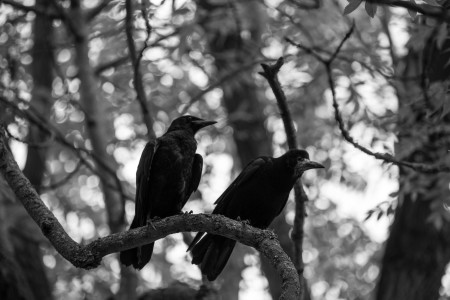
Crow teachers. Public domain photo

Crow teachers. Public domain photo

He looked to be around seven years old. He had long dark hair, and he looked terribly sad. His eyes were large and melancholy and he would not make eye contact. Crow went up to him to try to make eye contact. Then he hopped up onto the boy’s left shoulder and told him that we were here to take him home, if he would like to come with us. The boy just sat there as if he hadn’t heard a word. Crow asked the boy if he liked it there, in the cave. The boy shook his head slowly. “No, not really.” said the boy. “Would you like to come home?” asked Crow. “I don’t know.” Crow explained to the boy that things were different now, and that he would be safe. He told the boy that he had been missed and that he was loved, and that he would be welcomed back home with open arms. The boy indicated that he would like to come with us. I reached into the saddlebag for the medicine blanket, and wrapped it around the boy. He knew who had made it. I didn’t have to say a word. Now, when I looked at his face, he looked older, closer to maybe eleven years old or so. After this, his face would change, and his features would become those of a younger boy, then an older boy. But he was always somewhere between seven and eleven years old.

Crow stayed on his left shoulder. Phoenix stepped forward so the boy could climb onto his back. I followed with Eagle and we quickly exited the dank cave. As we left, Phoenix dropped a colorful tail feather, as an offering to Dragon, and Dragon picked it up and waved. We shot back up through the ocean, just as we had shot down, and we found ourselves back at the cliff. Grandmother Rose was there. Crow Dancer was there. Grandmother Rose embraced the boy for a long time. She pulled him onto her lap and rocked him and kissed him and hummed to him. She pulled the medicine blanket snugly around him and sighed. Crow Dancer placed a breastplate of porcupine quills on the boy and gave him his elk skin robe. Grandmother Rose took the boy’s long hair and divided it into three sections. She made three braids, and then braided those three braids into a single braid. She talked about the power of three, that three was the number to keep in mind. Crow Dancer placed three big shiny black crow feathers in the boy’s hair. Phoenix placed more feathers in the boy’s hair, magnificent feathers of brilliant hues; red, orange, yellow, violet, blue, green…He gave the boy a walking stick on which was carved: “NOW IS THE MOMENT OF POWER.” Grandmother Rose told the boy that it was important to forget the past, and to not worry about the future. “Life is short,” she said. “All we have is this moment.” Spider made an appearance and wove a cloak of scintillating light around the boy. It sparkled and shined with a pure radiance. She said that all he ever needed to do, if he ever got scared, was to ask Spider for a cloak of light, and she would weave something up for him. He will always have access to protection. All he has to do is ask.

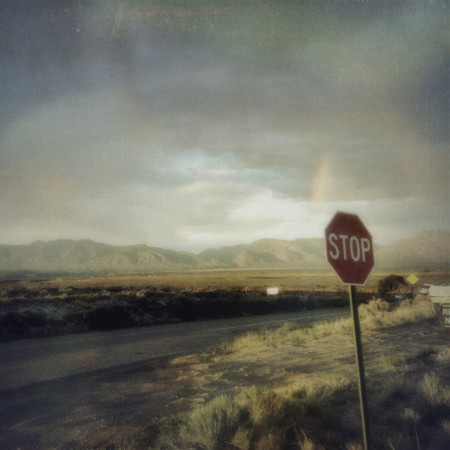
Mesa near Taos, NM.  H a v e n © 2016

Mesa near Taos, NM.
H a v e n © 2016

There were embraces and acknowledgements and blessings, and then it was time to say goodbye. We climbed down a ladder made of rainbow light and came to an open, grassy field. It was just outside the same edge of forest from which our journey had begun. Many animals began to appear and quickly disappear; Raccoon, Red Tailed Hawk, Bighorn Sheep, Unicorn, Coyote. As we landed on the grassy field, we joined a fire ceremony that was being held in the boy’s honor. The boy stood at the fire, wearing a white mask. Raccoon came up to him and took off the boy’s mask and tossed it into the fire, where it was consumed. There was another mask underneath. Again, Raccoon took off the mask and tossed it into the fire. This went on and on, mask after mask. The first masks were completely opaque, but as they continued to be peeled away they became more transparent. I could see through the final mask, and I saw that the boy was weeping. Raccoon stood there and looked at the boy with great compassion. Raccoon was not going to take off the final mask. The boy wept for a long time at the fire. Finally, he reached up and slowly removed the final mask, and placed it quietly into the flames. The boy’s face softened and he stopped crying. Everyone laughed and cheered and came over and embraced the boy. He was glad to be home.

Valentines Day Origins

The time is nigh for the Cupids of the world to indulge themselves in hallmark chocolate and prompted flower buying.

The modern market for Cupid.

The modern market for Cupid.

Why this one day to lay
our souls on the line to our sweeties? Why the mass love fest on February, the 14th?

The origins of the chocolate orgy we call, “Valentines Day”, came from the Romans, who celebrated a ritual called, Lupercalia. Lupercalia dates way back, even before the Romans decided to get arrogant and help invent Imperialism, the Romans celebrated Lupercalia. It was a ritual that was observed on February 13 through 15, to avert evil spirits and purify the city, releasing health and fertility. How did they do this?

The Lupercalian Festival in Rome (ca. 1578–1610), drawing by the circle of Adam Elsheimer, showing the Luperci dressed as dogs and goats, with Cupid and personifications of fertility

The Lupercalian Festival in Rome (ca. 1578–1610), drawing by the circle of Adam Elsheimer, showing the Luperci dressed as dogs and goats, with Cupid and personifications of fertility


The festival began with the sacrifice by the Luperci (or the flamen dialis) of two male goats and a dog.[10] Next two young patrician Luperci were led to the altar, to be anointed on their foreheads with the sacrificial blood, which was wiped off the bloody knife with wool soaked in milk, after which they were expected to smile and laugh.

The sacrificial feast followed, after which the Luperci cut thongs from the skins of the animals, which were called februa, dressed themselves in the skins of the sacrificed goats, in imitation of Lupercus, and ran round the walls of the old Palatine city, the line of which was marked with stones, with the thongs in their hands in two bands, striking the people who crowded near. Girls and young women would line up on their route to receive lashes from these whips. This was supposed to ensure fertility, prevent sterility in women and ease the pains of childbirth.

Now, let’s go buy some chocolates.

The Hatfield and McCoy’s of Skamania County

ALL NEIGHBORS NOT GOOD IN COUNTY’S EARLY SETTLEMENTS (Published in Skamania County Pioneer January, 1949)

“Neighbors” in the pioneer days of the county were not always “good neighbors,” according to Henry Metzger, pioneer Carson resident who this week recalled some of the occurances enlivening the early days in Skamania County.

The Hatfield clan from the famous Hatfield and McCoy conflict.

The Hatfield clan from the famous Hatfield and McCoy conflict.

“Much has been, and still is, said and written about the pioneer spirit, the spirit of neighborliness, mutual assistance, courage to take and solve difficult problems as if, and it is true, much of that has been and still is in evidence in this neck of the woods, but it would be folly and serve no good purpose to tell the now growing up generation that everything was sweet peace and harmony among the early settlers, for such was not always the case. Fact of the matter is that, in my opinion at least, there is now much more harmony among the neighbors than there was only about a half century ago. The reason for this I contribute to a much higher standard of education and to the fact that country life is getting more and more like city life, where you often do not know your next door neighbor.

Random photo of a fellow on Larch Mountain during the 1930's.

Random photo of a fellow on Larch Mountain during the 1930′s.

“Maybe I can best illustrate the pioneer spirit by telling of an incident that, I am told, happened in Skamania County about 60 years ago. There were two prominent citizens, joint farmer-neighbors, who could not get along together well. They could not smell one another, so the saying goes. They were not on speaking terms and when they met at public meeting they would oppose each other even if they were of the same opinion on the subject under discussion. It so happened that one of those farmers had hay on, ready to haul in when it looked as if the weather would turn to rain. He started hauling in hay, him on the wagon and his wife, a frail woman, pitching on the hay. But soon his ‘despised’ neighbor appeared and walking up to the woman said in a harsh tone, ‘Give me that fork and you go to the house, that’s where you belong,’ and he started in pitching on the hay and these two men worked for hours together, never speaking a single word to each other, not even would they say ‘thank you’ or ‘good bye’ when they parted after the hay was all in the barn.

“This is what I would call the ‘the Pioneer Spirit in the Rough’.”

Mt. Shasta and JC Brown’s Lost City

Mt. Shasta | ©2014 H a v e n

Mt. Shasta | ©2014 H a v e n

According to legend, JC Brown was a British prospector who discovered a lost underground city beneath Mt. Shasta in 1904. Brown had been hired by The Lord Cowdray Mining Company of England to prospect for gold, and discovered a cave which sloped downward for 11 miles. In the cave, he found an underground village filled with gold, shields, and mummies, some being up to 10 feet tall.

Thirty years later, he told his story to John C. Root who proceeded to gather an exploration team in Stockton, California. 80 people joined the team, but on the day the team was to set out, Brown did not show up. Brown was not heard from again.

Why there are no snakes on Takhoma | Cowlitz Legend

A long, long time ago, Tyhee Sahale became angry with the people. Sahale ordered a medicine man to take his bow and arrow and shoot into the cloud which hung low over Takhoma. The medicine man shot the arrow, and it stuck fast in the cloud. Then he shot another into the lower end of the first. He shot arrows until he had made a chain which reached from the cloud to the earth. The medicine man told his klootchman and his children to climb up the arrow trail. Then he told the good animals to climb up the arrow trail. Then the medicine man climbed up himself.

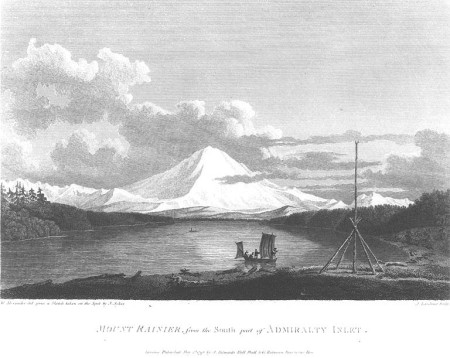
mt rainier admiralty inlet 1792

mt rainier admiralty inlet 1792

Just as he was climbing into the cloud, he looked back. A long line of bad animals and snakes were also climbing up the arrow trail. Therefore the medicine man broke the chain of arrows. Thus the snake and bad animals fell down on the mountain side. Then at once it began to rain. It rained until all the land was flooded. Water reached even to the snow line of Takhoma. When all the bad animals and snakes were drowned, it stopped raining.

After a while the waters sank again. Then the medicine man, and his klootchman, and the children climbed out of the cloud and came down the mountain side. The good animals also climbed out of the cloud, Thus there are now no snakes or bad animals on Takhoma.

Keeper of the Fire

Long ago, when the world was young, all people were happy, The Great Spirit, whose home is in the sun, gave them all they needed. No one was Hungry, no one

'Keeper of Fire' | © 2015 H a v e n

‘Keeper of Fire’ | © 2015 H a v e n

was cold. But after a while, two brothers quarreled over the land. The elder one wanted most of it, and the younger one wanted most of it. The Great Spirit decided to stop the quarrel. One night while the brothers were asleep he took them to a new land, to a country with high mountains. Between the mountains flowed a big river.

The Great Spirit took the two brothers to the top of the high mountains and wakened them. They saw that the new country was rich and beautiful.

“Each of you will shoot a arrow in opposite directions,” he said to them. “Then you will follow your arrow. Where your arrow falls, that will be your country. There you will become a great chief. The river will separate your lands.”

One brother shot his arrow south into the valley of the Willamette River. He became the father and the high chief of the Multnomah people. The other brother shot his arrow north into the Klickitat country. He became the father and high chief of the Klickitat people.

Then the Great Spirit built a bridge over the big river. To each brother he said, “I have built a bridge over the river, so that you and your people may visit those on the other side. It will be a sign of peace between you. As long as you and your people are good and are friendly with each other, this bridge of the Tahmahnawis will remain.

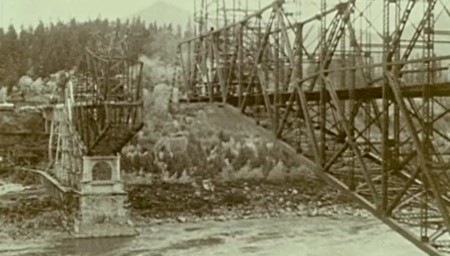
Building of the the modern day Bridge of the Gods, ca. 1925

Building of the the modern day Bridge of the Gods, ca. 1925

It was a broad bridge, wide enough for many people and many ponies to walk across at one time. For many snows the people were at peace and crossed the river for friendly visits. But after a time they did wicked things. They were selfish and greedy, and they quarreled. The Great Spirit, displeased again, punished them by keeping the sun from shining. The people had no fire, and then the winter rains came, they were very cold.

Then they began to be sorry for what they had done, and they begged the Great Spirit for fire. “Give us fire, or we will die from the cold,” they prayed. The heart of the Great Spirit was softened by their prayer. He went to an old woman who had kept herself from the wrongdoing of her people and so still had some fire in their lodge.

“If you will share your fire, I will Grant you anything you wish,” the Great Spirit promised her. “What do you want most?”

"Eternal" | ©2015 H a v e n

“Eternal” | ©2015 H a v e n

“Youth and beauty,” answered the old woman promptly, “I wish to be young again, and to be beautiful.”

“You shall be young and beautiful tomorrow morning,” promised the Great Spirit. “Take your fire to the bridge, so that the people on both sides of the river can get it easily. Keep it burning there always as a reminder of the goodness and kindness of the Great Spirit.”

The old woman, whose name was Loo-wit, did as he said. Then the Great Spirit commanded the sun to shine again. When it rose the next morning, it was surprised to see a young and beautiful maiden sitting beside a fire on the Bridge of the Gods. The people, too, saw the fire, and soon their lodges were warm again. For many moons all was peaceful on both sides of the great river and the bridge.

The young men also saw the fire–and the beautiful young woman who attended it. They visited her often. Loo-wit’s heart was stirred by two of them–a handsome young chief from south of the river, whose name was Wyeast, and a handsome young chief from north of the river, whose name was Klickitat. She could not decide which of the two she liked better.

Wyeast and Klickitat grew jealous of each other and soon began to quarrel. They became so angry that they fought. Their people also took up the quarrel, so that there was much fighting on both sides of the river. Many warriors were killed.

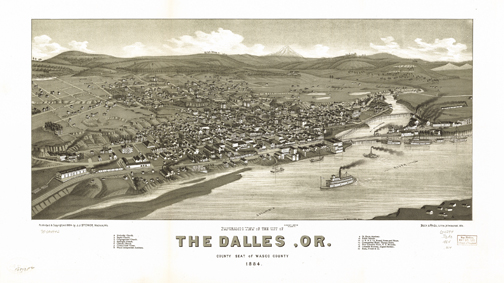
The Dalles, Oregon. ca. 1884

The Dalles, Oregon. ca. 1884

This time the Great Spirit was made angry by the wickedness of the people. He broke down the Bridge of the Gods, the sign of peace between the two tribes, and its rocks fell into the river. He changed the two chiefs into mountains. Some say that they continued to quarrel over Loo-wit even after they were mountain peaks. They caused sheets of flame to burst forth, and they hurled hot rocks at each other. Not thrown far enough, many fell into the river
and blocked it. That is why the Columbia is very narrow and the water very swift at the Dalles.

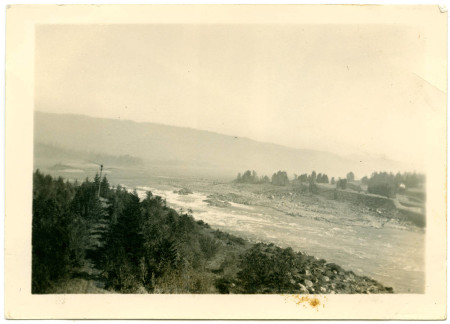
Pre-dammed Cascades. 1912(?) author unknown.

Pre-dammed Cascades. 1912(?) author unknown.

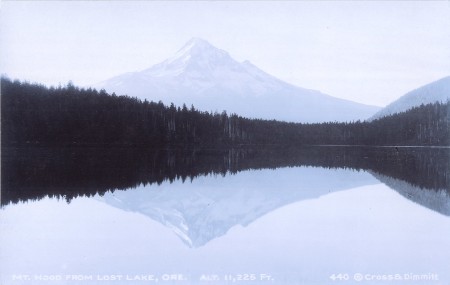
Loo-wit was changed into a snow-capped peak which still has the youth and beauty promised by the Great Spirit. She is now called Mount St. Helens. Wyeast is known as Mount Hood, and Klickitat as Mount Adams. The rocks and white water where the Bridge of the Gods fell are known as the Cascades of the Columbia.

——-Clark,Ella (1953) Indians of the Pacific Northwest (renewed 1981). The Regents of the University of California

A Mount Adams Story

A Mount Adams Story

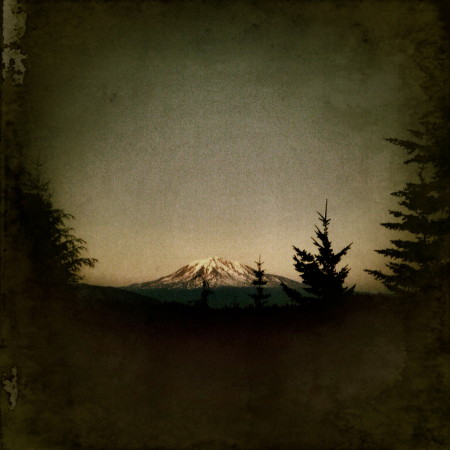
Pahto | © 2010 H a v e n

Pahto | © 2010 H a v e n

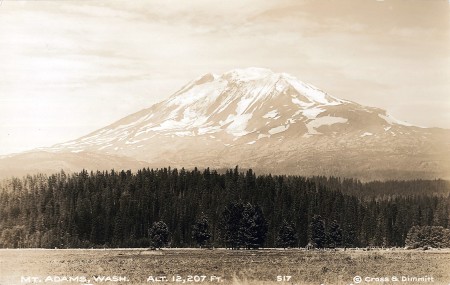
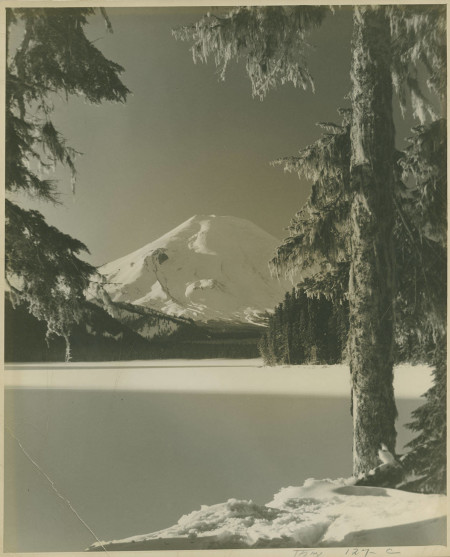
Mount Adams (12,307 feet in altitude), the second highest peak in Washington, stands in the southwestern part of the state. The Klickitat and Yakama Indians called it Pahto. They claimed it as their mountain.

This legend was told by Chief Jobe Charley, with his granddaughter, Hattie Wesley, acting as interpreter. Now eighty-six years old, Jobe Charley heard the story when he was a little boy. When he got his first horse, he rode to Mount Adams and climbed it. Until he saw the eagles up there, he had not believed the story. Many eagles are hatched in the caves in the east side of Mount Adams.

Back when the mountains were people, Sun was a man. He had five mountains for his wives. One was Plash-Plash, where the Goat Rocks are now. Plash-Plash means “white spots.” Another was Wahkshum, west of Satus Pass. The others were Mount Adams, Mount Rainier, and Mount St. Helens. The Indians called all of them Pahto, which means “standing high.” Wahkshum and Plash-Plash were once known as Pahtoes also. I will call only Mount Adams Pahto in this story, for Rainier and St. Helens are not important in it.

Mt. Adams post card from the 1920's.

Mt. Adams post card from the 1920′s.

Sun traveled from east to west, of a course. So Wahkshum was the first wife he talked to every morning. Plash-Plash was the second, and Pahto was the third. Pahto became jealous of the other two and made up her mind to get rid of them. Jealous and angry, she fought them and broke down their high heads. All that is left of Plash-Plash is goat rocks. All that is left of Wahkshum is the mountain called Simcoe Mountain and the little huckleberry bushes on it. Rainier and St. Helens were so far away that Pahto left them alone.

For a while after she had broken the heads of Wahkshum and Plash-Plash, Pahto was happy. Every morning she was the first wife Sun spoke to. She was the tallest mountain around, and she was proud and strong. But she did not remain satisfied. She made up her mind to go across the river and take what she wanted from the mountains south of her.

Mt. St. Helens. ca. 1920's

Mt. St. Helens. ca. 1920′s

So she went down there and brought back all their grizzly bears, black bears, elk, deer, pine nuts, huckleberries, roots, and herbs. From the rivers and creeks she took the salmon and trout and put them in the streams which flowed sown her sides. She planted the berries and the pine nuts and the roots all around her. She turned loose the elk, deer, and bears. That is why there are plenty on Mount Adams today.

All this time the great was watching. He saw the wrong things Pahto was doing. He thought to himself, “There must be a law that any wrongdoing shall be punished.”

But punishment did not come yet. Pahto was so strong and tall that the other mountains said, “We’ll not do anything about what she has done. We’ll just let it go.”

But Klah-Klahnee-You call them the Three Sisters- said among themselves, ”Pahto is too proud and greedy. We must do something.”

Wy'east.  Postcard, ca. 1920's

Wy’east. Postcard, ca. 1920′s

The came up north and said to Wyeast, Mount Hood, “Why don’t you destroy Pahto? Why do you let her get the best of you? You are tall and strong. Some day there will be people on the earth. When they find that we have let Pahto destroy us and steal from us, they will make fun of us.”

That is how Klah-Klahnee caused Wyeast to fight Pahto. “If I get the best of her,” Wyeast promised them, “I’ll take all that she has stolen from us.”

But first Wyeast said to Pahto, in a nice way, “I want you to give back half of what you took from us. When the new people come, those who live in are part of the country should have the same food that people near you will have. I am asking you now, in a nice way, for only half of what you took from us. If you give it to me, the new people will have food.”

But Pahto was greedy. ” No, I shall never give you anything,” she said.

So they fought.

Paul Kane painting.

Paul Kane painting.

Up to that time, Pahto had a high head. Wyeast hit her from the east side and knocked her head off. Today on the north side of Pahto there is a pile of fine rocks about a half a mile long. These rocks were once Pahto’s head.

The Wyeast thought, “I’ll leave here and there a little bit of everything she took away-elk, deer, berries, I’ll put some here, some there. Pahto can’t have everything.” So Wyeast shared with the other mountains.

The Great Spirit saw all that happened. He did not try to help Pahto. ”She deserved that punishment,” he thought. “She deserved to lose her head because she destroyed the heads of Wahkshum and Plash-Plash. That will be the law. If people do wrong they will be punished in the same way.”

But after Pahto lost her head, she became mean. Whenever she became angry, she would send a big thunderstorm and much rain. In the winter she would send big snows, and in the spring there would be floods. All through the Yakama Valley there were lakes from the big floods. When the first people came to the earth, they lived only on the mountains.

The Great Spirit was watching. He saw all that happened. At last he said, “I shall make a new head for Pahto. Then she will not be so mean.”

So he sent down a big white eagle with his son, a red eagle, riding on his right shoulder. He put the two eagles on top of Pahto, to be her head. Then he said to her, “I am sending white eagle and his son to you, to be your head. Don’t have hard feelings toward the other mountains. And don’t flood the earth again. Remember that you are the daughter of the Great Spirit.

Pahto answered, “I am glad you have given me the eagles. I will forgive the other mountains, and I will not flood the country anymore.”

Then she raised her right hand and said, “I did not know that the Great Spirit is my father. I am sorry for all wrong things I have done.”

Then the Great Spirit replied, ” I gave the world to you mountains. I put you here and there, where I wanted you to be. Some of you I made high. Some I made low. You should have never destroyed Wahkshum and Plash-Plash.”

Source: (http://archiver.rootsweb.ancestry.com/th/read/FOLKLORE/2000-09/0968495643)