How Coyote Helped The People- Columbia Basin Tribes

This is a composite of many tales related by many tribes that once lived along the Columbia River and its tributaries. For the sake of this story, the many traditions have been weaved together. No one tribe told about all these deeds of Coyote.
Artist unknown

Artist unknown

The part about Lake Chelan and the waterfall was told by Billy Curlew, at that time he was the present titular chief of the Moses-Columbia band of Indians, to the Forest Supervisor at the agency at Nespelem, with lack Jack Weipe as interpreter.

After Old-One had made the earth and the ancient animal people, he sent Coyote among them, because they were very ignorant and were having a hard time. Coyote was told to kill the evil beings who preyed upon them and to teach them the best way of doing things.
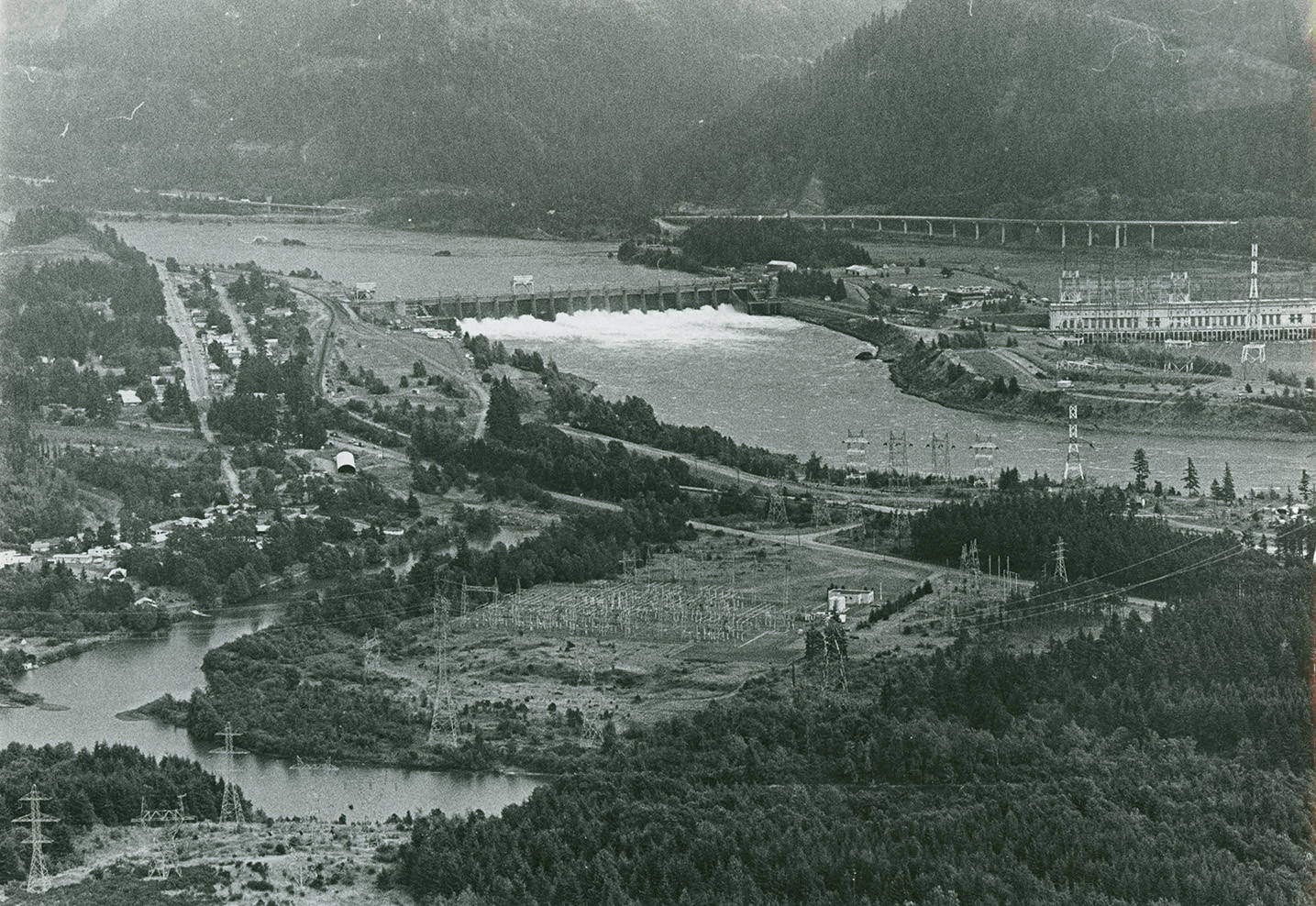
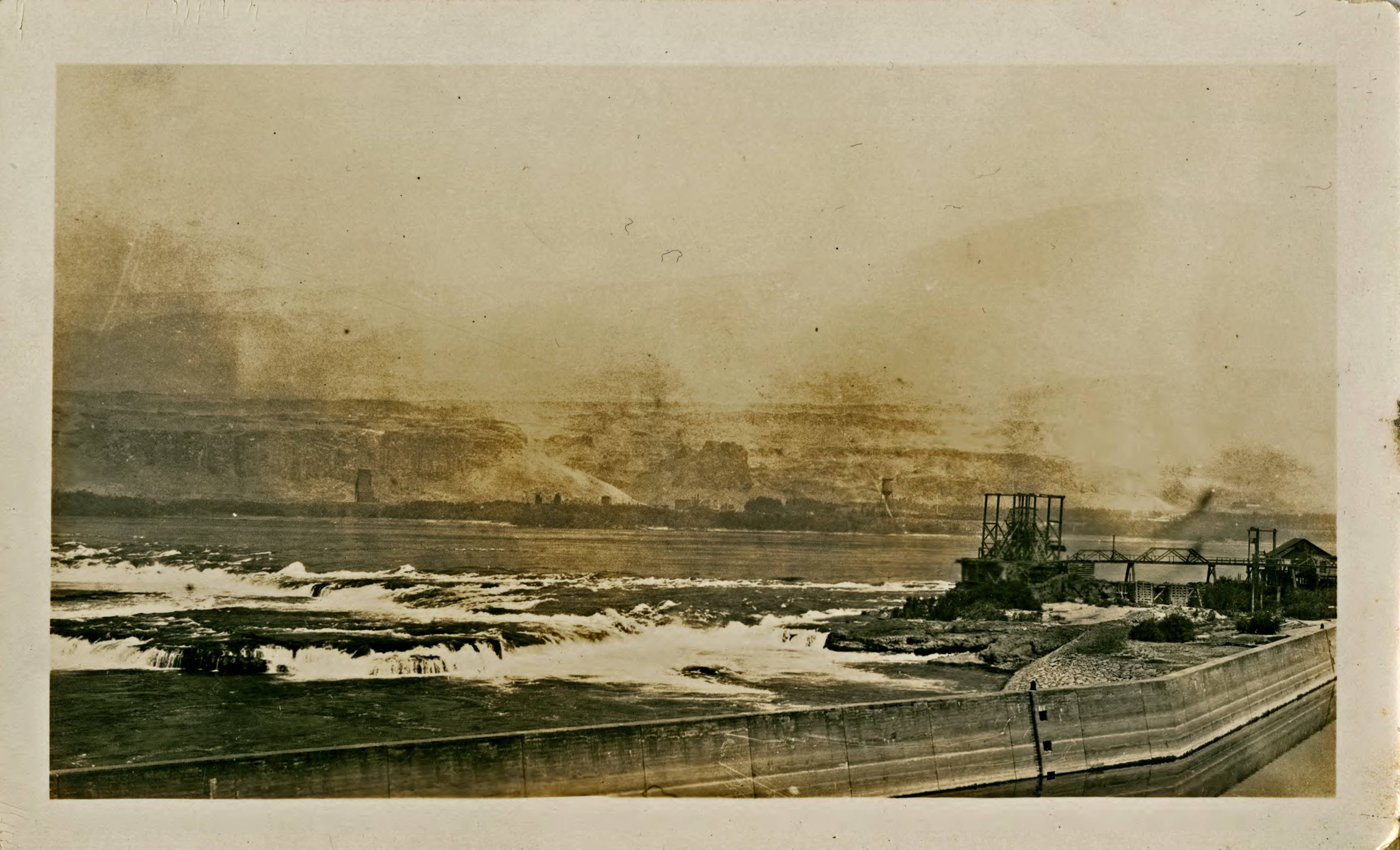
Bonneville Dam

Bonneville Dam

First he broke down the dam which five Beaver women bad built in the lower Columbia.”It is not right,” he said to them, “for you to keep the salmon penned up here. The people farther up the river are hungry.”

Then he changed the Beaver women into sandpipers. “You shall forevermore be sandpipers,” he said. “You shall always run by the water’s edge. You shall never again have control over salmon.”

By this time so many salmon had come up from the mouth of Big River that the water was dark with them. Coyote walked along the bank of the river, and the salmon followed him in the water. At all the villages, the animal people were glad to see him and the fish he brought. Their hunger was over.
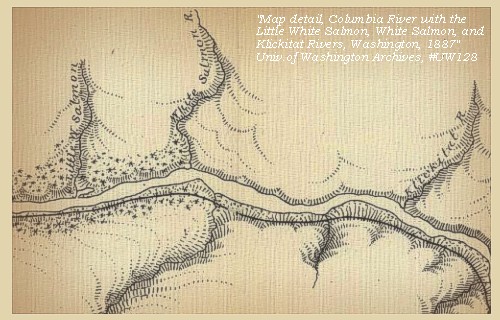
map of  white salmon area 1887

map of white salmon area 1887

When he came to the Little White Salmon River, he stopped and taught the people how to make a fish trap. He twisted young twigs of hazel brush and hung the trap in the river. Then he showed the people how to dry fish and how to store it for winter use.When he came to the bigger White Salmon River, he showed the people how to spear salmon. He made a spear from the inside bark of a white fir tree and caught the salmon with the pointed end of the spear.

“This is how you should do it,” said Coyote.
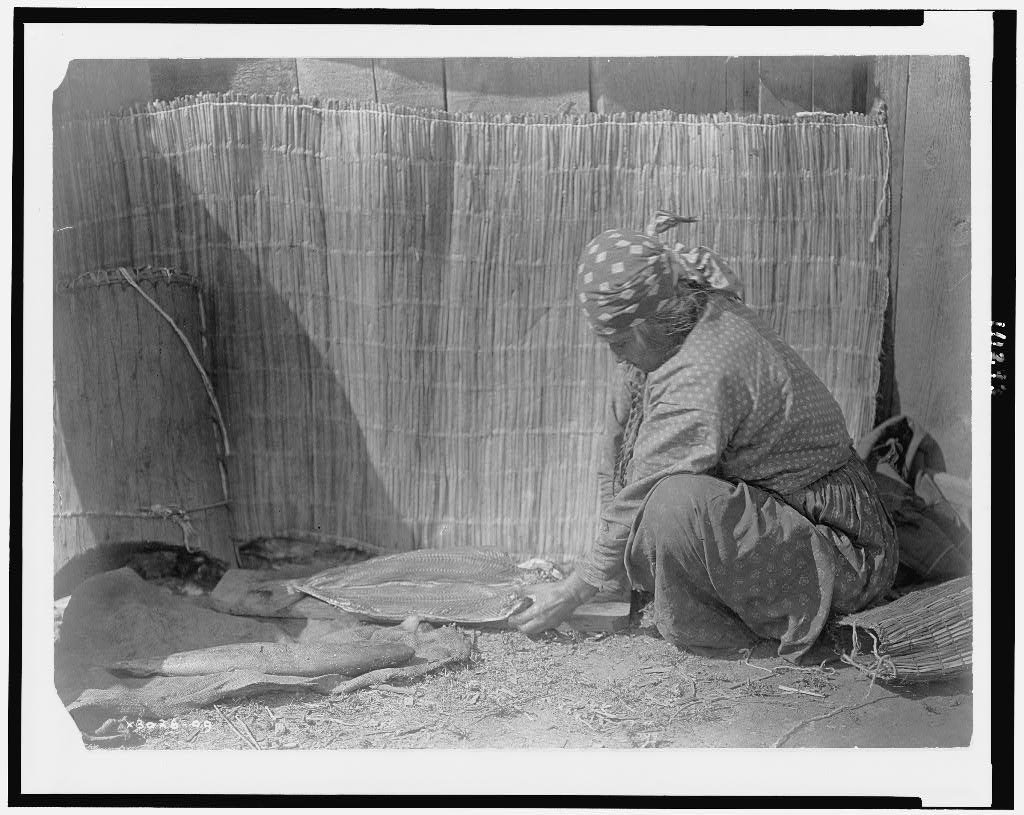
Wishram Grandmother preparing Salmon. Edward S. Curtis photo.

Wishram Grandmother preparing Salmon. Edward S. Curtis photo.

Wherever he stopped, he showed the people how to cook fish. They had always eaten it raw. He showed them how to broil salmon by holding it over the fire on sticks. And he showed them how to cook it in a pothole. Along Big River, to this day, there is a round-bottomed hole in the rocks, a hole that people call Coyote’s Kettle. Coyote put salmon in that hole, poured a little water over it, dropped hot stones into the pothole, and covered everything with green grass to hold the steam. Thus the salmon was steamed until it was tender.”This is how you should do it,” Coyote told the people.

PEO001-00013

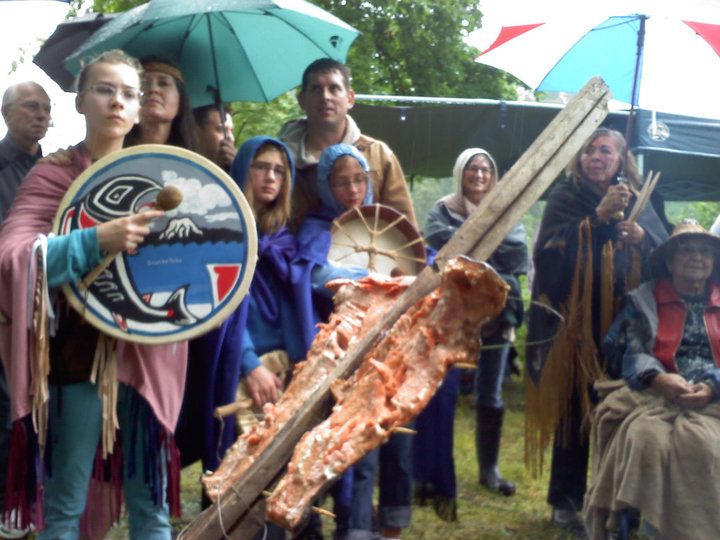
Preparing salmon for the First Salmon Ceremony. Stock image

Then he and the people had a big feast – a feast of salmon cooked in the proper way, the way he explained to them. Coyote said to the animal people along Big River and along all the streams which flow into it, “Every spring the salmon will come up the river to lay their eggs. Every spring you must have a big feast like this to celebrate the coming of the salmon. Then you will thank the salmon spirits for guiding the fish up the streams to you, and your Salmon Chief will pray to those spirits to fill your fish traps. During the five days of the feast, you must not cut the salmon with a knife, and you must cook it only by roasting it over a fire. If you do as I tell you, you will always have plenty of salmon to catch and to dry for winter.”
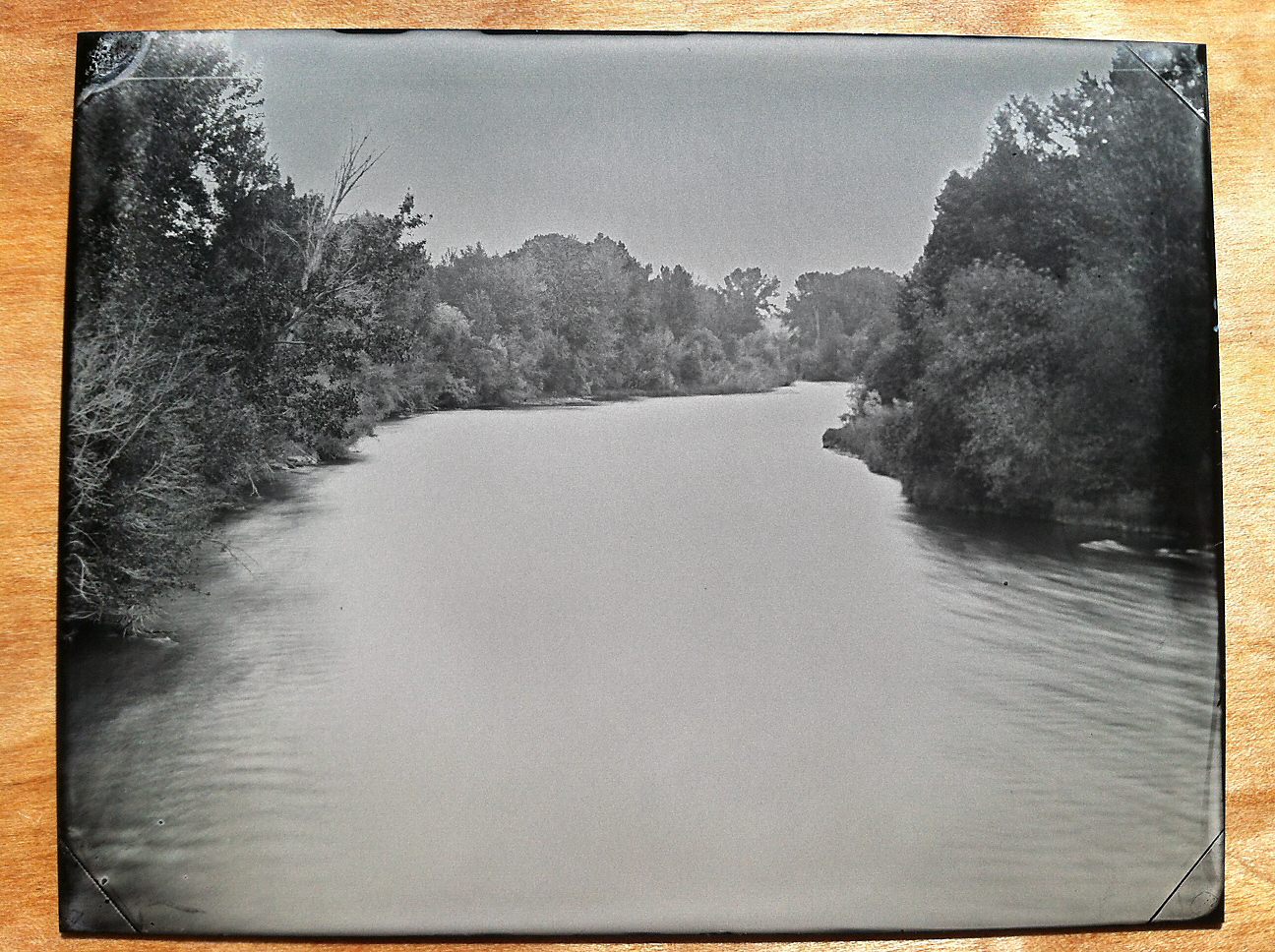
Yakama River.

Yakama River.

Then Coyote traveled farther up the river, and the salmon followed him. Often he came to a smaller stream flowing into Big River. Because the people along the Yakima and Wenatchee rivers treated him kindly, he sent the fish up their rivers and promised them that every spring the salmon would return. Where he was treated very kindly, he made the river narrow in one spot. He would make the two banks of a river almost meet, so that there would be a good place for catching salmon.When he came to the animal people along the Chelan River, he said to them, “I will send many salmon up your river if you will give me a nice young girl for my wife.”
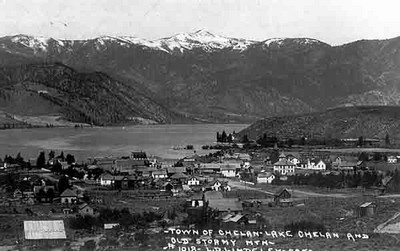
Lake Chelan.

Lake Chelan.

But the Chelan people refused. They thought it was not proper for a young girl to marry anyone as old as Coyote. So Coyote angrily blocked up the canyon of Chelan River with huge rocks and thus made a waterfall. The water dammed up behind the rocks and formed Lake Chelan. The salmon could never get past the waterfall. That is why there are no salmon in Lake Chelan to this day.

Artist rendering of Spokane Falls, 1888 from the book 'The Great Northwest.'

Artist rendering of Spokane Falls, 1888

Coyote made a waterfall in the Okanogan River because the girls there refused to marry him. He made a waterfall in the Spokane River because the chief along the upper river would not let him marry any girl among his people. Coyote said to the chiefs along the Okanogan and the Spokane “I will make falls here. I will make falls so that the salmon cannot get past them, to your people farther up the river.”As Coyote traveled up the rivers, he gave names to the streams and the mountains. He killed monsters that were destroying the animal people. He killed the Ice People and defeated Blizzard, so that the winters would not be so cold.
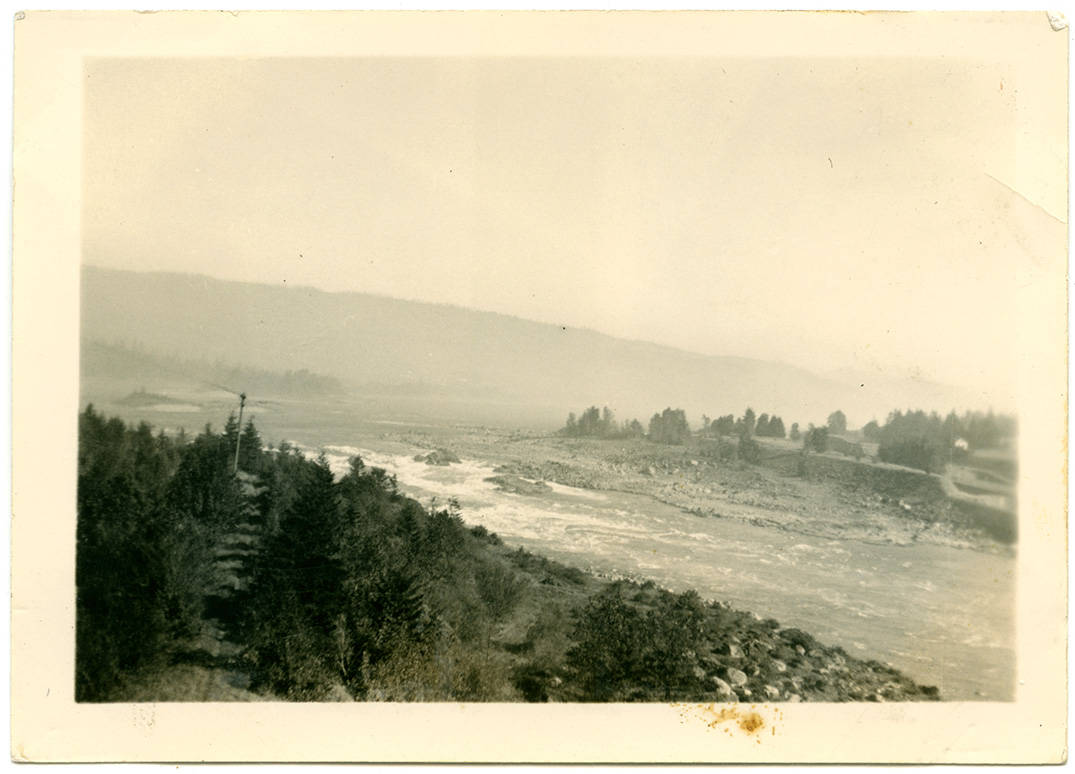
Pre-dammed Cascades. 1912(?) author unknown.

Pre-dammed Cascades. 1912(?) author unknown.

He planted trees, so that when the new people, the Indians, should come, they could burn wood and keep themselves warm. He planted huckleberries in the mountains. “People must climb to get these berries,” he said. “It will not be good for them to get all food easily. They will become lazy.” He planted strawberries and service berry bushes. He planted camas, kouse, and other roots, so that there would be all kinds of food for the new people. After the new people, the Indians, came, he showed them how to make fire by twirling sticks between their hands. He made a long knife to cut with, and an ax to chop with. He peeled bark off a cedar tree and made a cedar-bark canoe. “This is how you should do it,” he said.
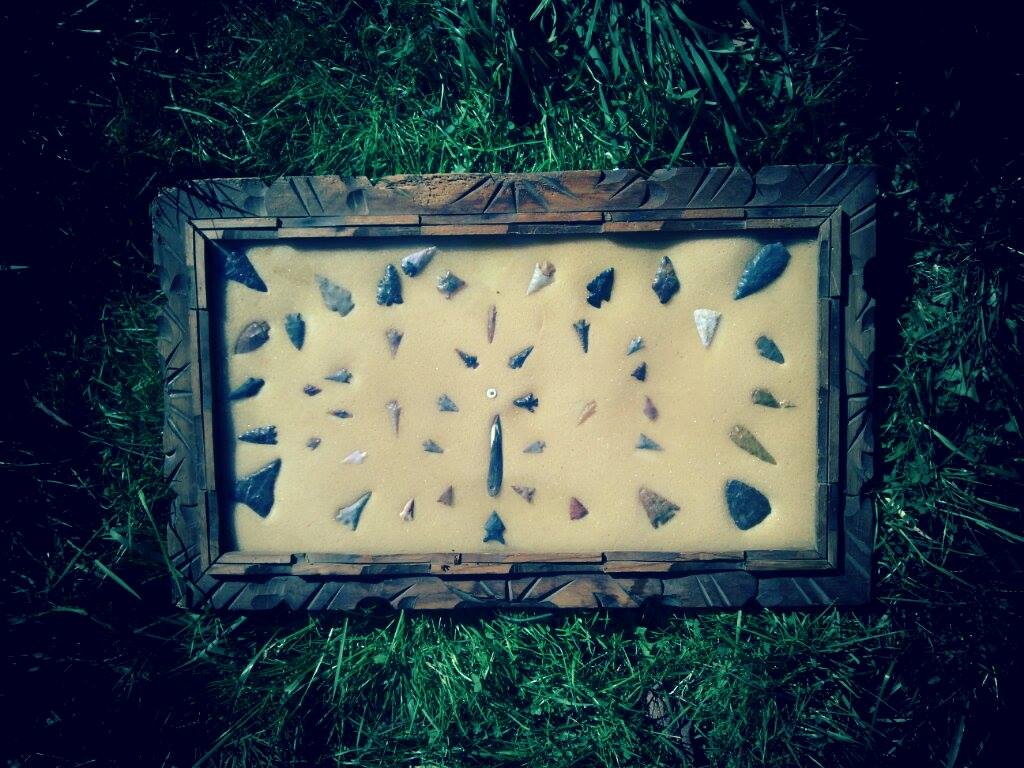
Arrow and spear collection -columbia river basin.

Arrow and spear collection -columbia river basin.

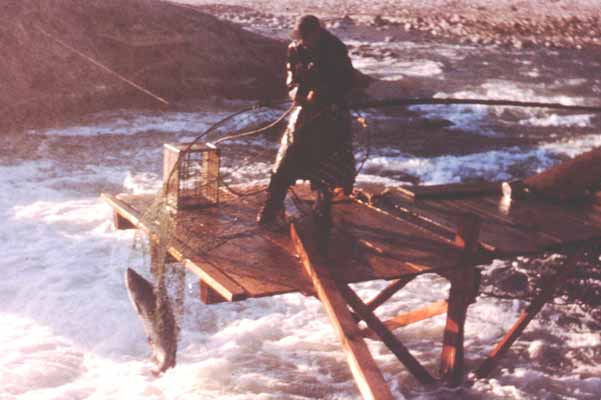
He taught them how to make bows and arrows from young arrowwood, and how to use the weapons. He made dip nets from maple and willow twigs, and showed the Indians how to catch salmon with them. He taught them how to make fishing platforms near the falls of Big River and how to spear salmon from these platforms. He made a basket trap also for catching fish. Coyote taught the Indians that salmon must always be kept clean. “if you do not keep them clean after you have caught them,” Coyote said, “they will be ashamed and not come up the river any more.
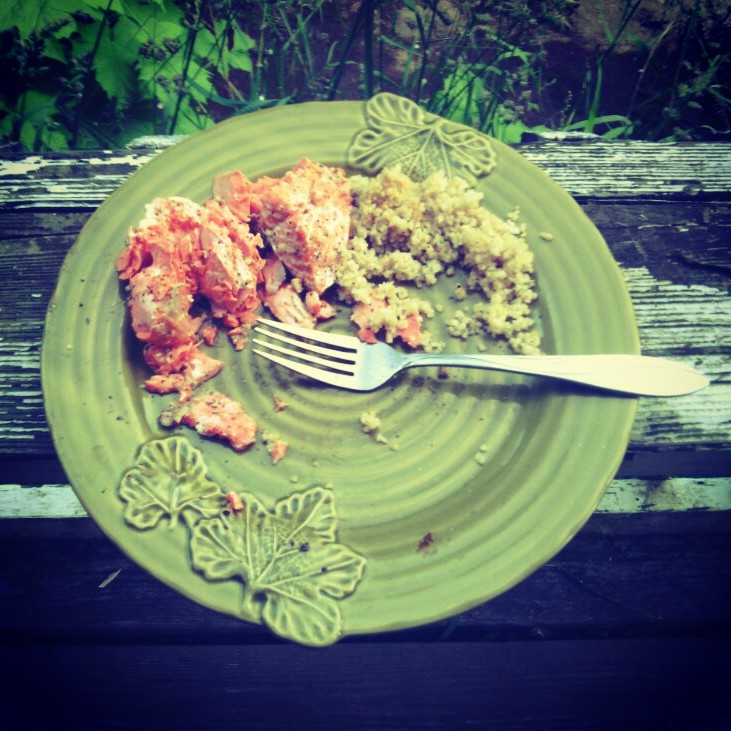
Salmon offering plate.

Salmon offering plate.

“And you must never cook any more than you can eat. If you cook three salmon when you are able to eat only half of one, the salmon will be ashamed and will refuse to enter your river.”

Many times he traveled up and down Big River and its branch rivers, teaching the people many useful things. Almost everything the Indians knew, Coyote taught them. He did many good things, but he did many wicked things also.

Indians say that when Coyote had done all the good things he could do, he was given a place in the sky. Other Indians say that he was punished for the bad things he had done.

Hail Coyote! Unknown photographer.

Hail Coyote! Unknown photographer.

He climbed to the sky on a rope. He climbed all one summer and all one winter. Then he fell down for a long, long time. When he struck the ground, he was mashed flat.

Lying there, he heard a voice say, “You shall always be a wanderer and shall forever howl and cry for your sins.”

That is why coyotes howl and cry at night. That is why they wander hungry and friendless over the earth.

*This story taken from the book Indian Legends of the Pacific Northwest, Ella E. Clark, University of California Press, 1953.
The Impact of the Bonneville Dam on Native American Culture

The impact of the Bonneville Dam on Native American Culture
(Re-Printed from: http://www2.kenyon.edu/projects/Dams/bsc02yogg.html)

For the Native American tribes living in the Columbia River Basin, salmon are an integral part of their lives, serving as a symbol of their prosperity, their culture and their heritage. There are more than fourteen different tribes represented in the area, including the Nez Perce, Umatilla, Warm Springs, and Yakama tribes. While they are separate tribes, with differing cultures and traditions, their reliance on salmon to maintain their way of life is a common bond.

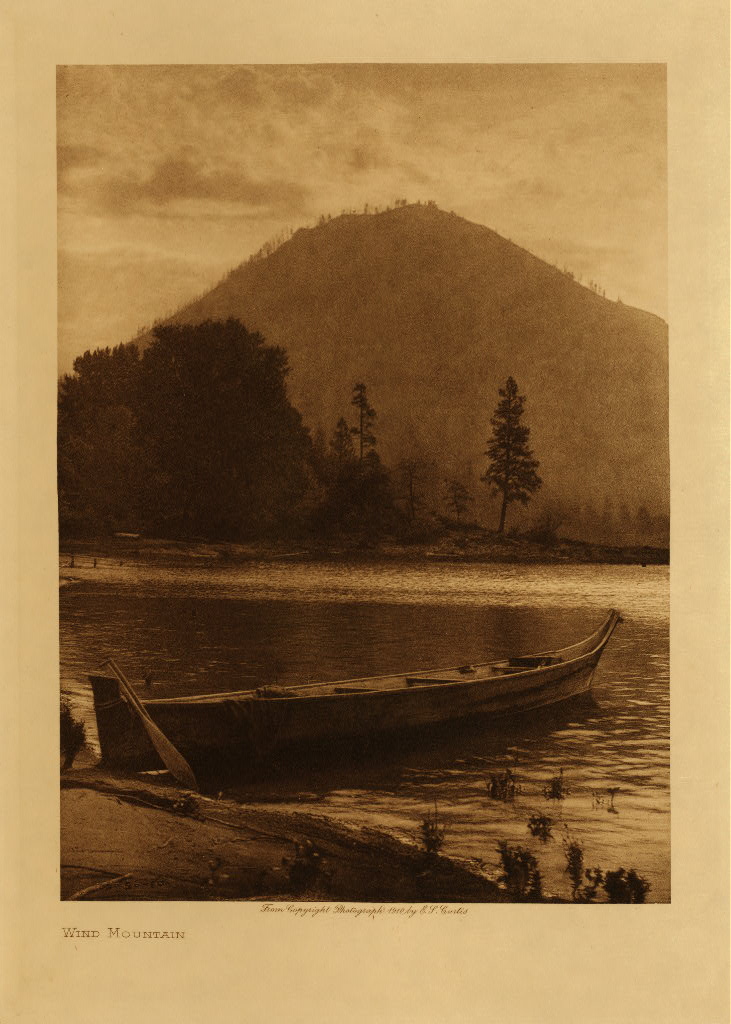
Auntie Virginia Miller's Canoe. Edward S. Curtis photo

Auntie Virginia Miller’s Canoe. Edward S. Curtis photo

Life Before the Dam

Economically, salmon were a large part of the culture of most of the tribes along the Columbia River. Before the treaty of 1855, many tribes had sucessful fishing economies. They traded salmon in order to obtain goods from other regions of the country. The salmon that were necessary to sustain their bodies and provide for their economic needs were available to them and therefore, the tribes were wealthy and self-sufficient. The economic benefits of the salmon were tremendously important for the welfare and maintenance of their communities, representing one of many significant benefits of salmon to their lives.

Year after year and generation after generation, the salmon returned every fall to spawn in the river. With this, a transfer of traditional knowledge and values occured. They passed on knowledge of fishing tecniques, as well as philosopies such as a respect for all forms of life. The return of Salmon to the river and subsequent transfer of knowledge symbolized to the natives that there had been a continuation of all life and assured them that their culture, tradition and spirituality had been upheld. It also served to reinforce their sense of place. When the salmon returned the tribes would gather down at the river to collect the salmon they needed to sustain them for the year. During the spring and summer they would head up to the hills to collect roots and berries to supplement their diet. People have mistaken these tribes to be nomads who wandered aimlessly in search of food and resources, but this is a misconception. These tribes followed the seasons, utilizing their resources in a circular pattern. The salmon were a fundamental component of their seasonal migration and their way of life.

Cowlitz First Salmon Ceremony, Photo Unknown

Cowlitz First Salmon Ceremony, Photo Unknown

Because the salmon played such an important role in their way of life, the salmon were incorporated into their spirituality and religious practices as well. The tribes felt that their souls were connected to the natural world and all of its inhabitants, including the salmon. Because of this “over a dozen longhouses and churches on reservations and ceded areas depend on salmon for their religious services” (http://www.critfc.org/text/IMPORT.HTM). The return of the salmon each year was cause for celebration. One of the ceremonies used in celebration of the salmon was the First Food Feast. In this celebration they would pray, sing and dance before eating a traditional meal of salmon, deer or elk, roots and berries. Antone Minthorn of the Umatilla tribe explained the importance of this ceremony…

The importance of the first salmon ceremony has to do with the celebration of life, of the salmon as subsistence, meaning that the Indians depend upon the salmon for their living. And the annual celebration is just that – it’s an appreciation that the salmon are coming back. It is again the natural law; the cycle of life.

(www.critfc.org/text/CERMON.HTM)

A Clash of Cultures

The native tribes to the land surrounding the Columbia, and the white settlers that arrived in the early to mid 1800′s had very different philosophies concerning their respective relationships with the land.

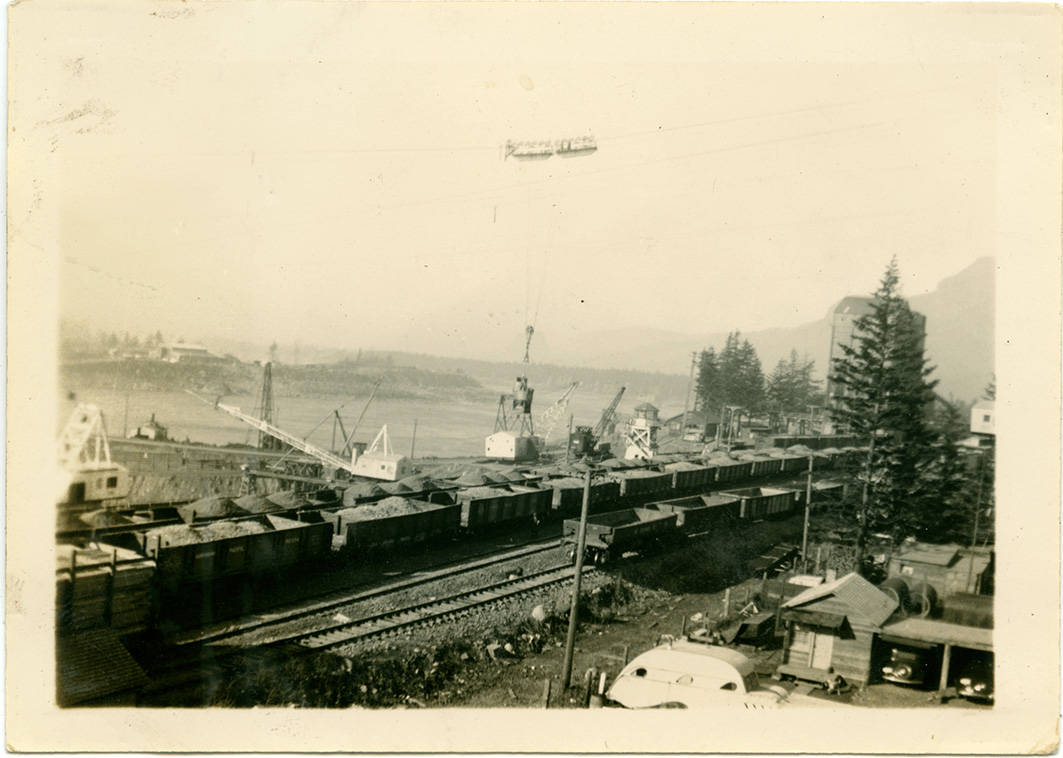
Fish Wheels near North Bonneville. Photo unknown

Fish Wheels near North Bonneville. Photo unknown

In general the white settlers displayed a disregard for the limits of their resources and brought with them the concepts of ownership and property. As a result of this, the non-Indian economy thrived at the expense of the Native Americans, whose fishing economy was driven almost to extinction. The native way of life depended on respecting the earths limits. They saw themselves as spiritually connected to the land, the animals, and its incredible abundance of resources, and they knew that by hurting the land they were hurting themselves. They understood the importance of sustainability, realizing that even if the effects of exploitation were not immediately apparent, they would be felt eventually, hindering the lives of the generations to come. This fostered a duty to protect the salmon. Bill Frank Jr. stated:

Survival of the salmon has always meant more than just food for the Indian people. Indians have long recognized that if they are to survive and if their children’s children are to survive, it will be because the salmon survives. It is their legacy.

(biology.uoregon.edu/classes/bi130/webprojects/35/tedstrong.html)

Construction of Bonneville dam, directly on top of my Ancestors old Village site.

Construction of Bonneville dam, directly on top of my Ancestors old Village site.

As the salmon population declined and many of their traditional fishing sites were flooded as a result of the constriction of the Bonneville Dam and other dams along the Columbia River, the culture, tradition and spirituality of these tribes have been put in danger. The native philosophies were essential in managing the resource of salmon, yet they were powerless in enforcing their methods because their ideas were seen as inferior. Allen V. Pinkham Sr. of the Nez Perce tribe who among other involvements in Native American politics spent nine years on the Nez Perce Tribal Council and was chairman of the Columbia River Tribal Fish Commission, explained:

We utilized the salmon resource, we didn’t deplete it. We utilized what was necessary to sustain our lifestyle and life ways, both spiritually and physically. Nobody does that anymore. Non-natives see only the salmon as a commodity that gets bought and sold. Not thinking about the survivability of that salmon as a species.

(Pinkham, 1996)

Present Day

Old unknown photo of a dip-netter.

Old unknown photo of a dip-netter.

Today the Native Americans struggle to maintain their fishing economy. A recent article by Ellen Morris Bishop in the Columbian describes the hapless state of Native American commercial fishing as follows:

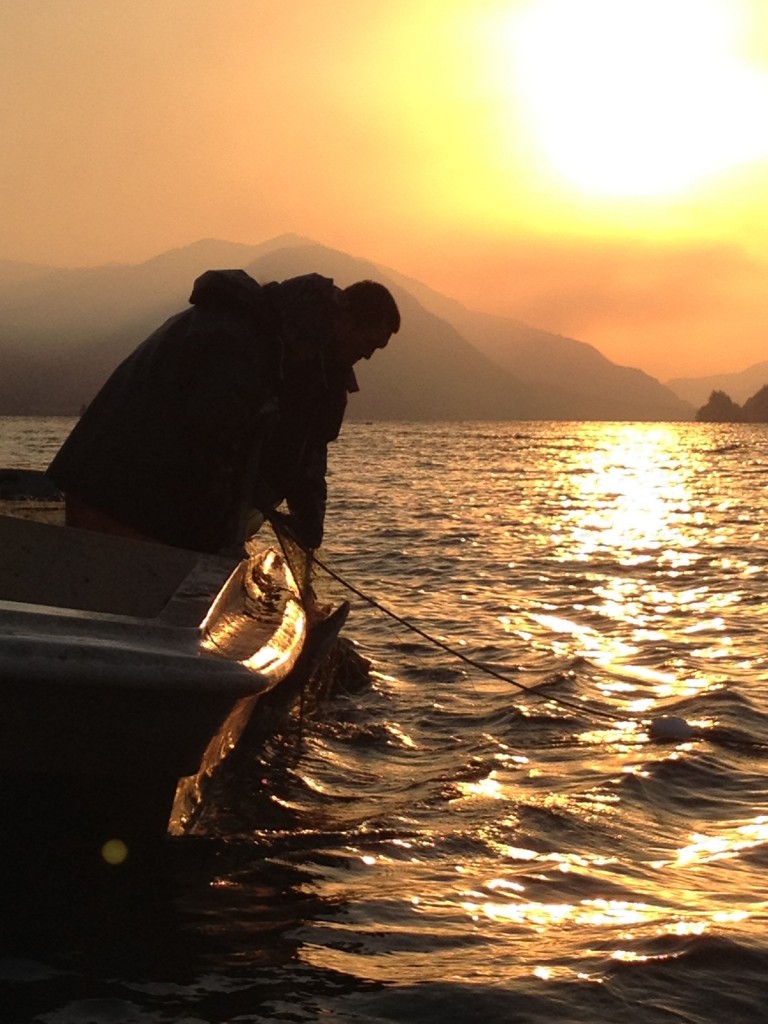
In the next month, Indians from Eastern Washington and Oregon will balance on flimsy platforms above the river’s current and plunge nets into the rolling green water. Others will challenge the Columbia in battered Boston Whaler boats, setting out gill nets in gathering darkness and harvesting their catch at dawn. They fish at sites their ancestors used, sites registered with the tribe, sacred ground.

(Bishop, August 27, 1998)

Les Brown photo. ©2012

Les Brown photo. ©2012

A decade ago there were nearly 1,100 native fishermen, while today they number fewer than 500. This year, in accordance with Native American treaty rights to half of all fish allocated for commercial harvest, the Upper Columbia River tribes are allowed to catch a total of 51,534 fall chinook and 16,720 steel head. It is anticipated that 2,400 will be wild steel head, but most of the fish will be from hatcheries. This year’s catch is up from last year’s 40,200 but far less than the 79,000 Indians caught commercially in 1990.

According to a 1995 article by Allen Thomas in the Columbian, in an effort to replace tribal fishing grounds flooded during construction of the Bonneville Dam, the U.S. Army Corps of Engineers planned to build and improve Native American fishing sites. The multiple sites along the Columbia and Snake River were planned to include parking lots, foot docks, camping sites, showers/restrooms, lighting systems, sewer and water systems, and fish cleaning stations. (Thomas, October 13, 1995)

It seems that the government is attempting to repair some of the damage done to the Native American fishing economy, but unfortunately much has already been lost. The Culture, tradition, and way of life of the tribes in the Columbia River Basin will never be the same as they were before the construction of the Bonneville Dam.

Skookums and a search for God

Skookum stories are found among the Natives of the Pacific Northwest. The legends existed prior to a single name for the creature. They differed in their details both regionally and between families in the same community. Similar stories of Skookums are found on every continent except Antarctica. An Ecologist argues that most cultures have human-like giants in their folk history: “We have this need for some larger-than-life creature.”

My family had no shortage of Skookum stories growing up. My Grandmother, Shirley Amos, would often tell this story as my neck hairs stood on end, hanging on to her every word.

As a youngster, I would roam through the woods near my home, with my bow draped across my shoulders, my ears perked and my nose to the path, on edge, looking for Skookum. My Uncle, Gary Amos, had a similar but different story he would tell of the Skookums and the call it would make… once again, my neck hairs would stand on end as I hung on to every word.

Artist unknown.

Artist unknown.

This need for some ‘larger-than-life creature’ has always fascinated me. I grew up a jehovah’s witness and was fed the ideology and imagery of a ‘larger-than-life’ God from the time of birth. A god of fire and brimstone, but it all seemed so mythical and scary to me. Something that kept me in line because of fear. I would hear these stories of Skookums (ironically told by strict jehovah witnesses), and for some reason, that felt more like God to me. It was a tug a war of spiritual information when I was a child. My Grandmother would tell these Ghost stories and Stories of the Land, but in the same breath, tell us that they were wrong and did not have jehovah’s guidance. This always confused me. How could we have forsaken this land and it’s rituals for some imported mono-theistic ideology, yet I felt a guilt for thinking such thoughts. Then something happened to me on May 18th, 1980 that would change my life forever.

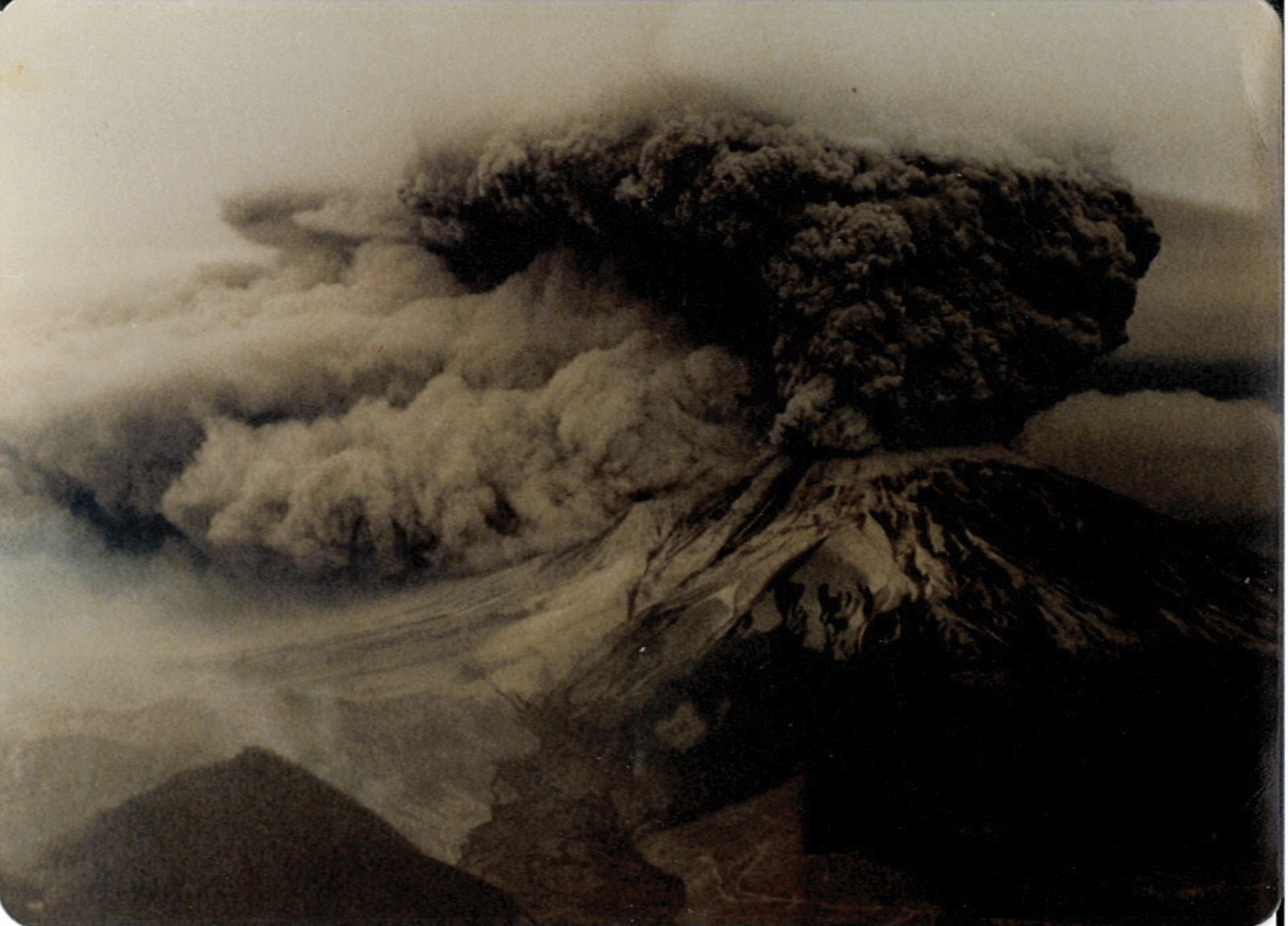
Loowit, May 18th 1980

Loowit, May 18th 1980

I was six years old and bewildered by what I saw and felt that day. I could hear so clearly the call of my Ancestors and the Call of the Land. This was God, this was the true power of God. On this day, I became an Animist. But what was I to do with this new and powerful Spiritual knowledge. Where was the Ceremony? I spent the next 20 years frantically searching for my ‘Ceremony’ in every portal that would open. I became the Volcano, I became the calm and I became my own Skookum. I had to listen for the Ceremony, I had to learn to accept that the Ceremony was right underneath my feet and I had to learn to accept the Skookum inside of me.

These stories I would hear growing up, seem at times, like a code. A code for living that would end up having profound teachings to me. I had to stop and listen long enough to hear what my Ancestors were telling me. I had to stop and listen to what the winds were telling me. I found God here.

All My Relations.

Journey Home

A place of neither time or space-
Where you hear the teenagers song
& smell them getting pregnant-
Around the alley on Poke St.-
Next to the local pawn shop.


A place where the cats eat the meat
of last night’s decadence-
Morality of a scavenger
Feasting on forgotten values
in man’s wasteful church.


A place where the homeless eat metaphors
of others good intent-
Around burning barrels the dance
the dance of lost dreams
to the drums of empty bottles & schizophrenia.


A place where wet pavement smokes dry ice
steaming like a dragon in Chinatown-
On side streets that are paved but never plowed
stands castrated angels in the mist of cold smokey air-
Grounded til the fog clears.


A place where shadows play hide-n-seek with the eyes
then are lost forever behind concrete.
& underneath the skyscraper canopy
that blocks out the sun-
You can see the yuppie in his Lexus car.


A place where the bombs of absurdity
explode in the ears of scabbed medicine men,.
In a land converted to asphalt (distant from ancestors)-


& medicine bags that carry rigs
to ride a black tarred hi-way to nowhere-


but somewhere I remember.


I remember the smell of rain after a storm-
I remember the winds that howl-
and I always knew I would end up here somehow
with hope on my tongue
and years on my feet-


I make the Journey complete.

Coyote and the Columbia

Coyote and the Columbia

From the Sahaptin/Salishan Tribes

retold by

S. E. Schlosser

One day, Coyote was walking along. The sun was shining brightly, and Coyote felt very hot.

“I would like a cloud,” Coyote said.

So a cloud came and made some shade for Coyote. Coyote was not satisfied.

“I would like more clouds,” he said. More clouds came along, and the sky began to look very stormy. But Coyote was still hot.

“How about some rain,” said Coyote. The clouds began to sprinkle rain on Coyote.

“More rain,” Coyote demanded. The rain became a downpour.

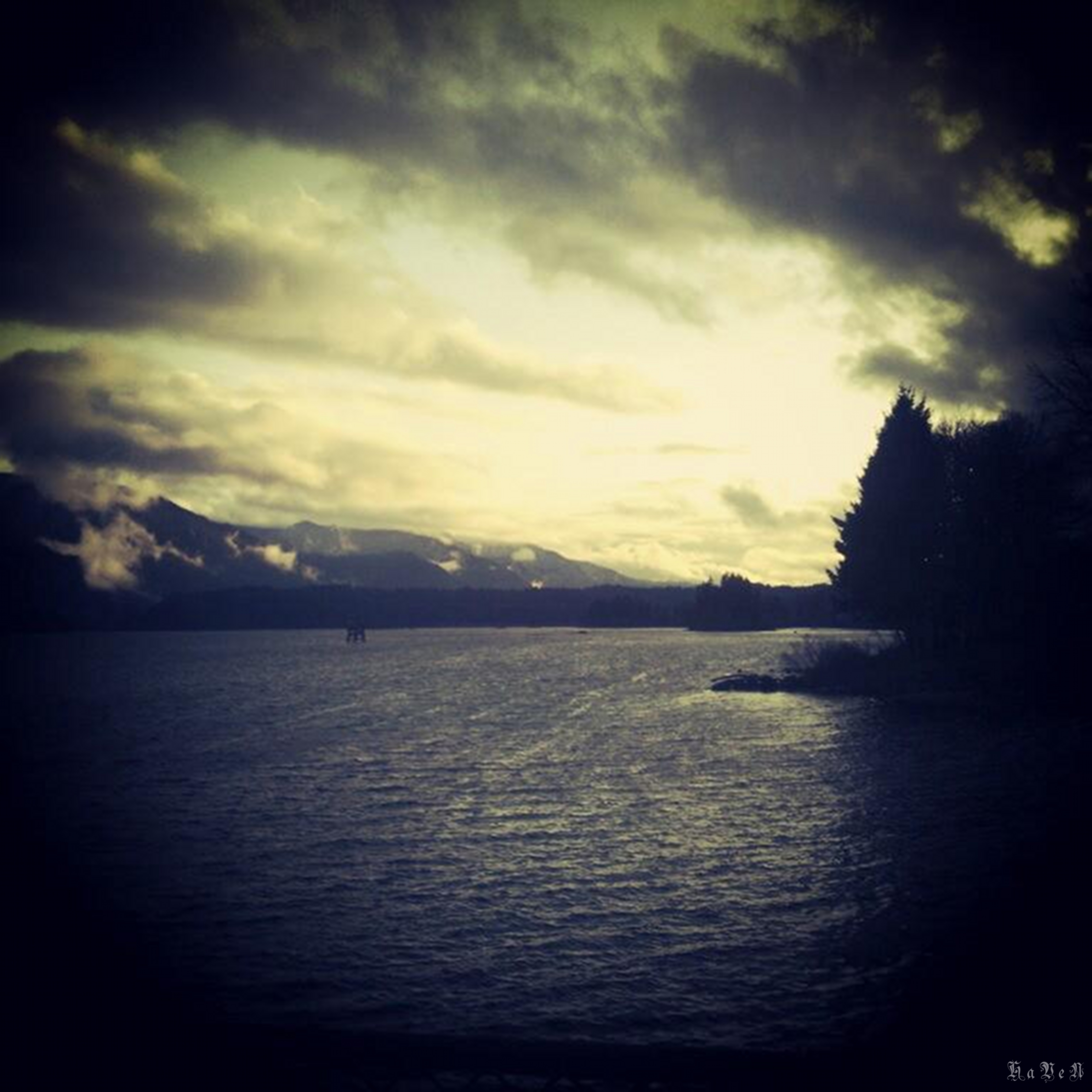
“I would like a creek to put my feet in,” said Coyote. So a creek sprang up beside him, and Coyote walked in it to cool off his feet.Gorge from sternwheeler dock

“It should be deeper,” said Coyote.

The creek became a huge, swirling river. Coyote was swept over and over by the water. Finally, nearly drowned, Coyote was thrown up on the bank far away. When he woke up, the buzzards were watching him, trying to decide if he was dead.

“I’m not dead,” Coyote told them, and they flew away.

That is how the Columbia River began.

Legend of the Lost Salmon: A Yakama Legend

This story is about when the people ignored the directions of the Creator about caring for the salmon, the salmon disappeared. All of their attempts to bring the salmon back failed until Snake used his powers to revive the salmon. The people were not fooled by Coyote’s pretentious effort to revive the salmon.

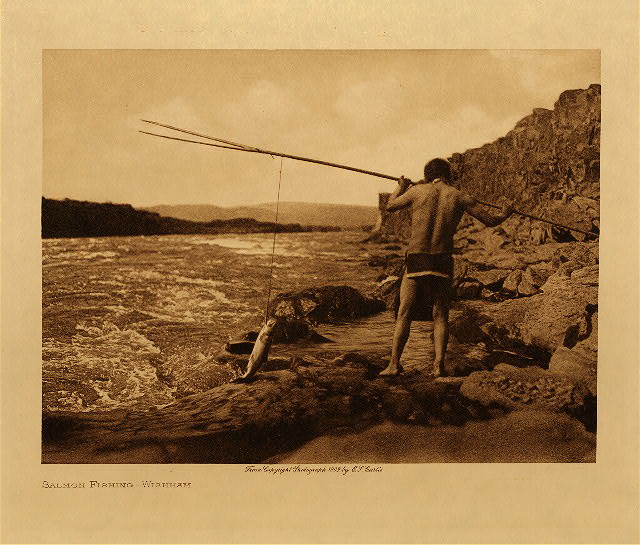
Wishram Fisherman. Edward S. Curtis photo

Wishram Fisherman. Edward S. Curtis photo

The Creator taught the people how to care for this food which was created especially for them. He said, “Do not neglect this food. Be careful that you do not break the rules in taking care of this salmon. Do not take more than you need”. He told them if they observed these rules, the salmon would multiply several times over as long as they lived.

At first the people diligently obeyed the rules, and they lived happily without problems. All along the river there were different bands of people living in their fishing villages, busy catching and drying their supply of salmon.

But one day something strange happened. The people became careless and they neglected to follow the instructions made by the Creator. They became greedy. They did not take care of the salmon. They let them go to waste when they caught more than they needed for their families. They would not listen to the advice from those who were trying to follow the rules. Suddenly the salmon disappeared.

When the salmon were no longer coming up the stream for the people to catch everybody frantically searched the rivers, but all in vain. There was not one salmon left to be found. Soon they became hungry, their little children were crying and the old people were forced to beg for food.

One day, while they were searching the river, they found a dead salmon lying on the bank of the river. They stared down at it in disbelief when they realized what had happened. They began to cry out in shame and lament their mistakes, “If we are given one more chance, we will do better. If only we could awaken this salmon, the other salmon might come up the stream.”

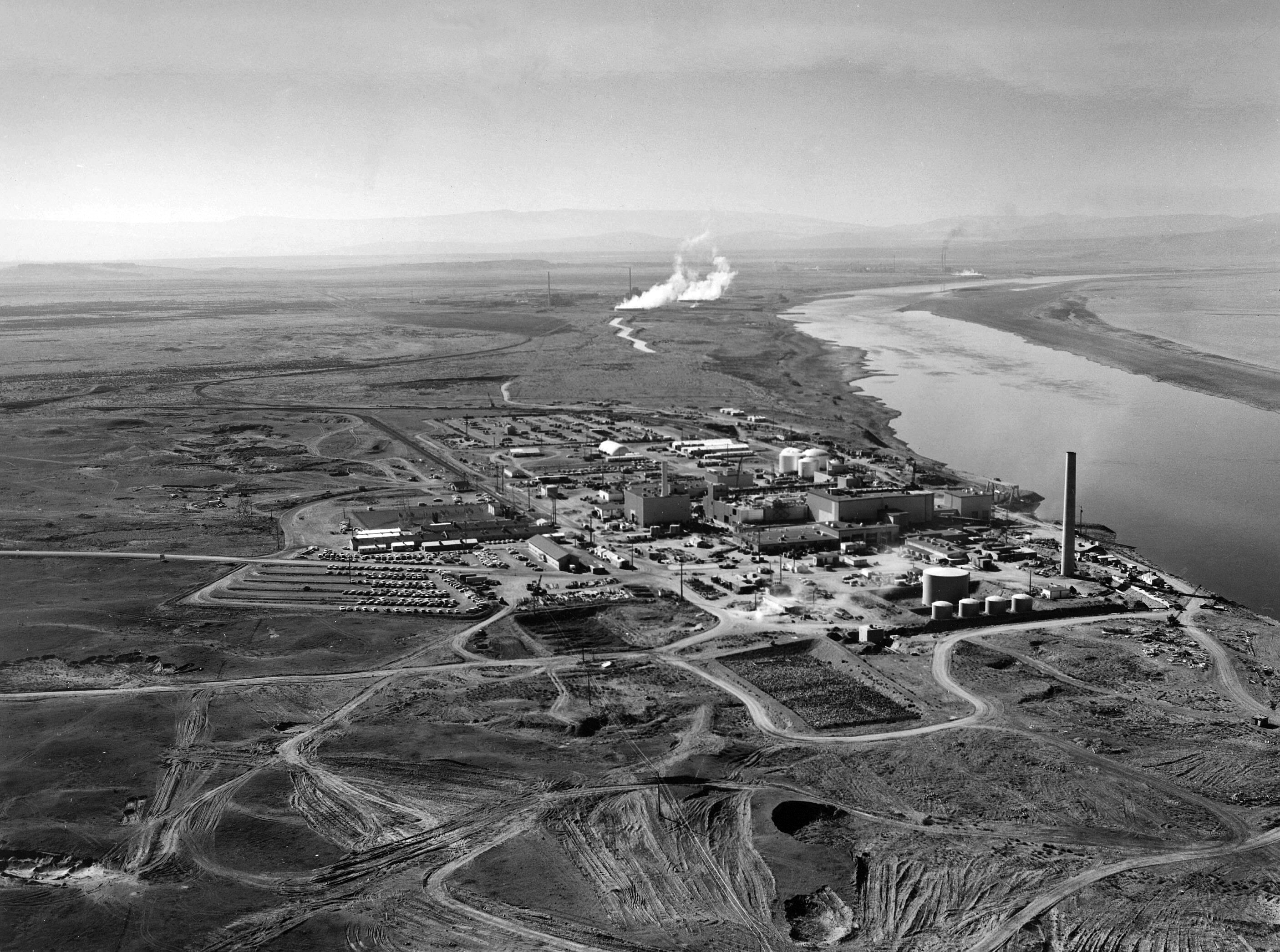
Hanford Reactor. http://en.wikipedia.org/wiki/Hanford_Site

Hanford Reactor. http://en.wikipedia.org/wiki/Hanford_Site

The people called a council and they talked about how they could give life back to the salmon. In legendary times those with supernatural powers could revive a lifeless creature by stepping over it five times. The people tried to use their own spiritual powers to revive the salmon. One by one they each stepped over the salmon five times, but to no avail.

There was a recluse named Old Man Rattlesnake. He never went anywhere always staying off by himself. He was very ancient and all the people called him “Grandfather”. Somebody said, “let’s ask Grandfather to help us! He is a powerful man. Let him revive the salmon!.” A messenger was sent. “Oh Grandfather, would you come and help us revive the salmon. Everybody has failed.” Old Man Rattlesnake listened and said, “What makes you think I am capable of reviving this lone salmon after everyone else has failed? I am an old man, how do you expect an old man like me to possess powers to do the impossible!”. The messenger was sad. “You are our last hope. Please help us, Grandfather”. Finally Old Man Rattlesnake agreed, “I will do my best”. He was so old it was very painful for him to move fast. He moved ever so slowly and it seemed like such a long way for one so old.

While Grandfather was on his way, Coyote tried desperately, using all his wily skills to convince the people he possessed supernatural powers. He was thinking to himself, “If I revive this salmon I will be a very famous person.” He stepped over it four times, and just as he was stepping over the fifth time, he pushed the salmon with the tip of his toe to make it appear as though it moved. He announced loudly, “Oh, look, my people, I made the salmon come to life. Did you see it move?” But the people were wise to the ways of Coyote and they paid him no attention.

Wishram Grandmother preparing Salmon. Edward S. Curtis photo.

Wishram Grandmother preparing Salmon. Edward S. Curtis photo.

Finally, Old Man Rattlesnake arrived. Painfully he crawled over the salmon four times. The fifth time something magical happened! Grandfather disappeared into the salmon and the salmon woke up and came back to life and the salmon came back to the rivers. The people learned their lesson well and took care to protect their salmon from then on.

Today when you catch a salmon, and you are preparing it for eating or preserving, if you break the spine you will find a white membrane inside. That is old Man Rattlesnake who gave life back to the salmon.

We did not know all this by ourselves; we were told it by our fathers and grandfathers, who learned it from their fathers and grandfathers. No one knows when the Great Chief Above will overturn the mountains.

But we do know this: the spirits will return only to the remains of people who in life kept the beliefs of their grandfathers. Only their bones will be preserved under the mountains.

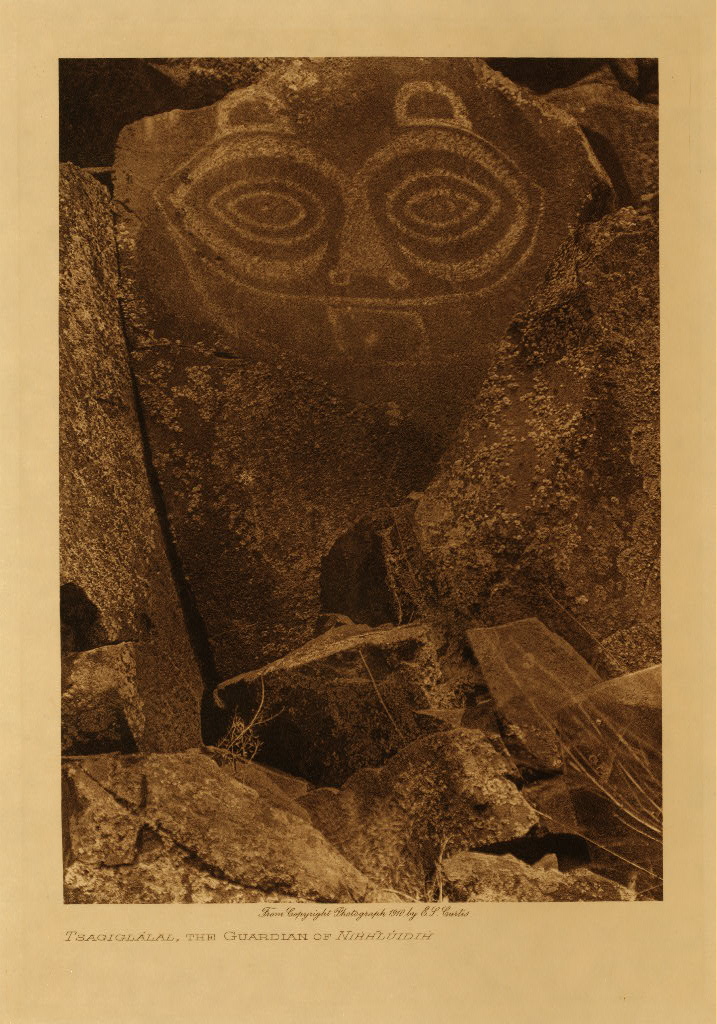
The Legend of Tsagaglalal (She Who Watches)

A woman was chief of all who lived in this region. That was a long time before Coyote came up the river and changed things, and the people were not yet real people. After a time Coyote, in his travels came to this place and asked the inhabitants if they were living well or ill. They sent him to their chief who lived up in the rocks, where she could look down on the village and know what was going on.

Coyote climbed up to the house on the rocks and asked, “What kind of living do you give these people? Do you treat them well or are you one of those evil women?”

“I am teaching them to live well and build good houses,” she said.

Edward S. Curtis photo.

Edward S. Curtis photo.

When she expressed her desire to be able to do this forever, he said, “Soon the world will change and women will no longer be chiefs.”

Being the trickster that he was, Coyote changed her into a rock with the command, “You shall stay here and watch over the people and the river forever.”

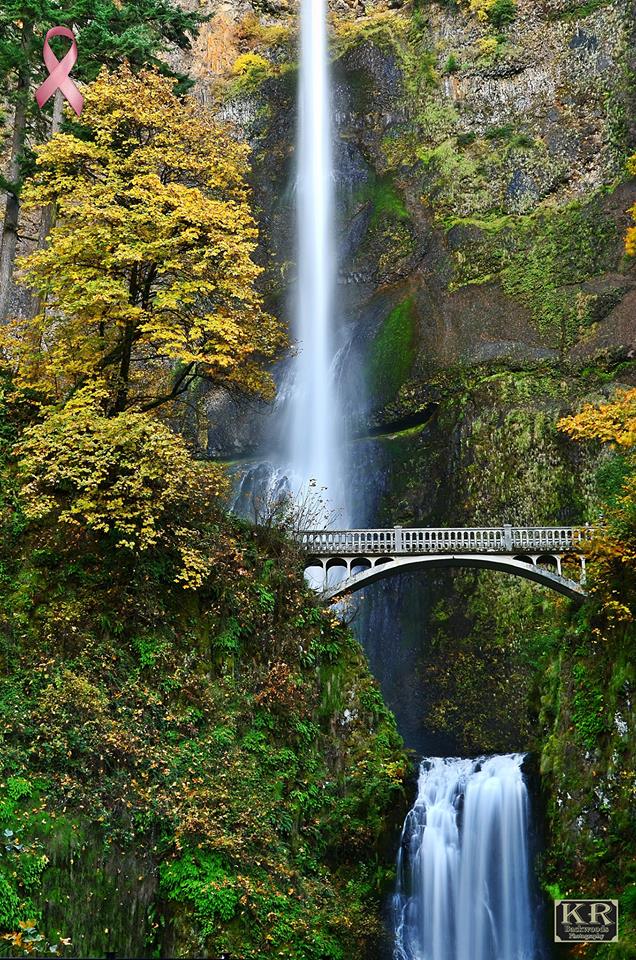
A Legend of Multnomah Falls: A Wasco Legend

Many years ago the head chief of the Multnomah people had a beautiful young daughter. She was especially dear to her father because he had lost all his sons in fighting, and he was now a old man. He chose her husband with great care, a young chief from his neighbors, the Clatsop people. To the wedding feast came many people from tribes along the lower Columbia and south of it.

The wedding feast was to last for several days. There were swimming races and canoe races on the river. There would be bow-and-arrow contests, horse racing, dancing, and feasting. The whole crowd was merry, for both the maiden and the young warrior were loved by their people.

But without warning the happiness changed to sorrow. A sickness came over the village. Children and young people were the first victims, then strong men became ill and died in only one day. The wailing of the women was heard throughout the Multnomah village and the camps of the guests.

“The Great Spirit is angry with us,” the people said to each other. The head chief called together his old men and his warriors for counsel and asked gravely,” What can we do to soften the Great Spirits wrath?”

Only silence followed his question. At last one of the old medicine men arose.” There is nothing we can do. If it is the will of the Great Spirit that we die, then we must meet our death like brave men. The Multnomah have ever been a brave people.”

The other members of the council nodded in agreement, all except one, the oldest medicine man. He had not attended the wedding feast and games, but he had come in from the mountains when he was called by the chief. He rose and, leaning on his stick, spoke to the council. His voice was low and feeble.

“I am a very old man, my friends, I have lived a long, long time. Now you will know why. I will tell you a secret my father told me. He was a great medicine man of the Multnomah, many summers and many snows in the past.

When he was an old man, he told me that when I became old, the Great Spirit would send a sickness upon our people. All would die, he said, unless a sacrifice was made to the Great Spirit. Some pure and innocent maiden of the tribe, the daughter of a chief, must willingly give her life for her people. Alone, she must go to a high cliff above Big River and throw herself upon the rocks below. If she does this, the sickness will leave us at once.”

Then the old man said,”I have finished, my fathers secret is told. Now I can die in peace.”

Not a word was spoken as the medicine man sat down. At last the chief lifted his head. “Let us call in all the maidens whose fathers or grandfathers have been headmen.”

Soon a dozen girls stood before him, among them his own loved daughter. The chief told them what the old medicine man had said. “I think his words are words of truth,” he added.

Then he turned to his medicine men and his warriors, “Tell our people to meet death bravely. No maiden shall be asked to sacrifice herself. The meeting has ended.”

The sickness stayed in the village, and many more people died. The daughter of the head chief sometimes wondered if she should be the one to give her life to the Great Spirit. But she loved the young warrior, she wanted to live.

A few days later she saw the sickness on the face of her lover. Now she knew what she must do. She cooled his hot face, cared for him tenderly, and left a bowl of water by his bedside. Then she slipped away alone, without a word to anyone.

All night and all the next day she followed the trail to the great river. At sunset she reached the edge of a cliff overlooking the water. She stood there in silence for a few moments, looking at the jagged rocks far below. Then she turned her face toward the sky and lifted up her arms. She spoke aloud to the Great Spirit.

“You are angry with my people. Will you make the sickness pass away if I give you my life? Only love and peace and purity are in my heart. If you will accept me as a sacrifice for my people, let some token hang in the sky. Let me know that my death will not be in vain and that the sickness will quickly pass.”

Just then she saw the moon coming up over the trees across the river. It was the token. She closed her eyes and jumped from the cliff.

Next morning, all the people who had expected to die that day arose from their beds well and strong. They were full of joy. Once more there was laughter in the village and in the camps of the guest.

Suddenly someone asked, “What caused the sickness to pass away? Did one of the maidens…?”

Once more the chief called the daughters and granddaughters of the headmen to come before him. This time one was missing.

The young Clatsop warrior hurried along the trail which leads to Big River. Other people followed. On the rocks below the high cliff they found the girl they all loved. There they buried her.

Then her father prayed to the Great Spirit, “Show us some token that my daughters spirit has been welcomed into the land of the spirits.”

©2013 Kevin Russel   http://www.krbackwoodsphotography.com

©2013 Kevin Russel
http://www.krbackwoodsphotography.com

Almost at once they heard the sound of water above. All the people looked up to the cliff. A stream of water, silvery white, was coming over the edge of the rock. It broke into floating mist and then fell at their feet. The stream continued to float down in a high and beautiful waterfall.

For many summers the white water has dropped from the cliff into the pool below. Sometimes in winter the spirit of the brave and beautiful maiden comes back to see the waterfall. Dressed in white, she stands among the trees at one side of Multnomah Falls. There she looks upon the place where she made her great sacrifice and thus saved her lover and her people from death.

A Reconciled Apocalypse: for Grandma Shirley

Grandmother was born on the threshold of a new age.
Assuming the role of a Father’s neglect
and a savior of a generation left with no shrine
So I build this altar of memory.

I remember her smell
Of prime rib and perfume-
Chasing me around with sinister dentures
And telling Skookum stories-
Scaring me from flesh
And finding my heart.

She dreamt and had visions
But kept them to herself-
Yet I could see them
In her eyes.

Her wrinkles ran like Gorges-
Where the tears would
Often flow.

She struggled-
And the struggle
Was her life
That she would
Roam.

Rites of passage transformed
In cigarettes and Patsy Cline
And looking for love
In all the wrong places.

We are all children
Of a
Reconciled apocalypse.

I lay a feather on this altar
And hear the wind sing-
“Fall to pieces.”

Home

Sit silent in the chorus of Frog songs.

dripping heavy, the Creek runs whitewash.


In these moments.

I can hear the land weep.

In Joy.

In Pain.

In Need.


The Frogs regain their voice.

and we sing in unison.

with shaky words

and sore backs.


and disappear in the wash

of

Sacred Waters.


How blessed are we

to still hear these,

composed beneath the Summer Moon,


HOME.

Gorge from sternwheeler dock

©2013 H a v e n