“No one must look at the rocks of the bridge. People knew that some day it would fall. They must not anger the Spirit Chief by looking at it, their wise men told them.
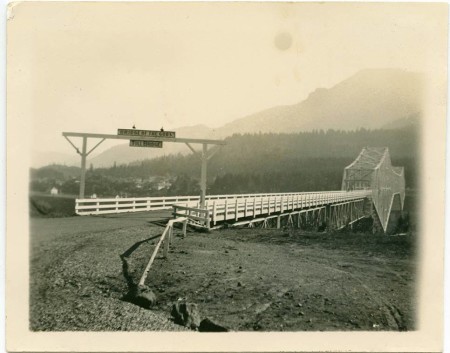
‘Bridge of the Gods’ ca. 1929, photographer unknown.
Read more here
“No one must look at the rocks of the bridge. People knew that some day it would fall. They must not anger the Spirit Chief by looking at it, their wise men told them.
‘Bridge of the Gods’ ca. 1929, photographer unknown.
Read more here
I woke up a bit before the Morning Star and could hear the silence of subfuscus mists hovering upon the hills and valleys. I laid awake, and reminisced about early mornings at Oceti Sakowin Camp in 2016, “Wake up, this is not a vacation!”.. I awaken to broken silence, echoing off old canyons, where trees fold time in the roots of soggy soil, I ponder my dreams.
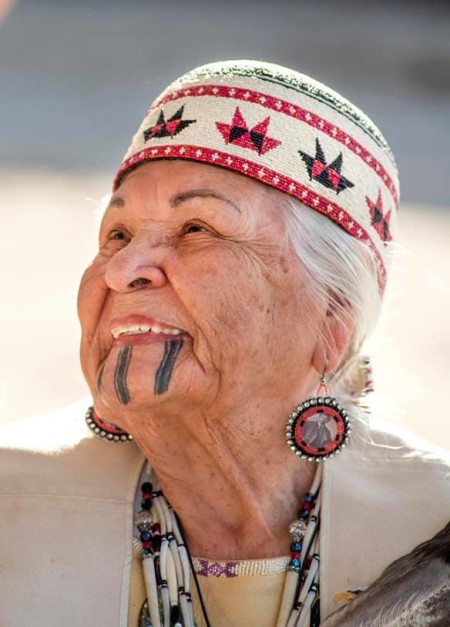
Taowhywee, Morning Star
My partner awakes to make some coffee and prepare herself for the journey. She knew Grandma Aggie personally, and looked up to her as a fellow Grandmother herself, learning to walk into Elder-hood. I watch her braid her hair with stories of Grandma, and what she meant to her. About her regrets of not staying in touch more, but holding the sacred memory close, she releases a single tear. I prepare the car for our journey to the Siletz Reservation, where we will lay Grandmother’s bones along side her relatives. As I am walking to the car, I hear my own Grandmothers voice in my head, and look up to greet the horizon. The young morning star obscured in fog seems so enchanted and calm. A deep breath overtakes me as I greet the day. I pray, remembering.
{Listen to my Grandmother, Shirley Amos, talking about finding our place in the sun.}
Our drive meanders through the Oregon Coast Range. The mists ebb and flow like the Ocean waves crashing against the shores of broken trees.
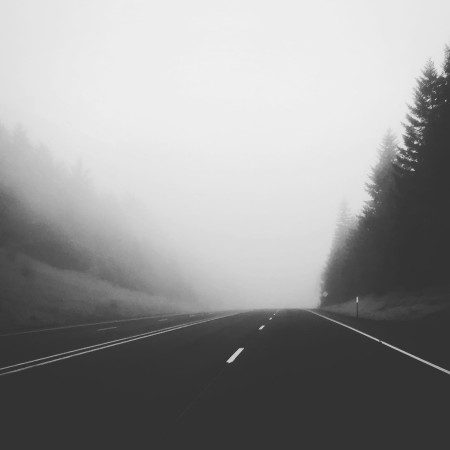
Hwy 20 west to Siletz Reservation. © H a v e n
Just as our stories are heartbreaking and traumatic, they are also laced in resilience and joy. There is a deep belonging to Place that fuels an inner fire no colonial power can kill, and no god can enslave. Yet, the scars are deep and seeping, and our Mother is in danger. We must find our place in the Sun, and rise above for the future generations. Thank you Grandma Aggie for the reminders, and the Stories.
The smells mingled in a frenzy of excitement, swaying with the brisk winds, carrying laughter and conversations into the chilly August night.

1954 Skamania County Fair: unknown photographer.
This photo really sums up in an image what this project is about to me. I can imagine what it would feel like to be Great Grandmother, watching the old ways die underneath the feet of something new. The very landscape has been rearranged and so has our Story. This photo is of the Cascades and Cascade Locks, Oregon prior to bonneville dams construction in the early 30′s.

A photo taken just before the Cascades were silenced. 193?, photo author unknown.
Read more about Bonneville Dam’s impact on my ancestors here
Celilo – Wyam 2005 Salmon Feast
Loss of Wyam caused pervasive sadness, even in celebratory events. The old Longhouse is gone. The Wyam, or Celilo Falls, are gone. Still courage, wisdom, strength and belief bring us together each season to speak to all directions the ancient words. There is no physical Celilo, but we have our mothers, fathers, sisters, brothers, and our children bound together for all possible life in the future. We are salmon (Waykanash). We are deer (Winat). We are roots (Xnit). We are berries (Tmanit). We are water (Chuush). We are the animation of the Creator’s wisdom in Worship song (Waashat Walptaikash).
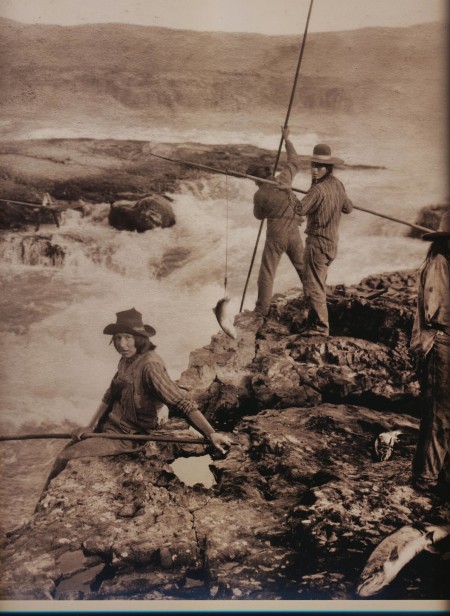
Unknown fishermen, unknown year, unknown photographer.. any information would be appreciated.
The leader speaks in the ancient language’s manner. He speaks to all in Ichiskiin. He says, “We are following our ancestors. We respect the same Creator and the same religion, each in turn of their generation, and conduct the same service and dance to honor our relatives, the roots, and the salmon. The Creator at the beginning of time gave us instruction and the wisdom to live the best life. The Creator made man and woman with independent minds. We must choose to live by the law, as all the others, salmon, trees, water, air, all live by it. We must use all the power of our minds and hearts to bring the salmon back. Our earth needs our commitment. That is our teachings. We are each powerful and necessary.”
published in River of Memory: The Everlasting Columbia,Layman,WilliamD.,Ed. UP: WA. Seattle, WA 2006
The hills drift in and out of vision as the rain slicked ground filters the deluge. In waves upon waves, it heaves and breaths.

‘rain drenched Phoenix’ | © H a v e n
An Edward S. Curtis photo from 1909 of my Ancestors old village site near Skamania, Washington. Lewis and Clark called us the ‘Shahala Nation’, when they came
 through the Gorge in 1805. We lived in three subdivisions: the Yhehuhs, who were above The Cascades of the Columbia River, the Chahclellahs, who lived below The Cascades, and the Wahclellahs, who lived near Beacon Rock. We had six villages on both sides of the river until the 1830′s, when what was called the ‘Cole Sic and Warm Sic’ (Malaria) epidemic came through and decimated our numbers to near extinction. Some number perspectives: in 1780, we numbered 3,200, in 1805, Lewis & Clark’s count was 2,800, 1,400 in 1812, and about roughly 80-100 after the epidemic of the 1830′s. The survivors then created the single village that became the Wat-la-la.
A grand spectacle! The sheer magnitude of these living waters, pummeling in their forever song of change.
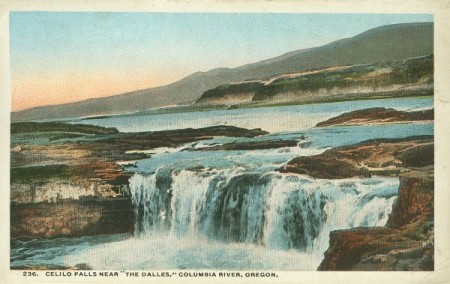
Post Card, Near The Dalles, 1917
“A cold wind was blowing from the north, and it made the trees rustle like living things.”
― George R.R. Martin, A Game of Thrones
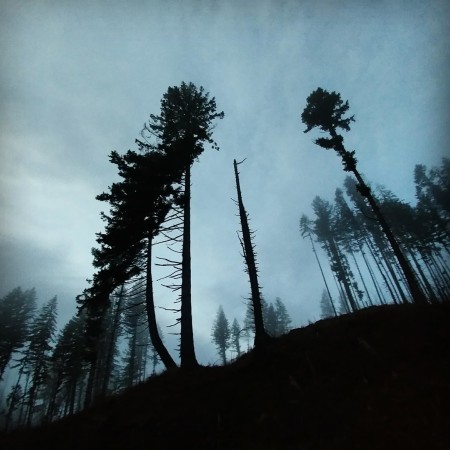
Horizons | © H a v e n
My heart lives here, amongst the rivers and restless winds. The hills and snowy peaks, wild flower and ancient tree. My bones rest here, in stone, and mud, and stories yet told.
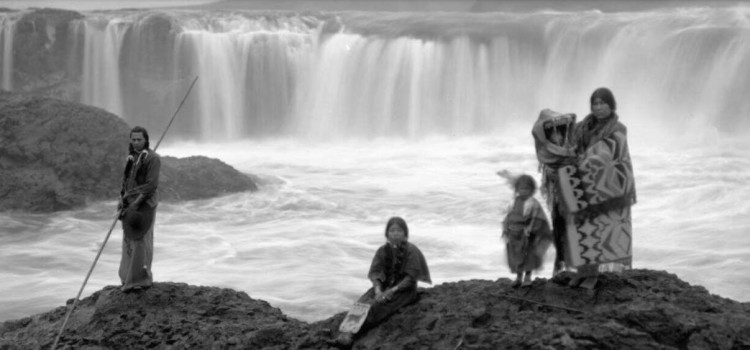
Family at Celilo, 189?
“My generation is now the door to memory. That is why I am remembering.” Joy Harjo
Many of us River People speak about still hearing those waters fall. Like a longing at the doors of our dreams. Or a remembering that we know in the beating of our hearts. Each pump a drum of longing to be home, amongst the joyful jumping of Salmon. A familiar smoke drifting from shacks holding old stories. The repeating patterns of metaphor, and the sound of Echoes of Water Against Rocks.
Watch the documentary, Echoes of Water Against Rocks, here: