Celilo – Wyam 2005 Salmon Feast
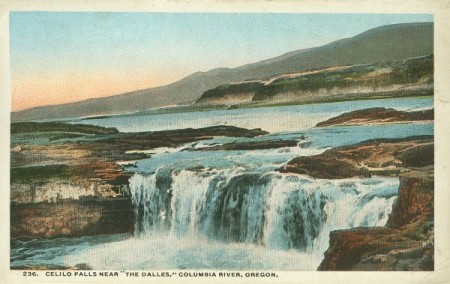
Loss of Wyam caused pervasive sadness, even in celebratory events. The old Longhouse is gone. The Wyam, or Celilo Falls, are gone. Still courage, wisdom, strength and belief bring us together each season to speak to all directions the ancient words. There is no physical Celilo, but we have our mothers, fathers, sisters, brothers, and our children bound together for all possible life in the future. We are salmon (Waykanash). We are deer (Winat). We are roots (Xnit). We are berries (Tmanit). We are water (Chuush). We are the animation of the Creator’s wisdom in Worship song (Waashat Walptaikash).
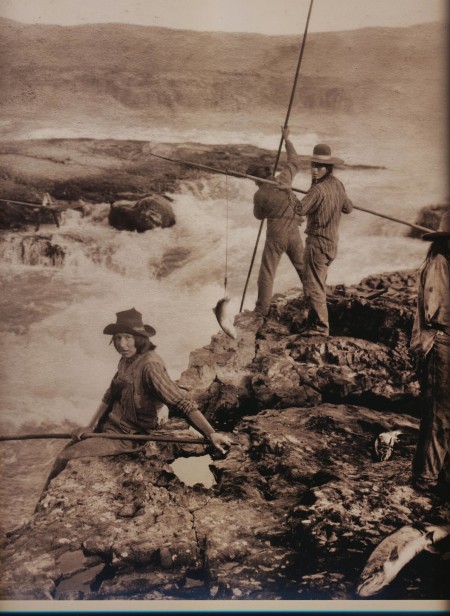
Unknown fishermen, unknown year, unknown photographer.. any information would be appreciated.
The spirit of the “Place of Echoing Water upon Rocks” is not silent. We care for the river and the life of traditional unity, the humble dignity, and purity in intention— wholeness. Ultimately, we restore life with our attention and devotion. Each hears the echoing water within.
The leader speaks in the ancient language’s manner. He speaks to all in Ichiskiin. He says, “We are following our ancestors. We respect the same Creator and the same religion, each in turn of their generation, and conduct the same service and dance to honor our relatives, the roots, and the salmon. The Creator at the beginning of time gave us instruction and the wisdom to live the best life. The Creator made man and woman with independent minds. We must choose to live by the law, as all the others, salmon, trees, water, air, all live by it. We must use all the power of our minds and hearts to bring the salmon back. Our earth needs our commitment. That is our teachings. We are each powerful and necessary.”
published in River of Memory: The Everlasting Columbia,Layman,WilliamD.,Ed. UP: WA. Seattle, WA 2006

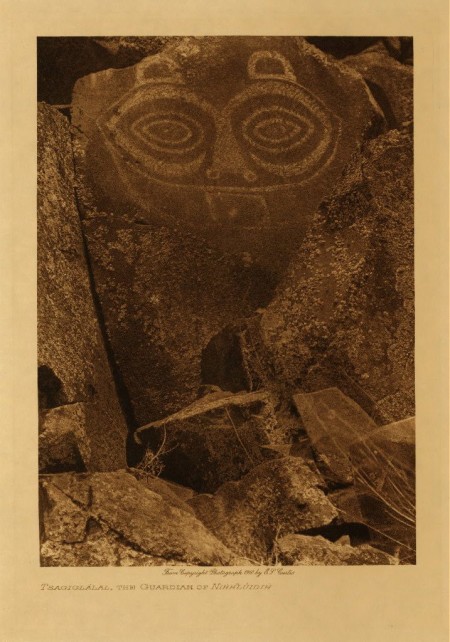 God call them home? The few survivors walked away dazed. Took to speaking other languages. Were replaced by strangers. After a few decades hardly anyone remembered that they had ever been there.”
 through the Gorge in 1805. We lived in three subdivisions: the Yhehuhs, who were above The Cascades of the Columbia River, the Chahclellahs, who lived below The Cascades, and the Wahclellahs, who lived near Beacon Rock. We had six villages on both sides of the river until the 1830′s, when what was called the ‘Cole Sic and Warm Sic’ (Malaria) epidemic came through and decimated our numbers to near extinction. Some number perspectives: in 1780, we numbered 3,200, in 1805, Lewis & Clark’s count was 2,800, 1,400 in 1812, and about roughly 80-100 after the epidemic of the 1830′s. The survivors then created the single village that became the Wat-la-la.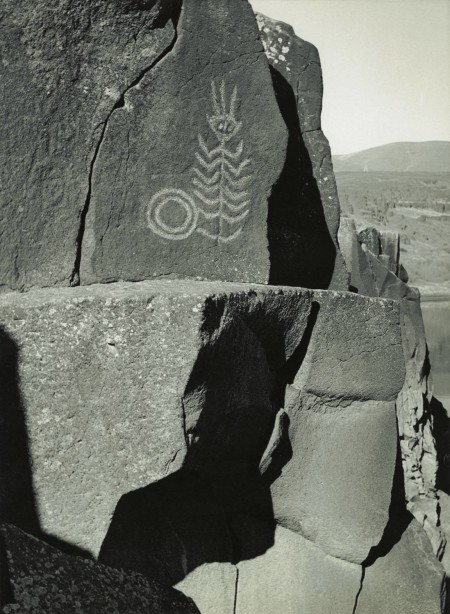
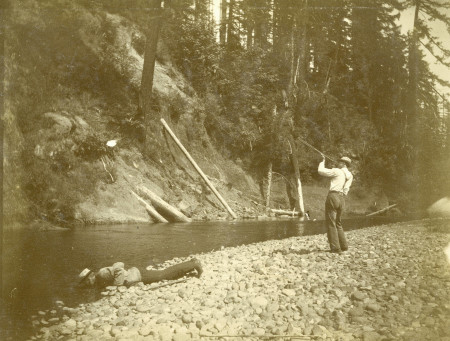
 was part of a substantial population that refused to settle or stay on the reservations. Many of them came to identify themselves as Columbia River Indians, or River People, based on their shared heritage of connection to the river, resistance to the reservation system, adherence to cultural traditions, and relative detachment from the institutions of federal control and tribal governance. ”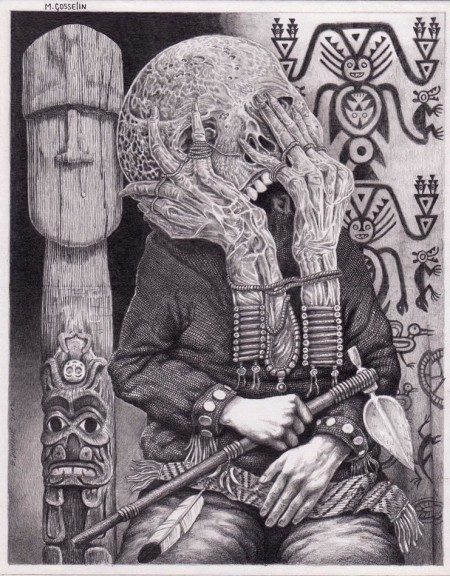
 tumble weed winds, swift and warm. There is a calm here in the big sky horizons, where reluctant life forges ahead through the harsh winters and dry summers. The lonely sacredness of dreams tied up in old stories that still live in Post Office conversations. I admire the Stoic vastness of the Prairie, stretched as far as the eye can see. I visit when I can, and get lost in the hushed whispers of time.