Green Stuff: What Legends are made of

Jello made its way into my family’s DNA—one molded and folded, whipped and loaded potluck after another, it became a part of our family tree. Growing up, the space-aged gelatin treat was present at every gathering and on every road trip. In the mountains, around the fire, we’d pass around Tupperware filled with finger jello, sometimes encasing unsuspecting maraschino cherries in its gelatinous embrace. Or we’d enjoy raspberries whipped with Cool Whip, baptized in cottage cheese-textured bliss. But my mother’s Green Stuff was the stuff of legends—a true crown jewel among the Potluck Queens.

It was a mystery, a secret recipe passed down from Sunset magazines and the backs of cleaner boxes.

“Jules, what’s in that?” people would ask. “It’s a secret,” she’d reply.

It tasted of pistachios and cottage cheese, walnuts and grapes. Heaping green mounds adorned our cousins’ plates, alongside Grandma’s chicken and the promise of safety.

Eulogy for all the ways we say wind

“The wind shows us how close to the edge we are.” ~Joan Didion

IMG_7330The dashboard glowed faint and useless, the numbers flickering with a tired rhythm that offered no comfort. The gas gauge hovered above empty, the check engine light a steady, accusatory orange. I stared at the dash, willing it to tell me something, anything. But it only pulsed with the stubborn life of a machine too old to trust. I cut the engine. The silence that followed felt heavy and broken, pressing against the thin, dinted glass of the windshield.

The mesa unfolded in front of me, open and exposed, stretching endlessly under a bruised sky. The sun was already swallowed by the horizon, leaving only a thin line of fire on the edge of the world, burning away the last warmth of the day. A chill crept in, sharp and insistent, curling beneath my jacket and into my bones. The desert air tasted of dust and old dreams.

I sat still, knuckles pale against the steering wheel, watching as shadows drifted along the roadside. Out here, the distance wasn’t just space. It was a presence, looming and impossibly broad, a kind of emptiness I couldn’t drive through or leave behind. It was the kind of quiet that made you think of everything you’d ever lost.

A River runs through me.

A River runs through me.

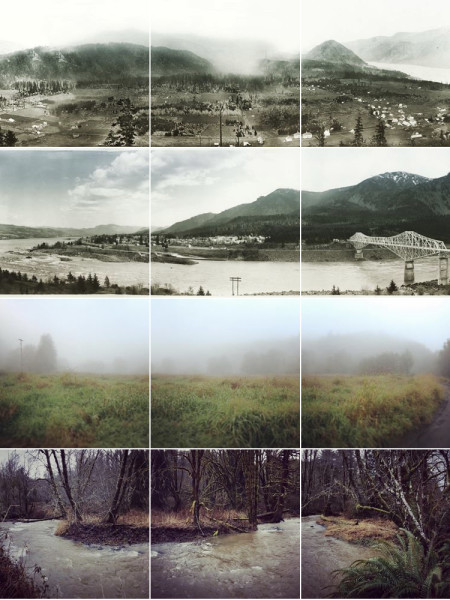
I thought of the Gorge, miles and memories away. I thought of rain pounding down in thick sheets, of the river below roaring with purpose, carving its way through stone. There, everything felt alive, if only for a moment; water and wind and the scent of fir. But here, only dust floated, refusing to settle, shifting with every restless breath of wind. The sky seemed wider, the world more brittle.

Was anything left back home? Did the fog still roll in off the water, thick and forgiving? Or had even that faded, leaving behind only dry riverbeds and brittle grass? I tasted nostalgia like iron on my tongue—sharp, metallic, unyielding. Memory flickered, unreliable and distant. I tried to recall faces, voices, the weight of belonging, but the details slipped away, replaced by the drone of cicadas and the endless sigh of the wind.

Had I ever really belonged anywhere? Or was it only the illusion of belonging I missed? Or the comfort of a place that remembered me, even as I tried to forget it?

I opened the door, letting the cold rush in. The air outside was thin and empty, charged with a restlessness I couldn’t name. I stepped out, boots crunching on scattered gravel. My shadow stretched long and distorted, a thin echo on the faded earth. The land was silent except for the wind, which carried the faint smell of sage and something burnt.

I wandered a few steps from the car, eyes searching for some sign: a familiar rock, a twisted juniper, anything that would anchor me. But every landmark felt strange, hollowed out, as if the world itself had shifted in my absence. The land offered no comfort, only space and silence and the slow, creeping dread that whatever I was searching for was already gone.

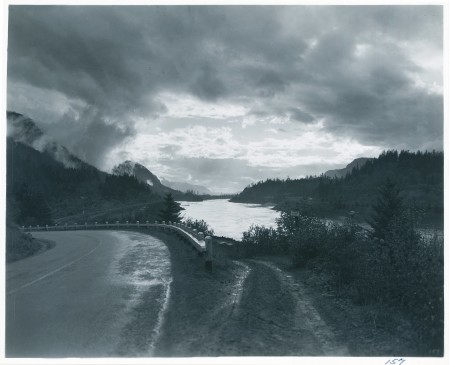
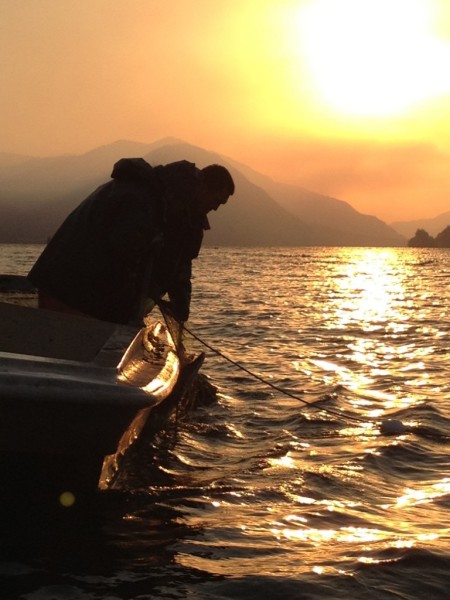
Sunset on Columbia River from Bridge of the Gods. 193?

Sunset on Columbia River from Bridge of the Gods. 193?

Sometimes, in dreams, I saw the Gorge as it used to be; wet, green, alive. I saw my mother’s hands, my father’s boots by the door, the soft glow of lamplight on fogged windows. But here, the past felt unreachable, a different lifetime entirely.

Time felt heavier here, pressing down, flattening hope, flattening memory. I kept scanning the horizon, looking for signs. Anything that would tell me which direction was forward, which was back. But the desert gave nothing away. The world was pared down to essentials: rock, sky, wind, and the slow ache of longing.

I found myself thinking about the people I’d left behind. Friends I’d promised to write. A sister who never answered the phone. The neighbor with the old dog who always barked at dawn. Had they changed, too? Did they remember me, or was I just another name lost in a stack of mail, a number in an address book never dialed?

IMG_8943The stark beauty of the mesa cut deep. It was a beauty I couldn’t carry with me, only endure. I stood by the old 4Runner, staring west, wondering if the Gorge remembered me. Wondering if the dust there was still dark, still alive, or if it had turned to ash, scattered and lost by time and wind.

The wind shifted, colder now, bringing only the scent of stone and emptiness. I slipped back inside, shivering, my hands trembling against the cracked vinyl seat. The darkness outside pressed closer, hungry and vast, and the world I once knew felt impossibly distant, receding in the rearview.

Circling in dreams.

Dreams We Weave, Marks We Leave: Reflections on Poet Warrior by Joy Harjo

“I walk in and out of several worlds every day.” —Joy Harjo

Link: Poet Warrior: A Memoir, By Joy Harjo

Some mornings, I wake unsure which world I’ve landed in. My body is here, jittered, somewhat grounded, pressed to the cold skin of earth, the taste of coffee lingering at the back of my mouth. But my mind is scattered across dream and daylight: one part drifting through old stories, the other scrolling the infinite blue of my phone, looking for a sign that I still belong to something older than algorithms.

Dreams have always been more than private flickers behind closed eyes. Among my people, dreams are the braids that bind us—to land, to each other, to those who came before and those not yet born. Dreaming isn’t solitary; it’s a communal current, threading through ceremonies, firesides, and quiet dawns. The dreamers are weavers.They return with gifts: stories, warnings, laughter, medicine for the waking world.

Joy Harjo calls these dreamers “poet warriors.” I read her words in Poet Warrior and feel the braid tighten around me, a gentle, insistent pull. She writes, “We are evidence of love, the burdens and gifts we carry,” and I sense the weight and the lift of that inheritance. She reminds me that story itself is a braid, never a single strand, but three, four, a dozen voices woven together. The dreamer listens not just to their own heart, but to the wind rattling the cottonwoods, to the ancestors whispering through the river, to the coyote slipping through the dawn.

I often reflect on what it means to be part of a story that is bigger than just myself. Poet Warrior isn’t a book that moves in a straight line. Instead, it circles and returns, built from fragments and spirals. Harjo’s chapters loop back on themselves, weaving together poems, memories, songs, prayers, and prose. Each layer adds meaning, like a river building up silt or a petroglyph deepening with time. Reading her work gives me permission to let my own writing roam, to braid together poetry and memory, image and reflection, to trust that the story will hold together, even when I can’t see its full shape.
#

I can’t do anything
but talk to the wind,
to the moon
but cry out goddamn goddamn
to stones
and to other deathless voices
that I hope will carry
us all through.” ― Joy Harjo

The first time I pressed my hand to a petroglyph on the basalt cliffs above the Columbia, I didn’t know what I was supposed to feel. The stone was warm, almost oscillating. The spiral carved there was older than any story I’d heard in English, older than the language I never learned but sometimes dream in. It felt like a conversation I’d arrived late to, but could still lean in close and catch a word or two. Stepping into a circle already formed, voices looping through the centuries, I pressed my ear to the stone, caught a word, snagged a thread, and let myself be woven in. Even if I had missed the beginning, somehow, I belonged.

“Remember, you are this universe and this universe is you.”

I think about craft, what it means to make a mark meant for someone you may never meet. The old petroglyphs were not just art, but message: I was here. We hunted here. Water came from this place. The salmon ran strong. Maybe a prayer layered in, or a bit of trickster mischief. The tools were simple. The intention was not. Harjo teaches that poetry, much like petroglyphs,is a way of listening as much as speaking. She writes, “I follow the spiral to the core, to the source, to where dreaming and the story begin.” My own tools now are a cracked phone, a battered notebook, a keyboard sticky with coffee rings. My marks are digital, ephemeral, a tweet, a story pinned to a map, a GPS breadcrumb trail a cousin left to show where the old berry patches still grow. But the intention remains: to reach someone beyond my sight, to leave a trace that says,

This is what mattered to me. This is what I saw.

#

I sit up in the dark drenched in longing. / I am carrying over a thousand names for blue that I didn’t have at dusk.”― Joy Harjo

When I read Poet Warrior, I recognize the mark-making urge in myself. The need to leave something, not just for remembrance, but for renewal. Harjo reminds me that every mark was new once, every story is a risk, every dreamer in danger of being erased or misunderstood. The work is not to guarantee permanence, but to show up with intention: to carve, in whatever medium, a story that’s honest, open, and willing to be found. “The story is always ahead of you, waiting to be found,” Harjo writes. Her words invite me to experiment with form: to let prose and poetry flow together, to create layers a future reader might sift through like sediment, discovering pieces of what was meant.

The best marks, I think, are collaborative, layered with meaning the maker never imagined. In Harjo’s words, “We all become ancestors in training.” What we leave behind is not only for remembrance, but for renewal.

Glitch in the stream


“Call your spirit back. It may be caught in corners and creases of shame, judgment, and human abuse.
You must call in a way that your spirit will want to return.” – Joy Harjo

Introduction

Sometimes I think of this blog as a basket. A basket I’m always filling with fragments of myself. Land and water have their own ways of holding onto what matters, even as everything else shifts and slips away. Longing and belonging run through these pages; old stories keep surfacing, no matter how often we’re told to let them go or leave them behind.

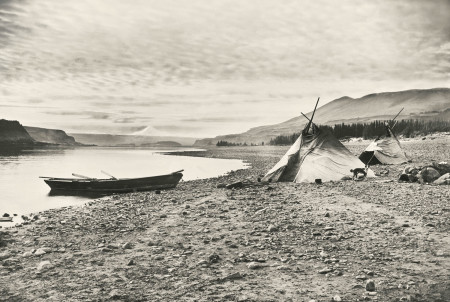
Home Guard on the Columbia, by Benjamin A Gifford (1899) (photo- courtesy The Valley Library, Oregon State University)

Home Guard on the Columbia, by Benjamin A Gifford (1899) (photo- courtesy The Valley Library, Oregon State University)

I keep circling back to those in-betweens: between faith and doubt, between what we’re allowed to say and what we still need to hear. Being two spirit, being queer, being Indigenous, none of it fits neatly into the categories handed down by those pamphlets and sermons. The stories I share here are often untidy, sometimes awkward, sometimes just a breath or a question.

Writing all this has been my way of making sense of what’s been lost and what still survives. Of finding the places where grief and hope sit side by side. Some days, the words come easy, like Coyote slipping through the brush; other days, it’s just sitting with the ache, waiting for something true to rise up.

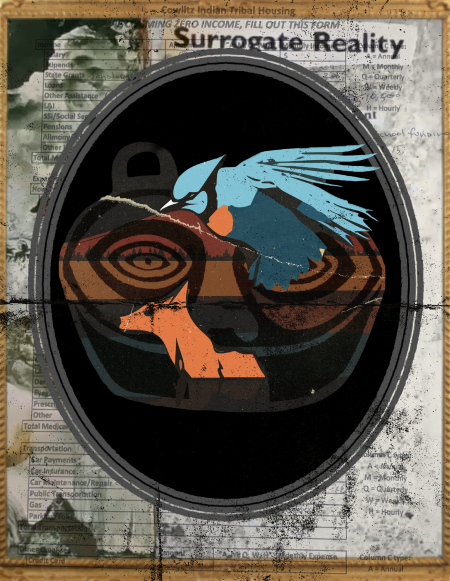
Art by Si Matta

Art by Si Matta

If you find yourself anywhere in this tangle—wondering, remembering, searching for language that feels like home—just know you’re not alone. There’s room here for all of it: the old stories, the quiet resistance, the new ways we find to belong to ourselves and each other. This is just another piece of the gathering. Let’s see where it leads.


I.Where the Story Glitched

As the onslaught of settlers to the Columbia River Basin dredged a new paradigm of disease and displacement, there was what Hunn describes as a “spiritual apocalypse” among the River People. (Hunn & Selam, 1990, p. 241) A “spiritual apocalypse” where animist cultures struggled with the biological reality of disease, for there had to be a spiritual reason for the trauma- something must be out of alignment with the spirit.

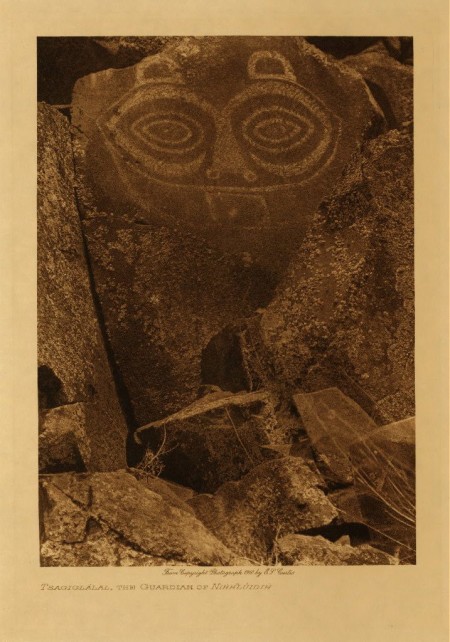
There are stories older than the fractures we inherit. Before the missionaries, before the epidemics, before the thunder of Coyote’s mischief echoed up the river, there was a different kind of order—one in which Tsagaglalal kept her eyes on the people, and the world was alive with spirit. But when Coyote turned her to stone and declared an end to women’s leadership, something was set in motion. Later, when settlers swept through, bringing disease and displacement, the River People faced not just a physical apocalypse, but a spiritual one. My ancestors, like so many others, searched for meaning in the devastation, believing something must be out of alignment with the spirit. I feel that search still, running like an undercurrent beneath my own questions of belonging, faith, and truth. The fracture didn’t end with them. It runs through me, too, and through the stories I’m still learning how to tell.
12697363_1109859742359005_2764864803838113474_oIn my family, and in the memories that float up around shared meals or linger in the quiet after a prayer, I sense the echoes of this original break. There’s a hunger to explain why so much was lost, why the world my great-grandparents described feels so different from the one I grew up in. The old stories say that when Coyote came upriver, laughing and clever, he brought change that was meant to keep order, but instead left us with a wound that never quite healed. Tsagaglalal—She Who Watches—was given a stone body so she could see forever, but her voice became something we had to listen for in the wind, or in the pause before an elder speaks.

When settlers arrived, carrying new gods and new diseases, the ground shifted again. The River People, rooted in animist ways,where stones, salmon, and even the wind carried spirit, were suddenly forced to face loss on a scale that felt impossible. Hunn called it a “spiritual apocalypse,” a time when the breach between body and spirit became impossible to ignore. When whole villages disappeared overnight, when familiar ceremonies failed to keep death away, my ancestors,like so many others at the time, searched for answers in the only places they could: in dreams, in stories, in the uneasy sense that something was out of balance in the world.
IMG_2610
It’s strange how trauma moves through generations. The original fracture—the turning of a matriarch to stone, the erasure of women and two spirit people from ceremony, was just the first. Every wave of missionaries, every epidemic, every law forbidding ceremony or language widened that split, until the silence itself felt inherited. I grew up catching glimpses of what was missing: a grandmother’s hesitation before telling an old story, a tightening around the word “queer,” the careful folding of hands before a meal, as if trying to keep the sacred from spilling out.

I wonder sometimes if this is why shame comes so easily—why depression feels built into the

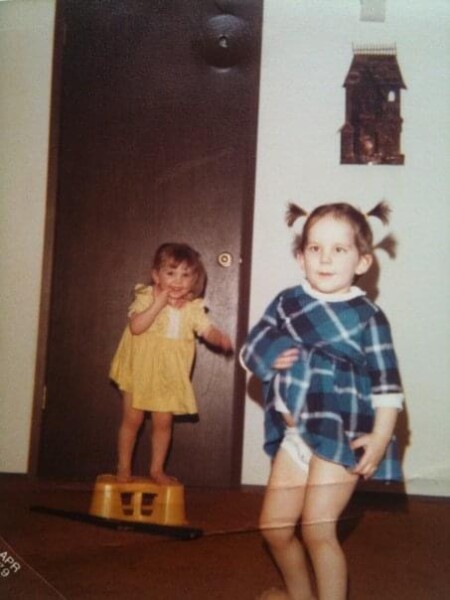
My Sister and I, circa 1979

My Sister and I, circa 1979

bones, why addiction and silence become so familiar. Colonial violence didn’t just take land or language; it planted silence deep in our blood, teaching our ancestors to guard their words, to tuck away what was sacred or strange for fear of punishment or loss. When you’re told that spirit and body are separate, that who you are or who you love is out of alignment with what the world expects, the original wound gets handed down- wrapped in shame, caution and grief. That kind of silence settles in quietly, showing up in the hesitation before a question, in the way stories are stopped short, in the careful ways we move through spaces that never felt safe for all of who we are. It’s a fracture that isn’t just history. It’s lived and relived every day, quietly shaping how we see ourselves and what we’re allowed to speak aloud. In this haze, the birds whispered my name.

II. The Birds Whispered My Name

Some birds are not meant to be caged, that’s all.- Stephen King

The birds whispered my name,
As I fidgeted on a cold chair,
Learning of a god dressed in thorns.

As they talked in righteous dictation,
I would pull thorny brambles from dirty hands-
Finding god in the splinters.

I remember how the rain tasted-
Dry in safe beds made from synthetic fibers.

Yet I could hear the birds whisper my name,
Telling me stories,

We forgot to tell ourselves.

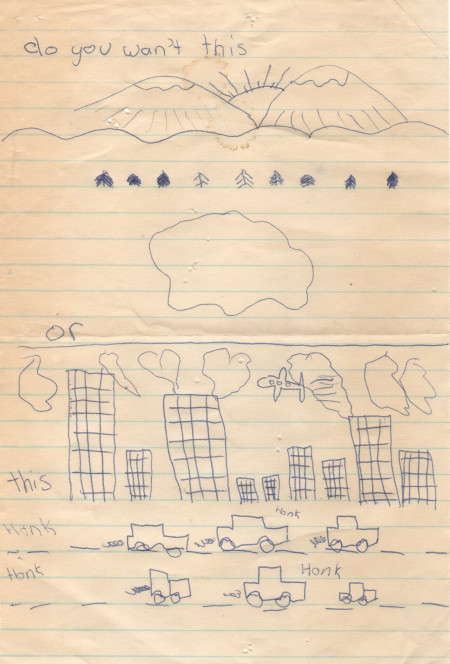
A very early drawing of mine I drew during church

A very early drawing my sister, Jadie Russell, drew in church. 1980′s

“Spiritual Apocalypse”: Settler Colonial Effects on the Changing Identities of Columbia River Indians

In 1988, during my time in middle school, my US history teacher delivered the news to the class that the Cascade/ Watala tribes residing along the Columbia River were no longer in existence because they did not have a reservation. This revelation struck a chord within me, as I felt deeply connected to the stories of my ancestors, both in flesh and spirit. In response to this declaration, I boldly asserted that we were not extinct, but rather transformed. This pivotal moment opened my eyes to a profound sense of self, one intrinsically intertwined with the land and the crucial presence of the Salmon, a keystone species. It was an identity forged out of defiance against the encroachment of settler colonialism and the reservation system that sought to uproot us from our sacred river. From the initial encounters with settlers to the present day, settler colonialism has irrevocably reshaped the physical and cultural landscapes along the Nch’i-Wanna (Columbia River).

Throughout history, the Nch’i-Wanna has served as the ancestral homeland for various indigenous groups such as eastmanschoolcraft_mapoforegonthe Watala/ Cascade, Wishram-Wasco, Klickitat, Yakima, Wanapum, and others. Despite their differences, these diverse cultures shared a deep connection with the river and its abundant Salmon. Ancient legends speak of Coyote bestowing the gift of Salmon upon the River People. The Salmon, in turn, carried the hopes and prayers of countless generations, swimming upstream to their birthplace at the Cascades Rapids (which gave the Cascade Mountains their name), passing through The Dalles straits, and continuing on to Wyam, also known as Celilo Falls, and beyond. Each spring, thousands would gather along the mighty river to celebrate the arrival of the first Salmon. They would sing songs, engage in trade, play stick games, and forge strong bonds of kinship. These vibrant cultures held a deep reverence for the natural world and had a profound sense of place. Traditional ceremonies like the Feather Religion were conducted to honor and express gratitude to the natural world. These cultural practices play a vital role in preserving the identity and heritage of the Columbia River Indians. They are a people who have chosen to live outside the confines of reservations and forced relocation, instead embracing the ways of their ancestors and the lifeways of the Big River.
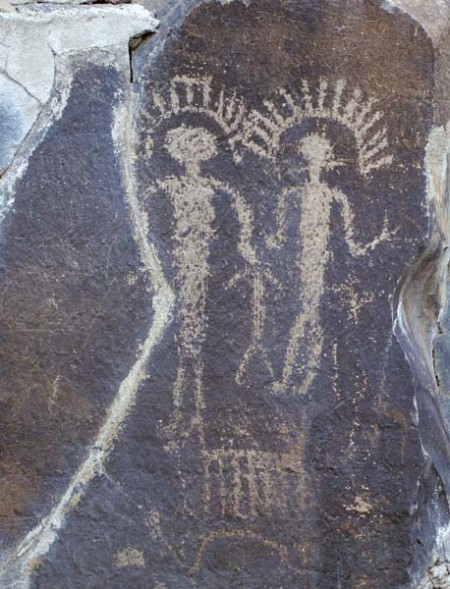
Magic of Place written in stone.

Magic of Place written in stone.

In this post, we will examine a timeline of immense changes that created and molded the Columbia River Indian
identity. Starting with an overview of pre-contact life along the Columbia River, we will examine the culture of stories and place that informed the Ancestors space in the cosmos and how violently that changed after first contact. We will look at how that first contact was a sight unseen as pestilence decimated a People who had never known such a thing. Animist cultures who internalized the settler crisis on a spiritual level, creating a “spiritual apocalypse” across the Columbia River basin, where Dreamer Prophets arose with promises of deliverance from the settlers disease, violence and reservations that tore kinship ties apart. We will look at how the term “renegade Indian” became synonymous with the Columbia River Indian, and how resistance to settler colonialism continues to this day. We are not extinct, only transformed.

I. Pre-Contact to First Contact: Prehistoric Life on the Mid-Columbia River and the Coming Storms of Pestilence

Long ago, when the world was young, all people were happy. The Great Spirit, whose home is in the sun, gave them all they needed. No one was Hungry, no one was cold. But after a while, two brothers quarreled over the land. The elder one wanted most of it, and the younger one wanted most of it. The Great Spirit decided to stop the quarrel. One night while the brothers were asleep he took them to a new land, to a country with high mountains. Between the mountains flowed a big river .” - Keeper of Fire, Bridge of the Gods Legend
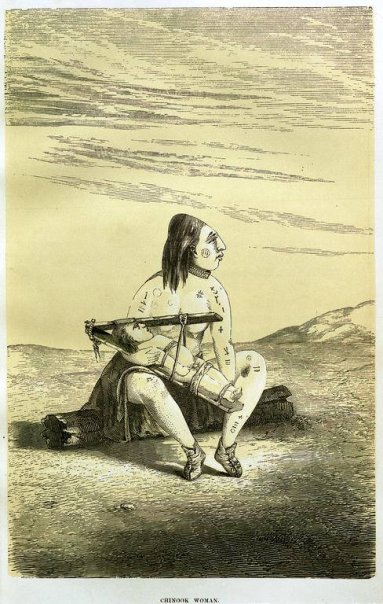
Paul Kane drawing of one of my Watala/ Chinook ancestors.

Paul Kane drawing of one of my Watala/ Chinook ancestors.

The Nch’i-Wanna has woven tales from the depths of volcanoes and the frozen expanse of ice through its elaborate ritual of creation. For ages untold, the mythologies surrounding the Columbia River basin have spoken of the profound reverence the People hold for this wild and picturesque landscape, often described “in poetic expression and high drama” (Hunn & Selam, 1990, p. 7). Stretching from the arid high desert plains of the upper Nch’i-Wanna to the verdant rainforests of the lower region, this mighty river has acted as a lifeline connecting various cultures, united by the abundance of Salmon. The indigenous tribes residing in the Mid-Columbia area skillfully utilized the bountiful salmon harvest in combination with plentiful root foods to sustain a substantial population, enabling the establishment of large winter settlements and summer gatherings that numbered in the thousands. (Hunn & Selam, 1990, p. 6). The land itself shaped the identity and way of life for the Mid-Columbia Indigenous people, permeating every aspect of their existence.

When Lewis and Clark made their westward voyage in 1804-05 they came across a Peoples who were already dealing with the effects of European contact with the spread of the smallpox epidemic among Pacific Northwest tribes in 1781. (Boyd, 2021) These epidemics swept through with a fury, altering the lives of thousands in a matter of a blink. It was endemic of what was ahead for the Columbia River Indians with the coming wave of settler colonialism. The epidemics began breaking down traditional tribal identities early on, cutting the population in about one half by 1801, yet the smallpox was just the beginning of the pestilence that would engulf Columbia River Indians. In the 1820’s, a Wasco prophet was reported to have had a vision that foresaw a day when many Indigenous People would “lay dead like driftwood along the shores of the [Big River].” (Fisher, 2011, p. 28) That vision became true just a few years later.

Fort Vancouver, HJ Ware, 1848

Fort Vancouver, HJ Ware, 1848

In the summer of 1830 “fever and ague”, also known as Malaria, broke out at the Hudson Bay’s headquarters of Fort Vancouver which decimated Chinookian villages of the lower Columbia. (Hunn & Selam, 1990, p. 27) These epidemics took more lives than all of the warfare provoked by settler colonialism and proved to further erode and eradicate kinship ties and families and create a void of identity among the Columbia River Indians as the story tellers, the elders, and the medicine people began to die and whole villages disappeared. (Fisher, 2011, p. 28) The storms had arrived and the stage had been set for an invasion that would alter the landscapes of the Big River forever.

II. “Spiritual Apocalypse” and the Making of the Dreamer Prophets

Tsagaglalal (She Who Watches) is said to be a death mask, a warning of pestilence

Tsagaglalal (She Who Watches) is said to be a death mask, a warning of pestilence

As the onslaught of settlers to the Columbia River Basin dredged a new paradigm of disease and displacement, there was what Hunn describes as a “spiritual apocalypse” among the River People. (Hunn & Selam, 1990, p. 241) A “spiritual apocalypse” where animist cultures struggled with the biological reality of disease, for there had to be a spiritual reason for the trauma- something must be out of alignment with the spirit. Elizabeth Vibert describes in her journal article “The Natives Were Strong to Live”: Reinterpreting Early-Nineteenth-Century Prophetic Movements in the Columbia Plateau”:

In the first two contact-era Plateau epidemics (I770s and 18oo-i), there is much to indicate that illness and death were not blamed on outside contagion. The peoples of the region turned inward for explanation. Smallpox, and other serious diseases, signaled an imbalance or power struggle among the personal spirit partners that animated the spiritual universe of the Plateau. Smallpox was read as a spiritual crisis within Plateau societies, and the prophetic movements of the time were an attempt to stem that crisis. (Vibert, 1995, p. 4)

These prophetic movements were a grounding force within the Columbia River Indians cosmology. A way to bring sense to their changing world and align themselves with the wisdom of their elders, and to bring them back to life to help aid in restoration of traditional lifeways.

One of the earliest accounts of a plateau prophet traveling to the mid-Columbia region was that of Kaúxuma núpika, an indigenous transgender prophet living on the Columbia Plateau in the early nineteenth century. Kaúxuma núpika traveled the length of the Columbia River, prophesying a coming apocalypse and the destruction of Native people by epidemic diseases brought by Euro American settlers. (Crawford O’Brien, 2015, p. 4) These prophecies resonated strongly with the River People, and was the beginning of creating the renegade spirit that would define the Columbia River Indian character as the settler apocalypse sharpened its teeth. Although Kaúxuma núpika hit a chord with the People, it would not be until the prophet Smohalla and his Dreamer Religion would emerge in the 1850’s that the Columbia River Indian would claim a spiritual resistance to the settler apocalypse.

Chief Smohalla

Chief Smohalla

Conceived around 1815 in a Wanapum village along the Columbia River, Smohalla was born during a time of great upheaval for his People. Smohalla would have profound visions and dreams during death like sleeps where he would profess to talk to the dead and receive instructions from Creator. He amassed loyal disciples with his decree called Wa-sani (Washani, meaning “dancers” or “worship”). They believed that Indians must stop tilling the soil or face divine retribution. To obey the creed and faithfully perform the wa-sat (“dance”) meant the Creator would reward the People by making the whites die off or disappear, deceased relatives would return to life, and the land would revert to its pristine state from before first contact. (Fisher, 2011, p. 84) Smohalla’s prophecies spoke directly to the renegade spirit of the Columbia River Indians, and would prove to be a thorn in the side of the reservation system that was emerging from the settler apocalypse.

III. “Nurseries of Civilization”: Diaspora, Reservations, and Resistance Along the Big River and the Emergence of the Columbia River Indian Identity.

“Where will we go? Where will we make our homes? If we lose our country what shall we do?”- William Chinook (Fisher, 2011, p. 37)
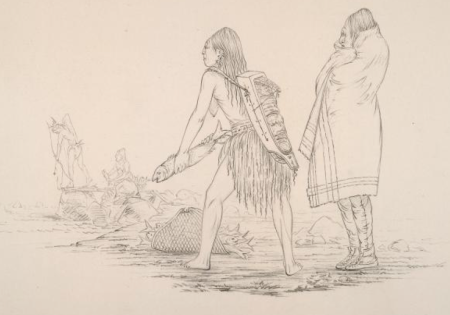
At The Dalles, George Catlin. 1850

At The Dalles, George Catlin. 1850

As if the apocalyptic pestilence of disease had not been enough, the coming storms of settler invaders brought with them further demands on resources; cultural, ecological, and biological resources became a desperate diaspora of survival for the Columbia River Indian. As more and more settlers moved in for the promiseland of Oregon, they brought with them the idea of taming the Indian from the land. The new paradigm demanded the Indian fit into “a suitable tribal taxonomy”(Fisher, 2011, p. 38) that was carefully curated between 1846-1855 based upon the ethnic stratification of the forty years previous. Forty years of broken family units, social bonds, and death created a “suitable tribal taxonomy” ripe to become the “nursery of civilization” and the birth of the reservation system along the Columbia River Basin. These stratifications were not just distinguished between generalized material culture and language, but were also gathered under a banner of “character”. Stereotypes of River People being “thieves”, for instance, would help sway settler popular opinions about the need to have them removed from their homelands. These forms of social control are endemic of a settler colonial framework, and have continued to help aid imperial United States foreign policy to this day. It is much easier to control those you deem as a problem/ different.

Treaty Lands

Treaty Lands

Flash ahead to that day in 1988 when my US History teacher tells us that my people are extinct- “a once noble and stoic savage now void from the place of their ancestors”. Yes, as far as a tribal distinction drawn up from settler colonial constructs are concerned, it would look as though we are extinct and landless. But, I am an enrolled Cowlitz, a cousin is an enrolled Yakama, another cousin is an enrolled Warm Springs, and my Greatx5 grandfather, Chief Tumulth, was a signer of the 1855 Kalapuya treaty- a treaty that threw us onto the Grande Ronde reservation in the soggy rainforest of the Oregon Coast Range- far from our traditional fishing grounds. Yet, at the core- we are of the Big River. These lines were drawn up out of the need for settler colonial interests to rid the land of the “Indian problem”, a “problem” they perceived to hinder the progress of a “civilized society” adherent to a single religion. This cognitive dissonance along the Big River really started to explode in the 1840’s, and the renegade Indian was emerging, unwilling to leave the life that was created for them by their ancestors and by the land as the state hurried its insatiable need for land and power.

Congress passed two pieces of legislation that unabashedly favored whites over Indians in the 1850’s. Starting in 1850 with the Oregon Donation Land Act, a piece of legislation that proclaimed that every adult male citizen could claim 320 acres from the public domain, and then with The Indian Treaty Act of 1850, which conveniently robbed the Indigenous People of their ancestral homelands and their removal to reservations to pave the way for a settler land grab.(Fisher, 2011, p. 40) These blatant racist policies of land theft and removal had no intention of honoring the cultural diversity of the Big River, only to further imaginary cultural lines that had nothing to do with the living cultures who were stuck in a desperate loop of survival. That survival was paramount to the Columbia River Indian- a survival that required them to live the life of their ancestors and to restore the land to its original pristine condition- just as Smohalla had instructed them. A land where the Salmon gifted all they needed.

Yakama Wars of 1855

Yakama Wars of 1855

A unified resistance was beginning to form in the early 1850’s, as Yakama headmen attempted to join their independent villages in a loose alliance that could better resist Suyapu encroachment. (Fisher, 2011, p. 41) These alliances began to monitor and discuss what was happening west of the Cascade Mountains as Governor Stevens quickly ratified several treaties by 1854. That same year, a large intertribal council with leaders from many Indigenous groups met in central Oregon to discuss a strong and unified resistance, maybe even armed, against the settler colonial expansionist empire of the United States. This spirit of resistance to Governor Stevens’ expectations was apparent among the Columbia River Indians, who would refuse to give up their autonomy and self sufficiency in his 1855 push to relocate them to reservations.

The general view of Indigenous Peoples along the Big River by settlers was that there was no such thing as a good or neutral Indian. The conflicts that were arising around the PNW at the time would be viewed as an organized and cohesive resistance to settlers, which was only intensified by the newspaper’s propaganda at the time. This culture of fear would lead to much violence provoked by settlers towards Indians. Just like with much of the United States at the time, volunteer vigilante militia groups would use excessive violence with the Indigenous populations of the Oregon territory. The violence fueled fear among the population, forcing many to the confines of reservations in hopes of escaping it. (Fisher, 2011, p. 57-58) This dichotomy would fuel a division among Indians, a division of traitors vs. traditionalists. The injustices that occurred in the seizing of lands and falsifying of treaties during the 1850’s even made the Governor cringe, even recommending that a new one be written up and ratified with the tribes. This recommendation was all but ignored when the senate ratified all treaties written four years earlier in 1859. “Mid-Columbia Indians accepted or rejected the treaties on their own terms, and continued to think of themselves as members of extended families and autonomous villages rather than constituents of confederated tribes.” (Fisher, 2011, p. 59) The 1850’s was a signal post to a greater sense of identity and a loose designation as Columbia River Indians that will accumulate recognition in the decades to come. All the while, the Salmon came and the River ran its seasonal cycles.

*****************************************

Columbia River Indian Family at Celilo Falls

Columbia River Indian Family at Celilo Falls

The River People were pacifists. Even as senseless, racist violence was bestowed upon them- they would not wage war against anyone during the Yakama wars because of their firm belief and religious conviction they had learned from their ancestors, and through the words of Smoholla, the dreamer prophet. Although most River People claimed neutrality during the Yakama wars, Indian Office officials soon learned that it was not a sign of concession, as “defiance of federal power and distrust of tribal authority” became “hallmarks of Columbia River Indian Identity.” (Fisher, 2011, p.61) This “distrust of tribal authority” would only deepen as time progressed. And the berries would come as the Salmon was dried for the winter villages.

The reservation system was an attempt to keep Indians contained, but the seasonal lifeways and kinship ties that had been practiced for millenia would not keep River People contained. This autonomy and mobility would frustrate the powers that be, unable to know for sure how many “reservation Indians” they had “contained”. Agent James Wilbur would judge the “wandering vagrant Columbia River Indians” as folks who would only come to “subsist upon their more provident relatives.” (Fisher, 2011, p.65) The traveling, reservationless Columbia River Indian became known as “renegades”, always to live outside the lines of containment- but within the lines of their ancestral duties to the land and kin.

Settler colonial demands that had created the “spiritual apocalypse” a short 60 years prior had failed to deter old lifeways from extinction. We often speak of resilience here in “Indian Country”, not because we wish we had it, but because without it, we would not be here today. This resilience was the lifeblood of a people who lived tied to the cycles of a Big River- and with big hearts, would continue to resist and fight off the dragons so intent on destruction. The resilience of watching your people perish and still awake with love in your heart is strength beyond measure. This resilience, this strength, this resolve to exist along the Big River is the benchmark of what it meant and means to be a Columbia River Indian. This resolve would continue to get us targeted as “renegades”, and by the 1870’s would land us the official government correspondence title as “Columbia River Indians”. (Fisher, 2011, p.68)

IV. Conclusion

That pivotal day in 1988 woke me up to the complexity of our identities along the
Nch’i-Wanna which was formed out of the “spiritual apocalypse” of settler colonialism. An identity forged with resilience and resolve to keep the Ancestors memories alive and practice the old ways. Settler colonialism did not drive us extinct, it only transformed us- a transformation that continues to this day.

References

Boyd, R. (2021, December 10). The first epidemics: How disease ravaged Indigenous Northwest peoples. The Seattle Times. https://www.seattletimes.com/opinion/the-first-epidemics-how-disease-ravaged-indigenous-northwest-peoples/

Crawford O’Brien, S. (2015). Gone to the Spirits: A transgender prophet on the Columbia Plateau. Theology & Sexuality, 21(2), 125–143. https://doi.org/10.1080/13558358.2016.1215033

Fisher, A. H. (2011). Shadow tribe: The making of columbia river indian identity. University of Washington Press.

Hunn, E. S., & Selam, J. (1990). Nch’i-wána, “the big river”: Mid-Columbia indians and their land. University of Washington Press.

Vibert, E. (1995). “The natives were strong to live”: Reinterpreting early-nineteenth-century prophetic movements in the columbia plateau. Ethnohistory, 42(2), 197. https://doi.org/10.2307/483085

The Eternal Fire: Standing Rock and the (re)Awaking of Dreams

“My young men shall never work; men who work can not dream, and wisdom comes in dreams.” —Smohalla 

In the still water quieted by pale dams, there is a whisper of dreams. A whisper that used to drive and propel hope through the changing landscape of “Indian Country” during the 1800s. In a time of great death and cultural genocide, many prophets spoke of dreams. Dreams that would bring the old ways back to the people.

Up River, Back Home

Up River, Back Home

Dreams were a fabric in which to weave stories of resilience and hope. These dreams kept the people fed and brought prophecy. The dreamer brought the people a sense of peace that one day their Ancestors would rise again from their untimely deaths brought about from settler colonialism. These are old dreams dressed in new clothes, a way for the Ancestors to keep speaking to us.

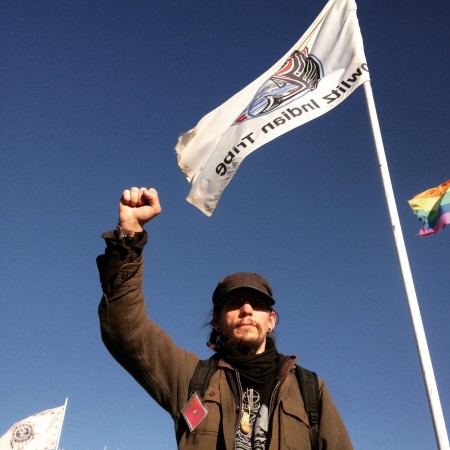
Many felt that a dream led them to the Standing Rock Sioux Reservation in 2016 to fight the Dakota Access Pipeline, including me. Many spoke of how it felt like their Ancestors had nudged them awake, as if the Earth was rising in a chorus of resistance to a machine that is hell-bent on destruction and greed. I recently read a Time magazine article about Standing Rock, that begins:

“Almost everyone who came to Standing Rock repeated the same legend. Someone, maybe Crazy Horse, had made a prophecy a long time ago—probably in the late 1870s—about the looming destruction of the planet.”

And that is exactly what called me there.

The liminal essence of dreaming was the fabric of everyday conversation in camp. From the morning prayers at the Sacred Fire to the frontlines of resistance, prophecy was on everyone’s lips. But to me, this was more than an Awakening. It was a confirmation that my dreams have always been telling me such things. Things I was beginning to finally understand.

********************************************

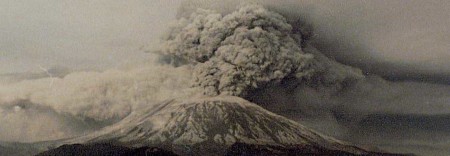
I was a young six-year-old; she was a timeless maiden. She changed my life! So clear the memory. So clear the vision. Awaken, the plume of ash on the horizon, safe near my parents. Several nights before, the whole house shook, the earth quaked, and I remember my curious thoughts: How did the Earth shake? What caused it? At that age, I was more of a scientist than an artist. But something changed in me, and my dreams would never be the same.

May 18th, 1980

May 18th, 1980


I was beginning to understand what my grandmother was telling me. She talked about the Bridge of the Gods, and the Mountains of Fire, and how the brothers Wyeast¹ and Pahtoe² would battle and argue for the love and admiration of Loowit³, or how Coyote made the N’ch-iwana⁴, and the stories of Thunderbird. She would talk about the little people, the Wah-Tee-Tahs, how they would lure you in with their mischief, all the supernatural stories of ghosts, and old burial sites, and my family’s struggle to make meaning out of the changing world around them. She would tell me these stories and end them with, “But we don’t believe like that anymore.”

It was true. She and so many members of my family stopped believing in the old stories and ways of our tribe and traded them in for a fundamentalist, vengeful god. When I was six and saw the timeless maiden Loowit blow her top on May 18, 1980, the old stories awoke in me. I wanted to know more about the old ways and how to practice them, but all I had to go off of were stories. And then the dreams came.

I used to pray, even if the sounds echoed into empty space. I had some faith that those words would reach some distant star, and portals would open up in the night sky. But instead I would dream. I would dream until I forgot what I was dreaming about. What was the reason for the journey? I often find the journey is the only thing that keeps me still most times, nodding off to the narcotic rhetoric of the modern age. It is in these journeys I meet my guides, who, with unforeseen hands, move the air of the fates in and out of existence. Coyote always seems to wake me up right before the climax. I was being shown a new way, a new story, if only I would listen.

Home Guard on the Columbia, by Benjamin A Gifford (1899) (photo- courtesy The Valley Library, Oregon State University)

Home Guard on the Columbia, by Benjamin A Gifford (1899) (photo- courtesy The Valley Library, Oregon State University)

The dream was this: Coyote was coming down the N’ch-iwana. He would stop at the lodges, rip open the doors, and yell, “Get up! The Salmon need you!”

He would stop at the fishing platforms dotted along the banks, yelling, “Stay alert! The Salmon are leaving! They need you!”

Everyone was bewildered.

“What is he talking about? Crazy trickster. He is always up to something!”

He would say back to them, “Get up! The Salmon need you!” Back and forth up the river he would go, telling anyone, whether they wanted to hear it or not, “Stay alert! The Salmon need you!”

I awoke to the feeling of sweat upon my brow, the dream resting on the tip of my tongue, goosebumps skimming my flesh, and my heart heavy with the message. “Get up! The Salmon need you!” I knew what was being asked of me; I felt it in my tired bones. It was the morning of October 26, 2016.

I was still sore and relearning the sacrament of swallowing. Just a week prior, I had a surgery on my esophagus to help cure a disease that nearly took my life. A month before my surgery, I had to live with a feeding tube in my esophagus, so it could start its healing process. I laid in bed, watching as the standoff at Standing Rock was unfolding. I felt a calling to be there, to help my cousins in North Dakota fight for their Sovereignty, and for the Mni Wiconi⁵, but was certain I would have to help from afar. On that cold October morning, I knew it was time to go.

I felt the old trickster’s words resonate in my heart. Indeed, the Salmon needed us. Since the first contact, Coyote had seen so much: from a river so fat with Salmon you could walk across it on top of their backs, to a silent dragon stuck in the gold pockets of a civilization determined to save a “savage” from its blasphemous ways. The roar of Wyam⁶ had grown silent to Coyote. And the Salmon, who fueled the stories and myth of old, were becoming ghosts before the spawn.

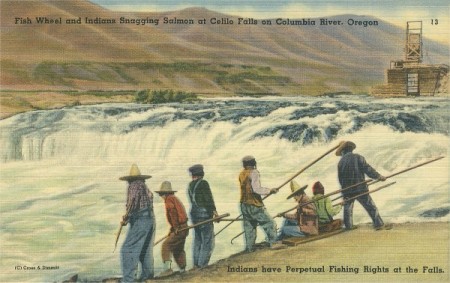
Celilo Falls, post card. ca. 1930

Celilo Falls, post card. ca. 1930


Many of us River People speak about still hearing those waters fall, like a longing at the doors of our dreams or a remembering that we know in the beating of our hearts. Each pump a drum of longing to be home amongst the joyful jumping of Salmon. A familiar smoke drifting from shacks holding old stories, the repeating patterns of metaphor, and the sound of Echoes of Water Against Rocks.

After the dream, I knew I had to go and stand with others who were standing against these mythical beasts. The sleeping dragon had awoken to the slithering black snake of the Dakota Access Pipeline. I packed my things and headed to Lakota country.


In Lakota prophecy, Zuzeca Sape is the black snake that comes into the land, breeding division and destruction in its path. I had heard this prophecy before from my Aunty Teri, who had learned much of the Lakota’s stories from her early activism with the American Indian Movement in the early 1970s. But only now were some of the meanings becoming apparent. Many tribes of People talked about the NoDAPL movement being Zuzeca Sape, and many People talked about their dreams.

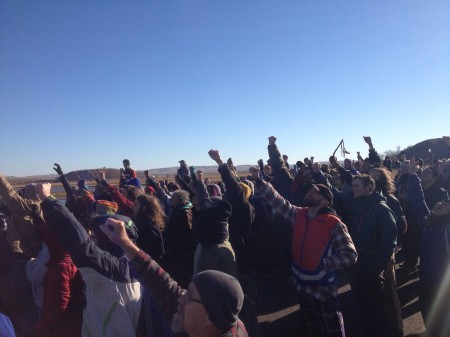
Backwater Bridge, Cannonbal, ND, NoDapl, November 8, 2016, Photo by Author

Backwater Bridge, Cannonbal, ND, NoDapl, November 8, 2016, Photo by Author


We left the Volcanoes and Rivers of my homeland and began our trek across mountains and endless plains in a van packed with donated supplies gathered in the haste of a great battle. We traveled excitedly and quietly. I was still finding it hard to swallow from my surgery. I felt weak, but determined. My words sat in my guts, and the drums of Pow-Wow CDs played a battle hymn to our coffee-fueled mission to the Oceti Sakowin.

“Get up! The Salmon need you!”

With the dream dancing in my head, we pulled into camp. Before us stood an encampment of so many others that had heard the call to show up and stand. We quickly set up our camp, got donations to their proper places, and made our way to the Sacred Fire of the Oceti Sakowin. I walked to the fire in the middle of a large circle of smiling faces, some with tears in their eyes—tears of joy and from the tear gas that had been poured upon the People with impunity. There was an Elder tending the Fire, his hand outstretched to mine as he handed me the tobacco to put into the flames. Our eyes locked, and as the tears began to pour down my thin face he said, “Welcome home, brother.” I prayed harder than I had ever prayed before as I walked clockwise around the Fire and put my offering into the thick smoke. The marriage of dream and prayer, complete in union.
14976756_10154242699429092_6297236316795363328_o
I had still not eaten a full meal since my surgery a week prior, and the protein shakes I had brought were beginning to run out. I had a deep hunger that had not been fed since I became ill four years prior, a hunger that was ravenous and tired. We decided to head to one of the many soup kitchens serving food, and as we slowly made our way through the line, we talked to folks that had been in camp since the beginning of the NoDAPL resistance. There were Lakota cousins, Cherokee cousins, Blackfeet cousins, Navajo cousins, all the many tribes of Turtle Island in one place, sharing stories, laughing, and full of love. I was handed a plate by a Lummi Grandmother from the homelands who asked me if I had just arrived.

“Yes,” I said, “a few Cowlitz Cousins and I just pulled into camp a few hours ago.”

She hugged me with a stern grasp and whispered, “Welcome Cousin, we have Salmon from our homeland, please enjoy.”

My plates were filled by kind servers, all telling us, “Welcome, Mni Wiconi!”  Generous portions of Salmon, huckleberries, and fry bread were laid upon our plates with love. We walked outside the serving tent and looked for a place to sit and found some Northwest Natives that had brought the fish for the People.

“Where is the Salmon from?” I asked one of the younger cousins.

“Oh, yeah, this Salmon came from the N’ch-iwana.” he replied in a thick rez accent.

“I believe most of this catch came from the Celilo Falls area.”

Les Brown photo. ©2012

Les Brown photo. ©2012


My neck hairs rose like porcupines as I edged the first bite to my mouth, whispering beneath my breath a Prayer of thanks to the Salmon People. I took a bite, and, swirling the pink sweet meat in my mouth, watering and eager, I swallowed. I could feel the medicine make its way down the new tube the surgeon had made just a week earlier, each movement wiggling in anticipation. It landed in my empty stomach, as a choir of sensations flooded my senses. Bite after bite, prayer after prayer, I was full as if for the first time. I was home. I was no longer dreaming.

“Get up! Stay Alert! The Salmon need you!”

Masi Coyote.

Mni Wiconi!

(This was originally published by Beyond the Margins, Oregon Humanities. All rights reserved by Author, Si Matta)

2020 Vision(s)

If it should happen you wake up and Armageddon has come, lie still.
― William Edgar Stafford

Last night I
saw the
moon
slip
in
and out
of golden light.

A flame burnt
ember of
gas
exploding
in my eyes.

Watching the end
of the world
no longer
feels
so
dramatic.

© Si Matta

The Birds Whispered My Name

Some birds are not meant to be caged, that’s all.- Stephen King

The birds whispered my name,
As I fidgeted on a cold chair,
Learning of a god dressed in thorns.

As they talked in righteous dictation,
I would pull thorny brambles from dirty hands-
Finding god in the splinters.

I remember how the rain tasted-
Dry in safe beds made from synthetic fibers.

Yet I could hear the birds whisper my name,
Telling me stories,

We forgot to tell ourselves.

© Si Matta

Fire

Each of us is born with a box of matches inside us but we can’t strike them all by ourselves― Laura Esquivel

I use to dream,
but my well
has ran dry.

Like cottonmouth.

I often cough
on words and
pass the torch.

A flame.

© Si Matta

Sinew

Never lost/ Fading slowly to Silence/ By infinite degrees”
― Ashim Shanker

The sinew of
the moment led
us to this
leather of silence.

Sometimes I forget
your name, but remember
the taste.

A distant drum-

Your heart.

© Si Matta