An Edward S. Curtis photo from 1909 of my Ancestors old village site near Skamania, Washington. Lewis and Clark called us the ‘Shahala Nation’, when they came
 through the Gorge in 1805. We lived in three subdivisions: the Yhehuhs, who were above The Cascades of the Columbia River, the Chahclellahs, who lived below The Cascades, and the Wahclellahs, who lived near Beacon Rock. We had six villages on both sides of the river until the 1830′s, when what was called the ‘Cole Sic and Warm Sic’ (Malaria) epidemic came through and decimated our numbers to near extinction. Some number perspectives: in 1780, we numbered 3,200, in 1805, Lewis & Clark’s count was 2,800, 1,400 in 1812, and about roughly 80-100 after the epidemic of the 1830′s. The survivors then created the single village that became the Wat-la-la.
Author Archives: Haven
‘Graffiti’ of the old ones
“I am now old. it was before I saw the sun that my ancestors discovered the Wah’-tee -tas, the little ancient people who wore robes woven from rabbit’s hair. They dwelt in the cliff. My people saw a little short fellow, like a person.
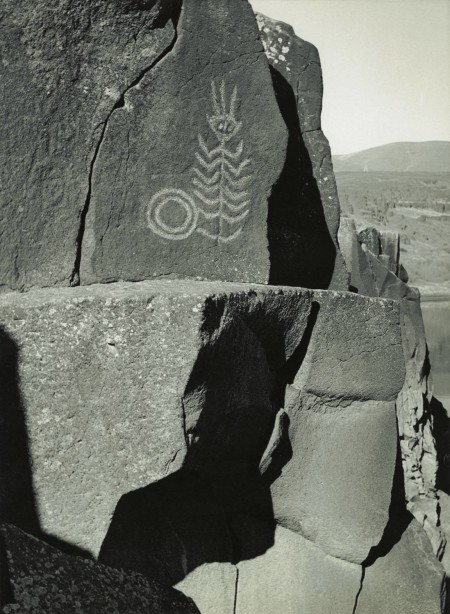
Alfred A. Monner (1953), warns of a dangerous whirlpool in the eastern Columbia River Gorge.
- Tokiaken Twi-wash (Yakama) told L.V. McWhorter this story in 1912
The Call of Sasquatch
Sasquatch runs deep through my family. My Grandmother use to tell me stories that would make my hair stand on end.
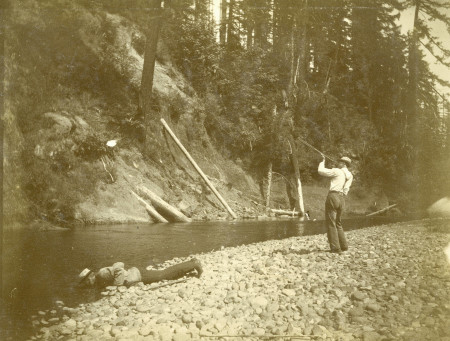
Hunting on Rock Creek near Stevenson, WA. c. 1911
You can hear my Uncle’s story about ‘the call of Sasquatch’ here:
River People
“Although identified by the photographer in about 1900 as Warm Springs Indians, this family, who lived near Celilo,  was part of a substantial population that refused to settle or stay on the reservations. Many of them came to identify themselves as Columbia River Indians, or River People, based on their shared heritage of connection to the river, resistance to the reservation system, adherence to cultural traditions, and relative detachment from the institutions of federal control and tribal governance. ”
(http://www.ohs.org/research/quarterly/images/OHQ1052_Fisher_1.pdf)
I am Proud to be a River People.
A video montage in honor of the River People.
remember who you are
The sun peeks its morning head over the hedges. Summoning the morning glories to rise and open their light to the world. Sometimes, I feel like a tight bulb, curled in on its self, not wanting to expose myself to the world, or
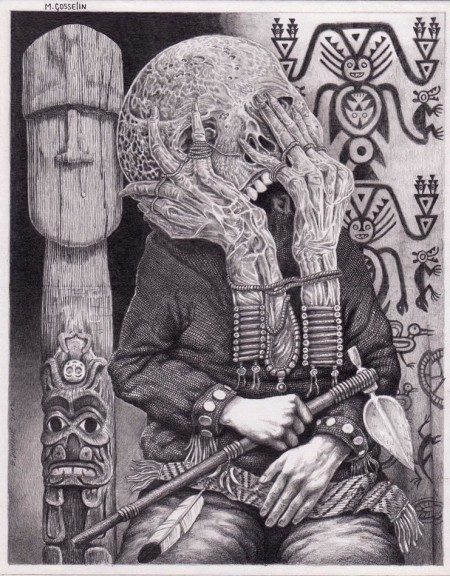
‘you put a spell on me. ‘exquisite corpse drawing bernard dumaine marc gosselin
Writing a new story
A grand spectacle! The sheer magnitude of these living waters, pummeling in their forever song of change.
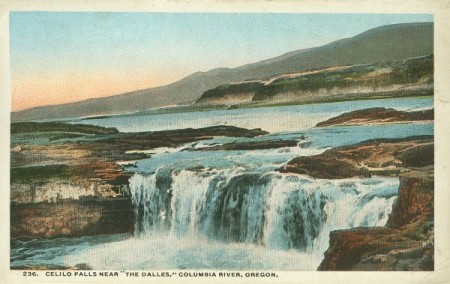
Post Card, Near The Dalles, 1917
Tumbleweed Dreaming
To the East, the mountains lose their teeth to rolling hills and grassy prairie. The smell of sweetgrass and manure wrestle through the  tumble weed winds, swift and warm. There is a calm here in the big sky horizons, where reluctant life forges ahead through the harsh winters and dry summers. The lonely sacredness of dreams tied up in old stories that still live in Post Office conversations. I admire the Stoic vastness of the Prairie, stretched as far as the eye can see. I visit when I can, and get lost in the hushed whispers of time.
Cold North Wind
“A cold wind was blowing from the north, and it made the trees rustle like living things.”
― George R.R. Martin, A Game of Thrones
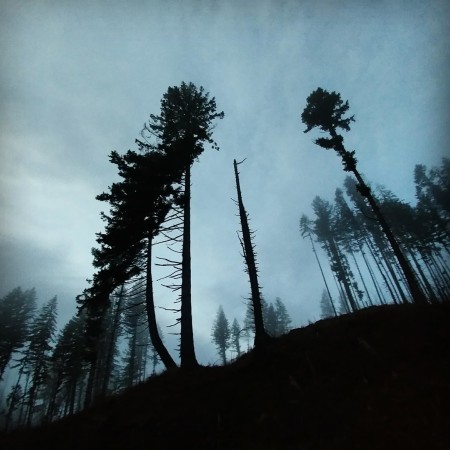
Horizons | © H a v e n
Chinook – Coyote Builds Willamette Falls and the Magic Fish Trap
Coyote came to a place near Oregon City and found the people there very hungry. The river was full of salmon, but they had no way to spear them in the deep water. Coyote decided he would build a big waterfall, so that the salmon would come to the surface for spearing. Then he would build a fish trap there too. First he tried at the mouth of Pudding River, but it was no good, and all he made was a gravel bar there. So he went on down the river to Rock Island, and it was better, but after making the rapids there he gave up again and went farther down still. Where the Willamette Falls are now, he found just the right place, and he made the Falls high and wide.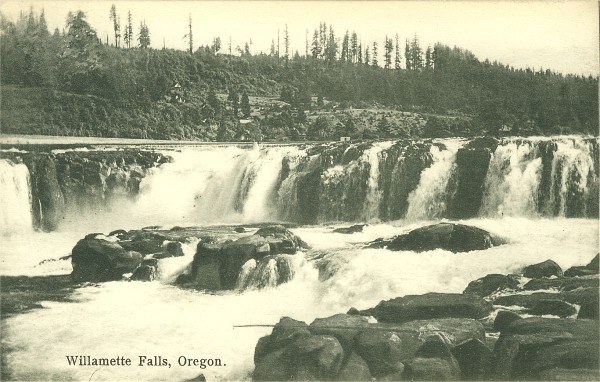 All the Indians came and began to fish. Now Coyote made his magic fish trap. He made it so it would speak, and say Noseepsk! when it was full. Because he was pretty hungry, Coyote decided to try it first himself. He set the trap by the Falls, and then ran back up the shore to prepare to make a cooking fire. But he had only begun when the trap called out, “Noseepsk!”
He hurried back; indeed the trap was full of salmon. Running back with them, he started his fire again, but again the fish trap cried “Noseepsk! Noseepsk!” He went again and found the trap full of salmon. Again he ran to the shore with them; again he had hardly gotten to his fire when the trap called out, “Noseepsk! Noseepsk!” It happened again, and again; the fifth time Coyote became angry and said to the trap, “What, can’t you wait with your fish catching until I’ve built a fire?” The trap was very offended by Coyote’s impatience and stopped working right then. So after that the people had to spear their salmon as best they could.
Chinook Creation Story
A Creation Story
“Long, long ago, when old Man South Wind was traveling North, he met an Old Woman, who was a giant.
“Will you give me some food?” asked South Wind. “I am very hungry.”
“I have no food,” answered the giantress, “but here is a net. You can catch some fish for yourself if you wish.”
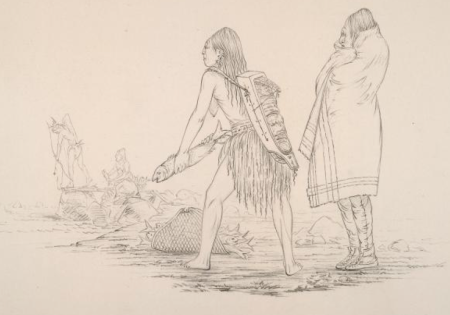
George Catlin. 1850
But the old giantress cried out, “Do not cut it with a knife, and do not cut it crossways. Take a sharp knife and split it down the back.”
But South Wind did not take to heart what the old woman was saying. He cut the fish crossways and began to take off some blubber. He was startled to see the fish change into a huge bird. It was so big that when it flew into the air, it hid the sun, and the noise of its wings shook the earth. It was Thunderbird.
Thunderbird flew to the north and lit on the top of Saddleback Mountain, near the mouth of the Columbia River. There it laid a nest full of eggs. The old
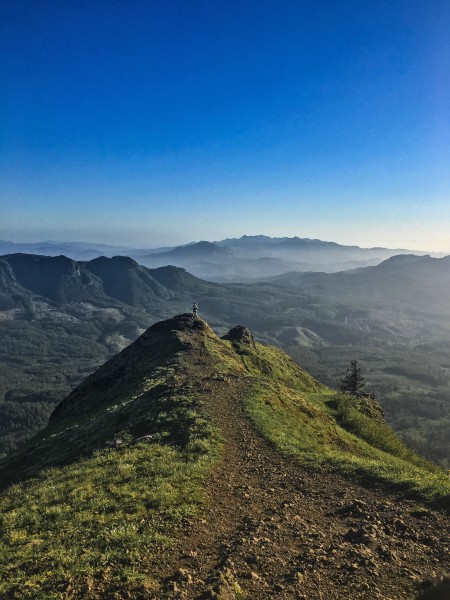
Saddle Mountain, Oregon
The old giantress broke some other eggs and then threw them down the mountainside. They too became Indians. Each of Thunderbird’s eggs became an Indian.
When Thunderbird came back and found its eggs gone. it went to South Wind. Together they tried to find the old giantess, to get revenge on her. but they never found her, although they traveled north together every year.
That is how the Chinook were created. And that is why Indians never cut the first salmon across the back. They know that if they should cut the fish the wrong way, the salmon would cease to run.
Always even to this day, they slit the first salmon down the back, lengthwise….