“Hope is the thing with feathers
That perches in the soul
And sings the tune without the words
And never stops at all.” – Emily Dickinson
~
There are numbers zipped up in code that distinguish a place. A place where the mailman sometimes drives a mile or more to the next box; markers upon a black sea of asphalt, gravel and rain. Toivo lived here, amongst the mapleway and dirt trails- snags of trees swaying in the wind. A psithurism cathedral, with halls that echoed Finnish Polkas in a land of make believe. My Grandfather came from an old world, yet made a new one in the mossy twigs of 98648.
I am the oldest of 10 grandchildren, and arrived into a world filled with imagination and music. My grandfather played the accordion, spoke Finnish when drinking with his brothers and sisters, and loved to tell good stories. My oldest memories are set to the soundtrack of joy, laughter, and the Chicken Dance. Gramps had instruments in every corner and nook- amongst the dusty wisps of paper scrolled upon with poems, music, and blueprints for building. His hands were always inventing something new. When I was 9, he invented Toivo Land.
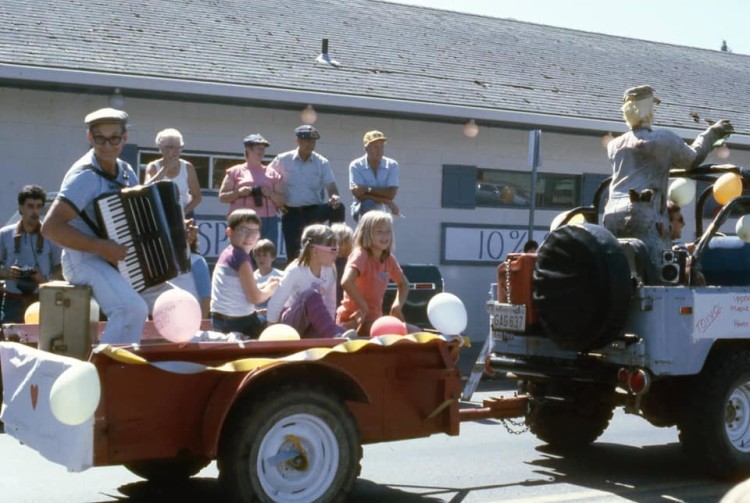
Toivo was an imaginary friend he made out of sawdust flesh, dressed in cover-alls, and who wore a face of permanent marker drawn upon a milk jug. Toivo always sat on an old Ford tractor that was rusty and splintered (unless he was out and about with the Toivo Land Band.) Toivo was a Magician, and like the Wizard of Oz, Toivo plowed a yellow brick road dotted with hand painted signs, and paved with the falling leaves of Maples, Oak, and Fir. A network of discovery that spanned 3 acres, and a lifetime. Toivo was always busy- this was Toivo’s land.
Toivo: 1) Finnish toivo = ‘hope’, ‘wish’, ‘desire’ 1 a) … with an older meaning ‘faith’, ‘trust’, ‘promise’
(Photo of Toivo Land Band @ Skamania County Fair Parade, Stevenson, WA. 98648 , cir. 1984)
~~
The faint sound of Polka seeping from old cassettes keeps time with the machines monitoring his breathing. His heart beats sporadic metronomes to his Covid-19 fever dreams. His fingers fold in on themselves- clutched and cold. It has been awhile since he has held the weight of billows and keys strapped upon his stern shoulders. He is quiet and ready- ready to make music again.
“Thank you,” I sob a hard sentence, stuck in my throat made of his flesh, “thank you Grandpa for always being there, and making our lives magic, and filled with love.”
“Thank you Grandpa for Toivo!”- I strain the words between tears that fall upon my pandemic shield made of plastic.
We lock a gaze of Finnish silence, the kind of silence filled with the solidarity of *Sisu. A stoic tear moves its way down his ageless face of wisdom, and with a side quiet smile, he says:
“It is all I could have hoped for!”
“It is all I could have hoped for.”
———————————————————————————————————————
* Sisu is a Finnish concept described as stoic determination, tenacity of purpose, grit, bravery, resilience, and hardiness and is held by Finns themselves to express their national character. It is generally considered not to have a literal equivalent in English.
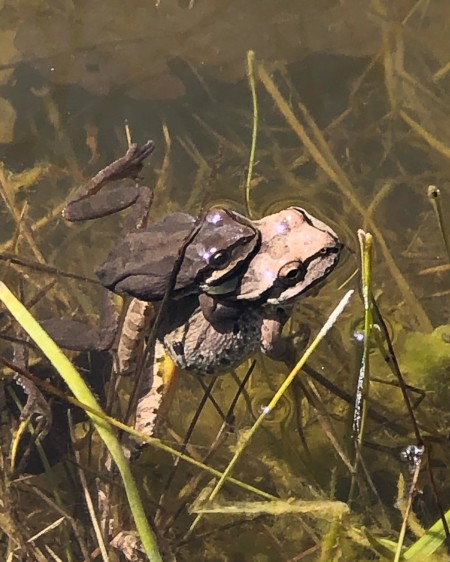
Beneath the securities of good nights and safe houses, lived fear. Fear dressed in Existential fangs always sat at the outside waiting to get in. The sweet smell of apple pie and coffee seemed a good enough shield to the elephant that sat in at the edge of the room, flicker of flame and wax. Shadows have always lurked beneath the savory light of ‘everything’s fine if you send hopes and prayers.’ Then one day, everything changed. Not the flash of atomic light we dreamt of in cold war beds, terrified with nightmare, and the comfort of mothers floor. No, it changed the way you would expect a tad pole to become a frog, unseen but heard for miles across platforms of social distancing. The veil became thin, and the emperor ran across abandoned golf courses, naked and scared.
Photo: Patricia Halleran
This had always been the dream, the liminal birthing canals connected to the ethernets of the universe, tearing illusion from its perch.. the Eagle remembered it was an Eagle and tore apart his jingoist ways, for a chance to taste the flesh of Salmon once again. The metaphors painted slow motion chrysalises, sparked from the time outside of time, where dream and awake fancy dance on early morning vistas.. or perhaps, it is the prayers of Ghost Dancers awaking the Ancestors for aid. The realist thing about this, is that it is not real. It is not matter. It can not cast shadow, or shine light, yet sits on the edge of hills, threading and weaving, a silent killer. A silent reminder….
Pay attention to what the frogs have to say, they may have all the answers we need.
‘The vision, however new and culturally unique, is translated back into a traditional oral format: the new within the old, reflecting the tenacity of oral tradition.’
“Magic in the Mountains: The Yakima Shaman: Power & Practice”, by Donald Hines, 1993
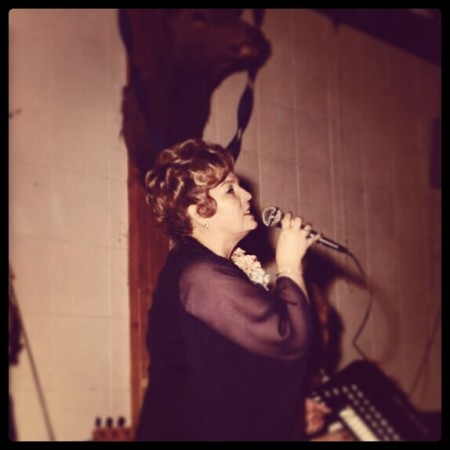
Grandma Shirley and the songs of forgotten dreams.
The stratosphere of my story is woven with so many American heartbreaks that my DNA seems permanently tuned to Patsy Cline’s “Fall to Pieces.” In these broken pieces, I’ve fought to carve out a sense of belonging—some place amidst the ruins of a well-fought war. My grandmother used to tell tales of family woes and heartbreak as if they were the very fabric of our shared ancestry.
Grandmother’s voice was golden—a place where she tucked away her secrets. She was a siren, luring you across a smoke-filled room with her sultry sadness and rough-around-the-edges charm. She found God in the holy waters of honky-tonks, at least until children and the rapture of everyday life claimed the sanctuary of her dreams. She traded in “Strange Fruit” for a father she thought she’d found in the dogmatic catacombs of Kingdom Halls. Still, she always shared that part of herself with me. She told the racy stories, grasping her hands like prayer, a nostalgic exhale slipping through the blinds. With me, she felt safe—a place to whisper her discontent with choices that turned her from the Old Ways of our blood. She saw the fire in me and tried to pass on the Ceremony. I ended up finding it myself. I found it in metal.
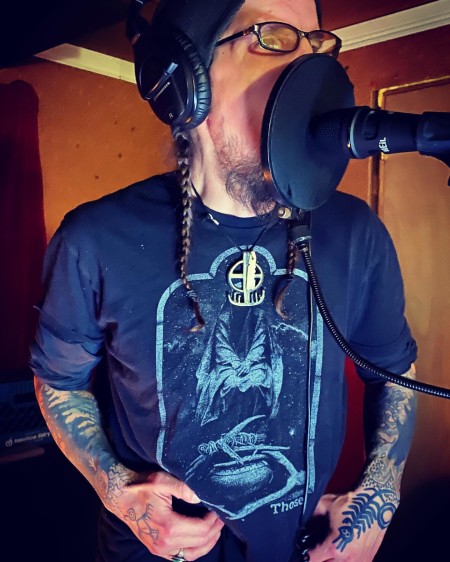
Laying down screams for my band, Cathartes Aura in 2019.
There’s resonance in the tonsils, a release of primal force summoned from the swamps of modern life. Here, a feral wind releases its shadow, storm clouds clash against the shores of volcanic words, and violent air rushes through smoke-strained cords. The buzz of amplified sound becomes a harbor for Armageddon, spinning chaos into a kind of bliss. The drums thump, quickening the trance—an anxious war waged on flesh and heart. This is what metal means to me: a padded cell of my own, where trauma is brought to the chopping block for visceral release.
When I was young, my world seethed with the wonder of nature—the gilded peaks draped in mist, ancient trees resisting the chainsaw’s hum, rivers meandering in dramatic silence as forests fell like rain. These landscapes were soundtracked by stereo speakers blasting Black Sabbath, by motorcycles, Iron Maiden, skateboarding, and punk rock. I’d listen to quaking mountains scream like thunderbirds in 4/4 time and distortion, summoning visions through a haze of psychedelic experiments. (I believe my ancestors used mushrooms as a kind of message in a bottle—or, more accurately, a cap.)
I felt the anger and confusion of being cut off from my ancestors and the spirit of place, forced to bow to an anemic god who never had our Mother’s best intentions at heart, feeding us a diet of forgetting. Old stories would rise up, speaking of days lost to the corpses of progress and manifest destinies, as sweaty bodies slammed together in a prayerful trance. It was redemption from the plagues—at least for a little while.
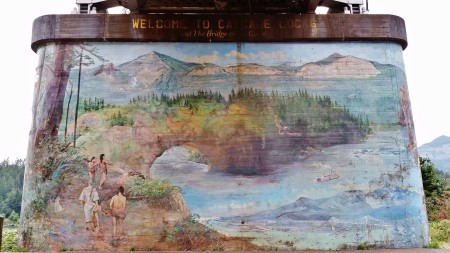
The Cascade Range, where it crosses the Columbia River, exhibits enormous cross sections of lava, and at its base are petrified trunks of trees, which have been covered and hidden from view except where the wash of the mighty stream has exposed them. Indians have told me, of their knowledge, that, buried deep under the outpours of basalt, or volcanic tufa, are bones of animals of siah , or the long ago.
Where Gods live.
Traditions of the great landslide at the Cascades are many, but vary little in form. According to one account, the mountain tops fell together and formed a kind of arch, under which flowed, until the overhanging rocks finally fell into the stream and made a dam, or gorge. As the rock is columnar Basalt, very friable and easily disintegrated, that was not impossible, and the landscape suggests some such giant avalanche. The submerged trees are plainly visible near this locality. Animal remains I have not seen, but these Salmon-eating Indians have lived on the river’s borders through countless ages, and know every feature in their surroundings by constant association for generations, and naturally ally these facts with their religious theories. (MacMurray MS.)
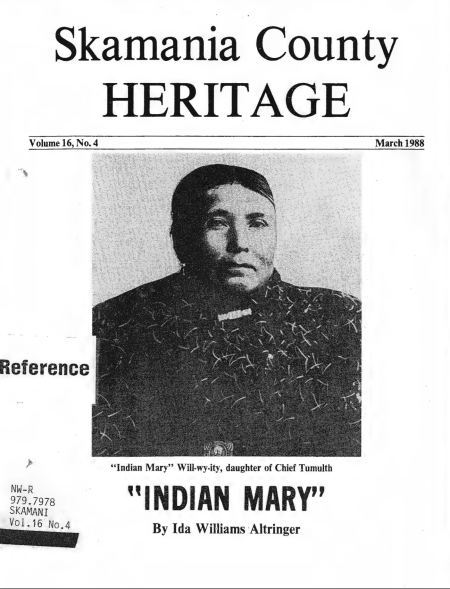
“Mary was born at the Cascades in 1854, in the “Moon of the Falling Leaves”, October. Many Indians did not know what year they were born, much less the month and day.
Matriarch.
Mary’s mother was Susan, a member of the Wishram tribe. Her father was Tomalth. * (Amanda pronounced it “Tum’uth”.) He was the 6’4″, red-haired chief of the Cascade tribe of Chinook Indians.He was the son of Chief Stilgat of one of the tribes at the mouth of the Columbia River.
Mary was only eighteen months old at the time of the Battle of the Cascades, in March 1856. After her father was hanged by order of the U. S. Army, Mary went with her mother and other family members back to the Wishram village.
In the 1870′s, as the young widow of Henry Will-wy-ity, a Wishram Indian, she traded a team of horses to Kenzy Marr for 160 acres of his donation land claim at Marr’s Landing. Here, at the end of the present lndian Mary Road, her brother built for her a nice wooden cabin.”
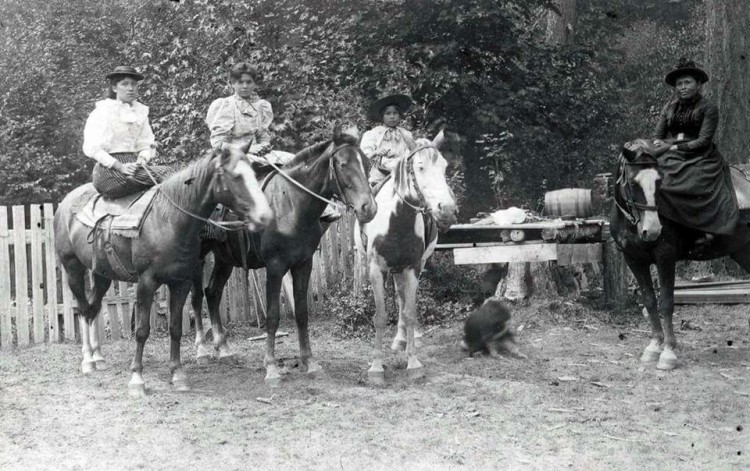
Old photo shows “Indian Mary” Stooquin, right, with daughters and a friend. From left is Nellie Arquette Miller, 18, a friend; Amanda Williams, 14; Abbie Reynolds Estrabrook, 7; and Mary Will-wyity, 40. Photo taken at Moffett’s Hot Spring about 1894.