The Maker of Rain

The Maker of Rain

The maker of rain sits in front of a forgotten sun
spilling forth its solemn tears it cries-
the rhythm of it’s sorrows sings sad songs
lamenting the long day in sheets of gray hues.
the echoes of thunderous choirs
and winds that chant through forests halls-
in these shadows-
the maker of rain summons.

Maker of Rain | © H a v e n

Maker of Rain | © H a v e n

Submerged Forest

Up until the completion of Bonneville Dam in 1938, a ghostly white forest of drowned tree stumps could be observed along both sides of the Columbia River between Cascade Locks and The Dalles. The submerged forest was first mentioned in a geologic textbook in 1853, in “Principles of Geology” by Sir Charles Lyell

“Thus Captains Clark and Lewis found, about the year 1807 (sic), a forest of pines standing erect under water in the body of the Columbia RIver, which they supposed, from the appearance of the trees, to have been submerged only about twenty years.”

Both Lewis and Clark in 1805 and Captain Fremont in 1845 recognized that the trees were drowned by the formation of a lake behind a 200-foot landslide dam.
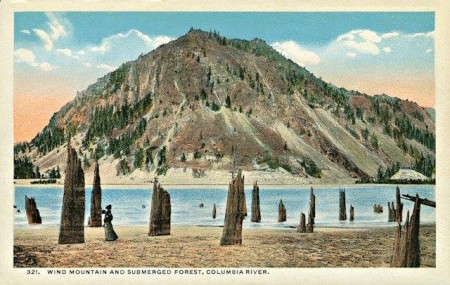
Penny Postcard, ca.1920s, "Wind Mountain and Submerged Forest, Columbia River".

Penny Postcard, ca.1920s, “Wind Mountain and Submerged Forest, Columbia River”.

Possibly triggered by an earthquake, the dam material slid down from the cliffs of Table Mountain and Greenleaf Peak at a time later determined to be between 1260 and 1290 A.D. The stumps were described in detail by Minnesota biologists Donald B. and Elizabeth G. Lawrence in a series of definitive papers in 1935, 1937, 1937, and 1958. The Lawrences were the first to date the time of the landslide, by caron 14 analyses, as having occurred 700 years before. As of 1936, the Lawrence’s counted 3,068 stumps on the south side of the river, and 938 on the north side of the river. The maximum concentration of stumps on the south side occurs just above the mouth of Viento Creek, where more than 800 stumps were counted within a small area.

Source: John Allen, Professor of Geology at Portland State University, 1985, “Time Travel in Oregon”.
Where Courage Lives

In the corners of the garden, I can see words caught in the geometry of webs that bob and dance in the breeze. I feel the sunflowers ushering poems through the labored

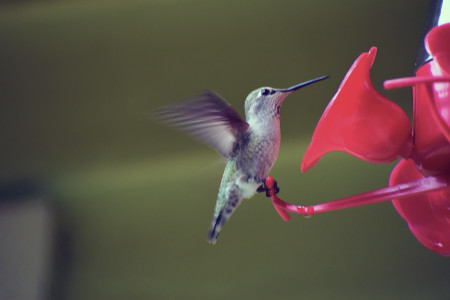
Humming Bird keeping time to the biology of existence.

Humming Bird keeping time to the biology of existence.

bow of growing as they stretch towards the sun. It seems I have forgotten this language, perhaps the taste of regret is to bitter for the tongue. Or perhaps the words were never mine to begin with, all dressed in others hopes and wishes. Who am I without these wayward tricksters? Who am I without these invasive fears? Who am I without these walls of identity?

“Invasive plants were like all evil things; the only way to ensure that they wouldn’t return was to face them head-on, battle it out, and win. Anything else was only a temporary fix. I sighed, thinking of my own life. I was letting the weeds grow all over me. They were threatening my happiness and, in some ways, my life. So why couldn’t I face them?”
― Sarah Jio

I seem to keep courage in a box, only reaching for it when life is set a blaze. My day to day has been ran over by fear, a crippling fear that eats and gnaws at my insides. Like brambles who bribe me with their berries, I allow this fear to grow until I am unable to move at all. I lose relationships to this. I lose myself to this. The garden is teaching me courage of everyday life. And in these times, everyday life is getting increasingly darker, so the practice is appreciated.

Be well Comrades.

In These Shadows, We Call Home

these veins of fire do smolder
beneath ash and flesh-
our eyes glow red-
and lips spit rocks-
we morph and quake
and shimmer and shake
and burn it all again.
in the dust the sun does bake
the ash to caked earth-
and a seed finds
its way to grow.
now our arms do shake as we begin to awake
and reach for the sky we fly….
and as storms do come,
and as mountains do cry-
-silent-
in their shadow-
we call home.

LAWETLAT’LA

LAWETLAT’LA

A Dragon Named Energy

The curve around a domed landscape harkens an era of black smoke and tar. Roads and the gorge became intwined in a historical knot of progress and expansion. Along with the trailblazing of the railroad, the fuel dependent pathways would change the course of what it meant to transport goods and culture. As the pace quickened along its shores, the river seemed to halt and stall behind pale dams hungry for a dragon named energy.

The very base of this mountain holds vigil, and reminds the River how it use to sing, and the mingle of wind holds time with the sun.
0809AB53-8F77-4F5A-9ACB-8949A52FDE21

Real Indian

Real Indian
By my Auntie Teri Deras

Little boy
questions
‘Are you
a real
Indian?’
‘Yes!’ I
Patiently
say.

‘But you
don’t have
braids!”

I smile and
walk away
in my
Reebok moccasins.

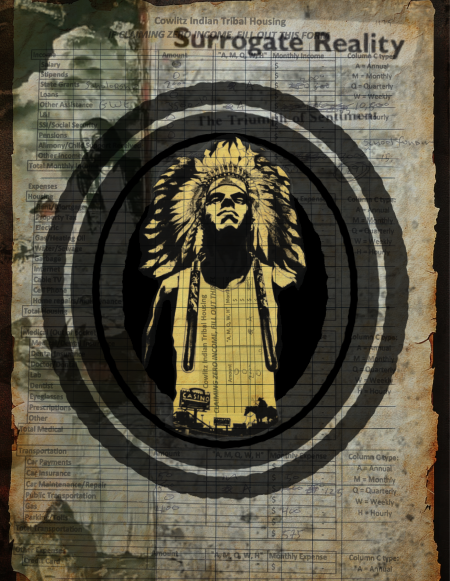
Zero Income Form_Justin Matta copy-4

Resilience | Confluence Project

Reposted from Confluence Project Please check out and support the work that they do!


Stories from the River is a series of documentary shorts produced in collaboration with Confluence, Tule Films and NW Documentary. These videos are here to support teachers as they work to bring Indigenous prospects into schools. They are also educational and inspirational to anyone curious to gain a more inclusive understanding of the Columbia River system. Filmmaker Woodrow Hunt (Klamath/Cherokee) of Tule Films produced this series with the support of the National Endowment for the Arts.

The theme of this video is resilience and survival. Four Native individuals talk about resilience, survival, river rights, and the fight for recognition.

In order of appearance:

Bobbie Conner, Cayuse/Nez Perce/Umatilla

Tanna Engdahl, Cowlitz

Greg Archuleta, Confederated Tribes of Grand Ronde

Mildred Quaempts, Umatilla